

Views: 0 Author: Site Editor Publish Time: 2026-09-29 Origin: Site


High-density storage maximizes square footage, but towering racks create severe lighting challenges standard fixtures cannot solve without wasting energy or creating dangerous shadows. Facility managers face a trilemma in racked environments: achieving adequate vertical illumination for inventory scanning, minimizing glare for forklift operators looking upward, and controlling operational energy consumption associated with high-wattage fixtures at 30-foot mounting heights.
Addressing these specific geometric and operational constraints requires purpose-built warehouse lighting solutions. Standard circular fixtures fail to penetrate deep aisles, leaving lower racks in the dark while over-illuminating storage unit tops. This guide breaks down the technical use cases, evaluation criteria, and return on investment factors for deploying linear high bay leds for high ceiling warehouses with racking.
Aisle-Specific Optics: Linear high bays utilize rectangular beam distributions to push light down narrow aisles, eliminating the "cave effect" common with omnidirectional fixtures.
Vertical Illumination: Specialized lensing ensures light reaches the bottom racks, critical for barcode scanning and inventory accuracy.
Operational ROI: Integration with advanced occupancy sensors and IoT controls yields up to 70% energy savings in low-traffic aisles compared to legacy HID or fluorescent systems.
Risk Mitigation: Successful deployment requires precise photometric planning to avoid improper spacing, thermal failure, invalidation of utility rebates, and code-compliance issues regarding emergency egress.
Establishing baseline requirements for illumination in racked environments goes far beyond simply measuring horizontal foot-candles on the concrete slab. In a high-density facility, the primary visual tasks occur on the vertical plane. Workers must read SKUs, scan barcodes, and identify safety labels on pallets stacked high above the ground. Success requires a delicate balance of horizontal and vertical foot-candles, strict uniformity ratios, and aggressive glare reduction. Without precise optical control, facilities suffer from uneven lighting where the top tiers are blindingly bright and the floor level remains dangerously dim. You need consistent light distribution from the top beam down to the floor level to prevent scanner misreads and logistics bottlenecks.
Traditional round fixtures project light in a wide, circular pattern. When installed above narrow storage aisles, this circular distribution creates immediate geometric conflicts. A significant percentage of the lumen output strikes the top of the racks rather than traveling down the aisle path. This wastes energy and fails to penetrate the narrow, deep spaces where material handling equipment operates. The geometry of a racked aisle demands a rectangular light distribution that mirrors the physical footprint of the floor space below. Pushing light into the rack flues instead of bouncing it off the top pallets requires a fundamental shift in fixture design.
Maintaining legacy fluorescent or Metal Halide fixtures introduces severe operational disruptions. Older technologies suffer from rapid lumen depreciation, losing a massive portion of their brightness long before they actually burn out. Frequent ballast failures require constant maintenance. In a facility with 35-foot ceilings, replacing a single bulb requires renting specialized scissor lifts and shutting down active aisles, halting productivity entirely. Modern industrial warehouse LED lighting eliminates these disruptions through solid-state technology that operates for tens of thousands of hours without requiring physical intervention. You eliminate the restrike times, the ballast hum, and the constant lift rentals.
Lighting Metric | Legacy HID / Fluorescent | Linear LED High Bays |
|---|---|---|
Beam Distribution | Omnidirectional (Wastes light on racks) | Rectangular (Targeted down aisles) |
Vertical Illumination | Poor (Creates shadows on lower tiers) | Excellent (Uniform light from top to bottom) |
Maintenance Frequency | High (Frequent bulb and ballast changes) | Zero-maintenance (Solid-state reliability) |
Warm-up Time | Up to 15 minutes restrike time | Instant on/off |
Heat Output | Extremely high (Increases cooling loads) | Minimal (Efficient heat dissipation) |
Glare Control | Minimal to none | Advanced frosted lenses (UGR <22) |
Linear form factors are engineered specifically to match the rectangular footprint of warehouse aisles. By utilizing elongated diode arrays and specialized optics, these fixtures direct light exactly where workers and machinery operate. Instead of spilling wasted lumens onto the top horizontal surfaces of pallet racks, the light is channeled linearly. This targeted approach maximizes efficiency, ensuring every watt consumed translates directly into usable illumination within the active workspace. When you align the fixture parallel to the racking, the optical spread perfectly maps the floor path.
One of the most critical functions of linear fixtures is their ability to improve visibility on vertical rack faces. From the top tier down to the floor level, consistent vertical foot-candles are mandatory for modern logistics. Forklift operators rely on clear visibility to align forks with pallet pockets, while order pickers need adequate light to ensure scanner read rates remain high. By pushing light deeper into the aisle, linear fixtures drastically reduce picking errors and enhance overall inventory accuracy. You stop relying on ambient bounce light and start driving direct lumens onto the product labels.
Operating a forklift in a high-ceiling environment requires drivers to constantly look upward when stacking or retrieving pallets at high elevations. If the lighting system produces excessive glare, operators experience temporary blindness, leading to catastrophic accidents or structural damage to the racking. Linear fixtures mitigate this risk through frosted lenses, recessed diode placements, and specialized diffusers. Achieving a Unified Glare Rating of less than 22 protects operators while maintaining high lumen output. Neck strain and eye fatigue drop significantly when you eliminate exposed diodes.
The linear layout of these fixtures perfectly supports aisle-by-aisle motion sensing. Facilities implement advanced zoning strategies where lights dim to 10% when aisles are vacant. The moment a forklift enters the aisle, the fixtures instantly ramp up to 100% brightness. Because LEDs do not suffer from the warm-up delays associated with legacy lighting, this instant-on capability ensures safety while maximizing energy conservation. Daylight harvesting sensors dim fixtures near loading docks or skylights based on ambient sunlight, adjusting the output dynamically throughout the shift.
Windowless facilities require robust emergency lighting to ensure safe evacuation paths during power outages. Linear fixtures can be equipped with integrated emergency battery backups. When the main power fails, these drivers automatically switch on, providing critical aisle illumination for a minimum of 90 minutes to meet NFPA 101 life safety codes. Integrating this life safety feature directly into the primary lighting layout eliminates the need for separate, bulky emergency lights scattered throughout the facility. You maintain the required foot-candles along the egress path without installing redundant hardware.
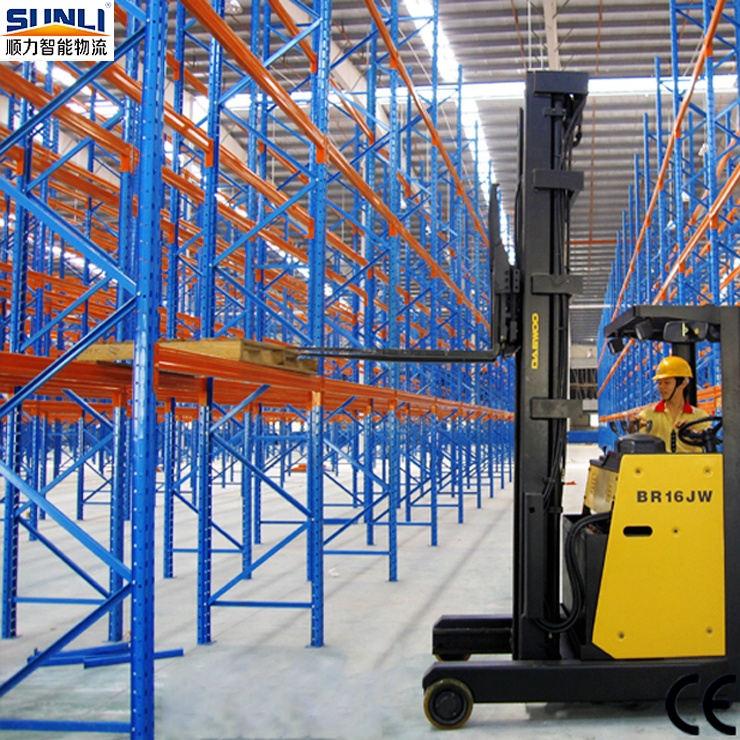
Selecting the correct lumen package requires calculating the exact requirements based on ceiling height and aisle width. For 30 to 40-foot ceilings, fixtures typically need to produce between 20,000 and 40,000 lumens to achieve adequate floor-level brightness. Raw lumen output must be balanced with efficacy, measured in lumens per watt. High-performance fixtures now routinely exceed 150 lumens per watt, allowing facilities to achieve massive brightness levels while keeping electrical consumption strictly minimized. You get more light on the floor while pulling fewer amps at the panel.
The optical distribution is the defining characteristic separating standard fixtures from specialized LED lights for warehouse racks. A standard wide distribution scatters light everywhere. Narrow optics, such as 30x90 or 60x120 degree beam angles, tightly control the spread. A 30x90 degree lens restricts the light from spilling sideways into the racks while allowing it to stretch longitudinally down the aisle. Specifying the exact beam angle based on the physical distance between rack faces is a non-negotiable step in the evaluation process. You match the lens to the aisle width to maximize efficiency.
Heat is the primary enemy of solid-state lighting. High ceiling warehouse lights operate in heavily stratified air where temperatures near the roof deck are significantly higher than at floor level. Robust thermal management prevents premature diode failure. Evaluating the heat sink design is critical. Extruded aluminum housings with deep fins provide the necessary surface area to dissipate heat away from the LED board and the internal drivers. Separating the driver compartment from the diode board ensures the fixture survives its expected lifespan in harsh, unconditioned environments.
Industrial environments expose fixtures to airborne dust, moisture, and potential physical impacts. Specifying an IP65 or IP66 rating ensures the internal components remain completely sealed against heavy dust ingress and high-pressure water jets used during facility washdowns. Alongside ingress protection, impact ratings dictate the fixture's ability to withstand accidental strikes from errant material handling equipment or shifting pallets. A high IK10 rating guarantees the polycarbonate lenses will not shatter upon impact when a forklift mast gets too close to the ceiling.
Visual clarity dictates operational efficiency. Standardizing on a Correlated Color Temperature between 4000K and 5000K provides a crisp, alert environment mimicking natural daylight, reducing worker fatigue during long shifts. A Color Rendering Index greater than 80 ensures accurate color recognition. This is vital for workers who must quickly distinguish between color-coded safety labels, specific product packaging, and hazardous material warnings in fast-paced logistics hubs. You cannot afford picking errors caused by washed-out colors under poor lighting.
Upgrading a massive facility requires balancing the initial capital expenditure against guaranteed long-term energy savings. Premium linear fixtures command a higher upfront investment than basic circular models, but their specialized optics mean you often need fewer fixtures to achieve superior foot-candle readings. The transition to solid-state technology eliminates recurring labor and equipment expenses associated with replacing burnt-out lamps at 30-foot heights. The zero-maintenance lifespan of 50,000 to 100,000 hours rapidly offsets the initial procurement phase, delivering a strong lifecycle value.
Selecting fixtures carrying the DesignLights Consortium Premium certification is a critical financial strategy. State and local utility companies offer substantial prescriptive and custom rebates for retrofitting inefficient legacy systems with high-efficacy LEDs. DLC Premium certification acts as the gateway to unlocking the highest tier of these utility rebates. By strictly specifying certified fixtures, facility managers significantly accelerate the payback period, turning a mandatory infrastructure upgrade into a highly lucrative energy project. You leave money on the table if you install non-certified hardware.
Moving beyond standalone motion sensors, modern facilities integrate Bluetooth mesh, Zigbee, or DALI-2 networked control systems. These advanced platforms provide facility-wide energy analytics, allowing managers to track exact kilowatt-hour consumption aisle by aisle. Networked controls generate occupancy heat maps, revealing which aisles see the most forklift traffic. This data optimizes inventory placement, moving high-velocity SKUs to easily accessible zones. Predictive maintenance alerts notify facility teams of any driver anomalies before a fixture actually fails, driving down operational overhead.
An often-overlooked ROI factor is the secondary energy savings achieved through HVAC load reduction. Legacy Metal Halide and high-pressure sodium fixtures generate massive amounts of ambient heat. In a facility with hundreds of these fixtures, the cooling system works overtime to counteract this thermal output. By switching to highly efficient LEDs, the ambient heat generated by the ceiling infrastructure drops dramatically. This directly reduces the mechanical strain on facility cooling systems, yielding further reductions in monthly utility bills and extending the life of your rooftop units.
Installing linear fixtures without analyzing the aisle geometry often results in the "cave effect," where the center of the aisle is bright but the lower racks remain completely dark. Mitigation requires commissioning a professional 3D photometric layout prior to purchase. Using software like DIALux or AGi32, engineers map the exact foot-candle distribution, ensuring the chosen beam angle and fixture spacing eliminate dark spots and provide uniform vertical illumination. You must run the point-by-point calculations before ordering the hardware.
Standard motion sensors struggle in high-bay environments. If a sensor's field of view is too wide, a forklift driving down a main cross-aisle triggers the lights in three adjacent storage aisles, wasting energy. Mitigation involves specifying high-mount PIR or microwave sensors calibrated specifically for narrow aisles. These specialized sensors utilize narrow detection patterns to prevent false triggers, ensuring lights only activate when equipment actually enters the specific aisle. Masking the sensor lenses physically blocks unwanted cross-aisle detection.
Industrial environments generate significant airborne particulate matter, especially cardboard dust from constant pallet movement. Flat-topped fixtures accumulate heavy layers of dust over time. This dust acts as an insulating blanket, trapping heat inside the fixture and reducing thermal efficiency, which accelerates diode degradation. Mitigation involves selecting sloped, curved, or heavily finned heat sink designs that naturally shed debris and maintain optimal airflow around the internal components. You need a housing design that prevents dust buildup from choking the heat sink.
Retrofitting an older facility requires careful assessment of the existing infrastructure. Assuming new fixtures seamlessly match old mounting points is a costly mistake. Mitigation requires a thorough audit of existing mounting hardware, whether chain, aircraft cable, pendant, or surface mount. Voltage requirements must be verified. Facilities operating on 347-480V systems require specific high-voltage drivers, whereas standard 120-277V fixtures immediately fail if connected improperly. High bay warehouse lighting must match the existing panel voltage to avoid catastrophic driver blowouts.
Initiate a comprehensive lighting audit to document existing fixture locations, panel voltages, and current mounting methods.
Request a 3D photometric lighting layout from manufacturers to guarantee uniform foot-candle distribution and eliminate shadows on the bottom racks.
Verify local utility rebate eligibility by cross-referencing proposed fixtures with the DLC Premium qualified products list before issuing a purchase order.
Specify narrow-beam optics and high-mount aisle sensors to maximize energy savings in low-traffic storage zones.
A: Linear high bays distribute light in a rectangular pattern ideal for aisles and racking, ensuring lumens are directed down the workspace. UFO high bays provide a circular light spread, which is better suited for open floor plans, manufacturing floors, and bulk storage areas without tall obstructions.
A: Typically, fixtures producing between 20,000 and 30,000 lumens are required for 30-foot ceilings. Exact requirements depend heavily on the chosen beam angle, the specific aisle width, and the target foot-candles required at the floor level for safe operation.
A: Narrow or specialized aisle beam angles, such as 30x90 or 60x120 degrees, are optimal. These specialized optics push light down to the floor and vertical rack faces rather than wasting illumination on the horizontal tops of the storage racks.
A: They utilize standard mounting methods like aircraft cable, chain, or rigid pendants. They require precise alignment parallel to the racking to ensure the rectangular optical distribution functions correctly and aligns perfectly with the aisle path.
A: Properly specified linear LEDs reduce dangerous shadows in deep aisles. They utilize specialized frosted lenses and recessed diodes to minimize glare, preventing temporary blindness when operators look up to place or retrieve high-tier pallets.
A: Yes. Beyond standard utility rebates, many energy-efficient commercial lighting upgrades qualify for deductions under Section 179D of the EPAct. This is pending specific energy reduction thresholds and the integration of qualifying automated lighting controls.


