

Views: 0 Author: Site Editor Publish Time: 2026-09-30 Origin: Site


High-density storage facilities pack inventory tight to maximize square footage. When you combine 30-to-50-foot ceilings with narrow racking aisles, you create a tough environment for visibility. Deep shadows form naturally. Light distribution gets uneven. Forklift operators end up working in high-risk zones where visibility drops drastically. Legacy HID or fluorescent lighting simply cannot push usable light down to the floor level through these tight spaces. Even improperly specified round LED fixtures fail here, wasting light on the top of the racks. Poor lighting directly causes picking errors, slows down throughput, and drives up accident liability. Facility managers need a better approach to illuminate these corridors. Upgrading to linear high bay leds for high ceiling warehouses with racking sets the engineering standard for these spaces. This upgrade shifts the focus from basic energy savings to serious risk mitigation. You gain precise optical control and measurable safety improvements across the entire warehouse floor.
Targeted Aisle Optics: Linear high bays utilize specialized rectangular beam patterns to drive light down narrow aisles, eliminating the "scalloping" effect and dark spots common with round fixtures.
Superior Vertical Illumination: Unlike omnidirectional lights, linear fixtures successfully illuminate the entire face of warehouse racks from the top tier to the floor, critical for safe material handling.
Glare Reduction: Properly specified linear LEDs reduce direct glare for forklift operators looking upward, directly mitigating collision and load-drop risks.
Comprehensive Coverage: Integrating linear aisle lighting with cross-aisle and staging zone illumination prevents dangerous blind spots during high-speed forklift transitions.
Compliance & ROI: Upgrading to purpose-built linear warehouse lighting solutions supports OSHA compliance for workplace illumination while significantly reducing maintenance overhead in hard-to-reach environments.
Defining safe lighting requires looking past raw lumen output. You need specific foot-candle measurements at the floor level and across vertical planes. A safe facility needs 20 to 30 foot-candles on the floor for pedestrian and vehicle movement. You also need at least 15 vertical foot-candles across the rack faces. This vertical light allows operators to read labels, scan barcodes, and check pallet structural integrity before inserting the forks.
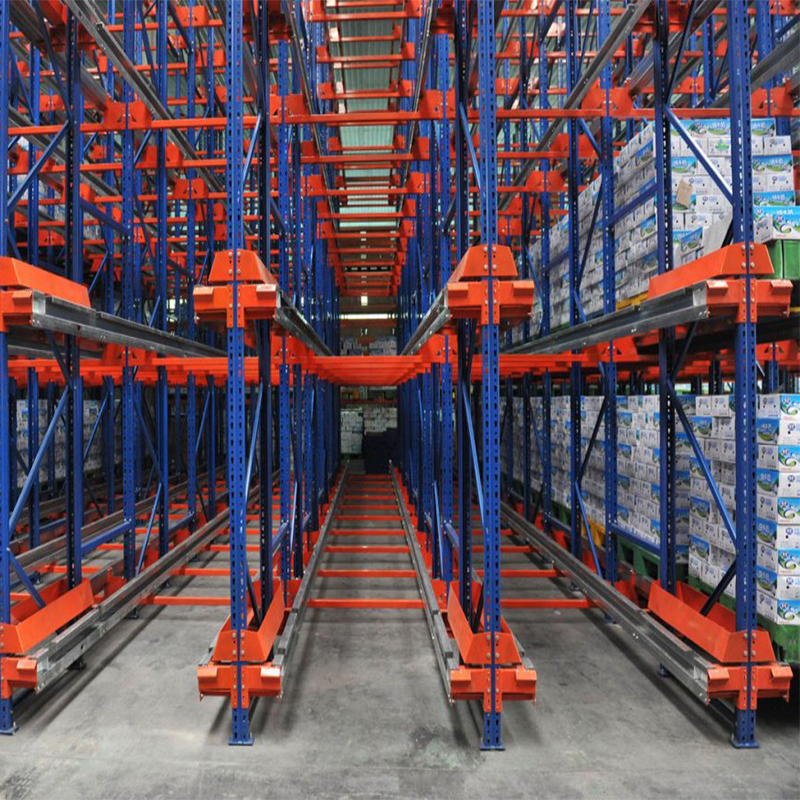
Tall racking systems block ambient light from spreading. This physical barrier creates a cavern effect. Narrow aisles turn into dark zones. When pedestrians walk through these poorly lit corridors while heavy machinery operates, accident risks multiply. Lack of overlapping light leaves dark patches on the floor. These shadows hide debris, spilled liquids, or misplaced pallets that can easily destabilize a forklift carrying a heavy load at elevation.
Cross-aisles introduce transition blindness. Moving from a dim narrow aisle directly into a bright staging zone forces the human eye to adjust rapidly. This sudden change causes temporary visual impairment. A forklift traveling at standard speeds covers significant ground completely blind during those few seconds. This endangers nearby workers and damages infrastructure. You have to balance the light levels between these zones to give the operator's eyes time to adjust naturally.
Upward glare presents a severe physiological hazard. Forklift operators constantly look up to retrieve heavy pallets from top-tier racks. High-glare, omnidirectional fixtures installed directly above the aisle force the operator to look straight into the light source. This exposure causes temporary flash blindness. It drastically increases the risk of misaligning the forks, dropping heavy loads, or striking the racking structure. You need fixtures that shield the diodes from direct line of sight.
Maintaining legacy HID fixtures at 40-foot heights introduces secondary safety risks. Older units generate massive heat, creating thermal hazards near top-tier inventory. Rapid lumen depreciation and frequent burnout rates force maintenance teams to deploy boom lifts regularly. Operating elevated work platforms in active, narrow aisles disrupts throughput. It requires locking out the aisle, tying off with fall protection harnesses, and introduces severe fall hazards to maintenance staff.
Warehouse Zone | Target Horizontal Foot-Candles | Target Vertical Foot-Candles | Primary Safety Concern |
|---|---|---|---|
Narrow Racking Aisles | 20 - 30 fc | 15 - 20 fc | Upward glare, vertical visibility |
Open Staging Areas | 30 - 40 fc | 10 - 15 fc | Uniformity, transition blindness |
Loading Docks | 40 - 50 fc | 20 - 25 fc | High-contrast shadows, trailer visibility |
Cross-Aisles | 25 - 35 fc | 15 fc | Intersection collisions, blind spots |
Evaluating high bay warehouse lighting requires understanding two primary form factors. You have round UFO fixtures and linear fixtures. Each serves a distinct geometric purpose. UFO fixtures work well in wide-open spaces, manufacturing floors, and loading docks. They spread light evenly in all directions. Linear fixtures are engineered specifically for long, narrow corridors.
UFO high bays fail in narrow racking aisles. They emit a circular light pattern. Placing them over an aisle means a massive percentage of the lumen output hits the top of the racks. It never reaches the floor. This wasted light creates harsh shadows below the top tier. Forklift operators driving down the aisle experience a scalloping effect. They drive through alternating pools of bright light and deep shadow. This causes severe eye fatigue and masks ground-level hazards.
Linear high bays hold a distinct optical advantage. They match the physical geometry of the aisle. These fixtures distribute light in a rectangular pattern. They push light forward and backward along the aisle path instead of spilling it sideways onto the rack tops. This maximizes optical efficiency. The rectangular distribution ensures continuous, overlapping light coverage. It completely eliminates the scalloping effect and provides uniform visibility from one end of the aisle to the other.
Installation efficiency favors linear form factors. Long, linear spaces benefit from continuous runs. Contractors can daisy-chain many linear fixtures together. This capability provides seamless illumination down exceptionally long aisles without the wiring complexity of running individual conduit drops to every single fixture. You get a cleaner ceiling deck, faster installation times, and a perfectly illuminated corridor.
Map the aisle dimensions to determine the required length of the continuous run.
Install the primary power drop at the head of the aisle.
Suspend the linear fixtures using aircraft cable or rigid pendants.
Connect the fixtures end-to-end using quick-connect wiring harnesses.
Test the dimming circuit across the entire daisy-chained run before securing the final mounts.
Optimizing LED lights for warehouse racks requires a strict focus on vertical illumination. Specific lens types on linear fixtures push light sideways onto the rack faces while driving it down to the floor. You must measure vertical foot-candles to evaluate these fixtures. If a worker cannot clearly see the rack face, they cannot safely engage a pallet. High vertical illumination ensures operators accurately judge depth and alignment at 40 feet in the air.
Uniform light distribution plays a massive role in hazard recognition. High-contrast zones force the human pupil to constantly dilate and constrict. A bright spot sitting immediately next to a dark spot causes severe eye fatigue over an eight-hour shift. This slows reaction times. Linear fixtures with overlapping beam patterns eliminate these contrast zones. They create a smooth, uniform visual environment. Operators stay alert and spot ground-level obstructions instantly.
Visual acuity relies heavily on the Color Rendering Index (CRI). A higher CRI, typically 80 or above, accurately reflects the true colors of objects. Color accuracy is a strict safety requirement in a warehouse. Workers must quickly identify color-coded safety warnings. They need to differentiate between similar wire jackets and read small text on faded shipping labels. High CRI linear LEDs directly reduce picking errors and prevent operational accidents caused by misidentified materials.
Consider the reality of reading a faded barcode on a shrink-wrapped pallet sitting on the fifth tier of a rack. Low-quality lighting reflects off the plastic wrap, creating a glare spot that washes out the barcode. The operator has to shift the forklift, lean out of the cage, and squint to verify the pick. High-quality linear fixtures with diffused lenses cut through that glare. The operator verifies the pick instantly from a safe, seated position.
Facility managers must evaluate specification sheets for industrial warehouse LED lighting by translating technical features into safety outcomes. Total lumen output matters far less than how efficiently you direct those lumens. Efficacy, measured in lumens per watt (lm/W), dictates the true performance of the fixture. A baseline requirement for 30-foot ceilings differs drastically from 50-foot ceilings. You need precise optical control, not just a massive flood of raw light.
Scaling for extreme heights demands specialized engineering. Standard fixtures fail to deliver adequate floor-level foot-candles when ceilings reach 40 to 50 feet. You must specify high-output 400W LED high bays in these scenarios. Deploying 400W fixtures requires strict attention to glare control. Without frosted lenses or deep-set diode configurations, these high-wattage units will blind operators. The engineering balance lies in driving intense light downward while shielding the light source from direct upward viewing angles.
Beam angles and aisle optics dictate the success of the installation. Symmetric lenses distribute light evenly in all directions. This works for open spaces but fails in aisles. Asymmetric lenses feature narrow beam angles like 30x100 degrees. Engineers design these specifically for racking aisles. The 30-degree spread keeps light off the top of the racks. The 100-degree spread pushes light far down the aisle path. This precise geometric control is the defining technical requirement for racked environments.
Industrial environments subject fixtures to harsh conditions. Durability ratings are non-negotiable. Ingress Protection (IP) ratings indicate how well a fixture seals out dust and moisture. An IP65 rating ensures airborne cardboard dust or humidity will not degrade internal components. IK ratings measure impact resistance. Fixtures must withstand potential mechanical impacts from errant forklift masts or shifting inventory. The housing must remain intact and the diodes protected during daily operations.
Ceiling Height | Recommended Beam Angle | Lens Type | Typical Wattage Required |
|---|---|---|---|
15 - 25 Feet | 60x120 Degrees | Frosted / Diffused | 100W - 150W |
25 - 35 Feet | 40x100 Degrees | Clear with Glare Shield | 150W - 250W |
35 - 50+ Feet | 30x100 Degrees | Deep-Set Asymmetric | 300W - 400W |
Retrofitting active warehouse spaces introduces significant practical challenges. Swapping old fixtures for new high ceiling warehouse lights on a strict 1-to-1 basis without a photometric analysis is a massive engineering mistake. Photometric software modeling maps the exact dimensions of the racks, the aisles, and the ceiling height. Lighting designers use .IES files to simulate the exact light distribution in the space. This digital simulation prevents under-lighting. It ensures optimal fixture spacing and guarantees the final installation meets all targeted foot-candle requirements before you deploy a single lift.
Integrating aisle lighting with open-area lighting requires strategic planning. You cannot have perfectly lit aisles that dump into dark cross-aisles. Blending linear aisle lights with UFOs or high-output fixtures in staging areas and loading docks ensures safe, uniform transitions. The photometric layout must account for these transition zones. You overlap the beam patterns slightly to prevent the temporary transition blindness that causes high-speed forklift collisions.
Mounting heights and suspension methods directly impact the longevity and performance of the system. You can suspend high ceiling warehouse lights via chain, aircraft cable, or rigid pendant mounts. Chain and cable allow for slight movement. This absorbs vibrations from heavy machinery and roof-mounted HVAC units. In facilities with massive airflow or high-velocity fans, rigid pendant mounting prevents the fixtures from swaying. Swaying fixtures create moving shadows on the floor. These moving shadows disorient operators and trigger motion sickness.
Integrating smart controls requires a safety-first approach. Aisle-specific motion sensors drastically reduce energy consumption. Choosing between Passive Infrared (PIR) and Microwave sensors matters. Microwave sensors can detect motion through some rack materials. They trigger lights before the forklift enters the aisle. To maintain safety, lights must never turn off completely while an aisle is occupied. Programming step-dimming maintains a baseline visibility. Lights drop to 20% output when empty and instantly ramp to 100% upon entry. This prevents the warehouse from looking like a hazardous, abandoned cavern.
Managing installation downtime is critical for 24/7 operations. Phased retrofitting minimizes disruption. Contractors block off one or two aisles at a time. They complete the teardown and installation of the new linear fixtures while the rest of the facility operates normally. Coordinating these closures with the inventory management team ensures you upgrade high-velocity picking zones during the lowest traffic shifts. This protects both the workers and the facility's daily throughput metrics.
Connecting technical safety improvements to financial outcomes reveals the true value of modern warehouse lighting solutions. Meeting the recommended Illuminating Engineering Society (IES) standards for warehouse illumination directly protects the company from OSHA compliance fines. Proper lighting mitigates liability. If a forklift collision or pedestrian accident occurs, a documented photometric layout proving the facility met all lighting safety standards serves as a critical defense against negligence claims and workers' compensation lawsuits.
Energy consumption and maintenance reductions provide immediate financial relief. Moving from 400W or 1000W metal halide fixtures to 150W or 300W linear LEDs cuts lighting energy loads drastically. Beyond the meter, eliminating ballast replacements and ending rapid lumen depreciation removes a massive maintenance burden. Facilities no longer need to rent lift equipment or pull maintenance crews off critical machinery repair just to change dead bulbs at 40 feet in the air.
Productivity gains represent the most significant operational return. High-quality, high-CRI lighting correlates directly with faster pick times. Workers instantly read labels and verify barcodes without squinting or repositioning their scanners. Throughput increases. Eliminating harsh glare and high-contrast shadows reduces employee eye strain and fatigue. Less fatigue leads to fewer errors, lower absenteeism, and a more alert workforce capable of maintaining high safety standards throughout a long shift.
For high ceiling warehouses with racking, linear high bay LEDs serve as critical safety infrastructure. They are not just an energy-saving measure. The unique geometry of narrow aisles demands specialized optical control. You must push light down to the floor and across rack faces while eliminating hazardous shadows and blinding glare. Relying on outdated HID technology or improperly specified round fixtures actively endangers operators and degrades facility throughput.
When shortlisting vendors, prioritize manufacturers and suppliers who offer custom photometric layouts and specific aisle-optic lenses. High-efficacy fixtures engineered for industrial environments will always outperform generic, off-the-shelf UFO lights that waste lumens on rack tops. The right lighting system integrates seamlessly with the physical layout of the storage system.
Take the following actions to upgrade your facility safely and effectively:
Request a comprehensive facility lighting audit to measure current floor and vertical foot-candles.
Secure a professional photometric lighting plan based on your exact racking dimensions and ceiling heights.
Specify asymmetric lenses for all narrow aisle applications to maximize optical control.
Program smart sensors with step-dimming rather than full on/off settings to maintain baseline visibility.
A: The optimal choice is linear high bay LEDs equipped with asymmetric lenses. These fixtures provide a rectangular light distribution that matches the aisle geometry, pushing light down to the floor and across the rack faces without wasting lumens on top of the storage system.
A: Lumen requirements depend heavily on ceiling height, rack layout, and target foot-candles. A flat lumen-per-square-foot rule fails in racked environments. You must use a photometric layout software simulation to calculate exact lumen output and fixture spacing for safe illumination.
A: Specify 400W LED high bays in facilities with extreme ceiling heights of 40 to 50+ feet. At these elevations, high-wattage, high-lumen output is necessary to drive adequate light down to the floor level to meet safety standards.
A: UFO high bays are optimal for open areas, cross-aisles, or loading docks. However, they should not be used inside narrow racked aisles, as their circular beam pattern wastes light on rack tops and creates hazardous shadows on the floor.
A: Vertical illumination refers to the amount of light striking an upright surface, measured in vertical foot-candles. It is critical in warehouses because it allows forklift operators to read labels, identify pallet conditions, and safely engage loads at high elevations.
A: Linear LEDs reduce upward glare, preventing temporary flash blindness for operators looking up. They also eliminate dark intersections, provide seamless transition lighting between zones, and improve the visual clarity of safety markings and ground-level hazards.
A: Mounting heights typically range from 15 to 45+ feet, depending on the facility. The specific mounting height dictates the required fixture wattage and the necessary beam angle to ensure light properly reaches the floor.


