

Views: 0 Author: Site Editor Publish Time: 2026-08-19 Origin: Site


Modern supply chains face a critical breaking point. Relentless labor shortages and soaring throughput demands now force facilities to abandon manual material handling. To survive, you must transition to automated workflows. Deploying automated guided vehicles in warehouse environments offers a powerful solution. However, this investment represents more than just buying robots. It demands a strategic integration of hardware, software, and your existing facility infrastructure.
Will robots instantly solve all your logistical bottlenecks? Not without rigorous planning. Successful deployment requires strict evaluation of specific use cases. You must uncover hidden integration costs before they derail your budget. You also need to establish realistic ROI timelines based on actual facility metrics. In this guide, you will learn how to identify the best applications for automation. We will explore navigation technologies, software integration, and actionable strategies to ensure your rollout succeeds.
Many operators mistakenly judge material handling equipment strictly by top speed. Manual human-driven forklifts can certainly move fast. However, humans take breaks. They experience fatigue. Shift changes cause operations to pause. In contrast, automated systems prioritize steady predictability. Predictable, continuous operation heavily outperforms the variable speeds of manual material handling over a full shift. A fleet of robots maintains a constant baseline of productivity. You can accurately forecast daily throughput.
Warehouse safety remains a massive operational liability. Manual forklift traffic frequently leads to rack damage and product shrinkage. More importantly, it causes OSHA-recordable safety incidents. Automated guided vehicles strictly adhere to programmed safety zones. They utilize redundant laser scanners and PLd-rated safety logic to detect obstacles. Deploying them significantly drops facility damage rates. Fewer human-driven vehicles mean fewer unpredictable collisions. You protect your human workforce while securing your inventory.
Finding reliable warehouse labor grows harder every year. Paying humans to drive pallets across a massive facility wastes valuable payroll. You must shift human capital away from low-value horizontal transport. Instead, assign them to high-value tasks. Humans excel at complex order fulfillment, quality control, and exception handling. Automation handles the repetitive travel. Your staff handles the cognitive tasks. This reallocation dramatically increases your overall revenue per employee.
Robotics cannot fix fundamentally broken warehouse processes. They amplify what already works. You must assign them to the correct workflows to see real financial returns. Below are the specific applications where automation truly excels.
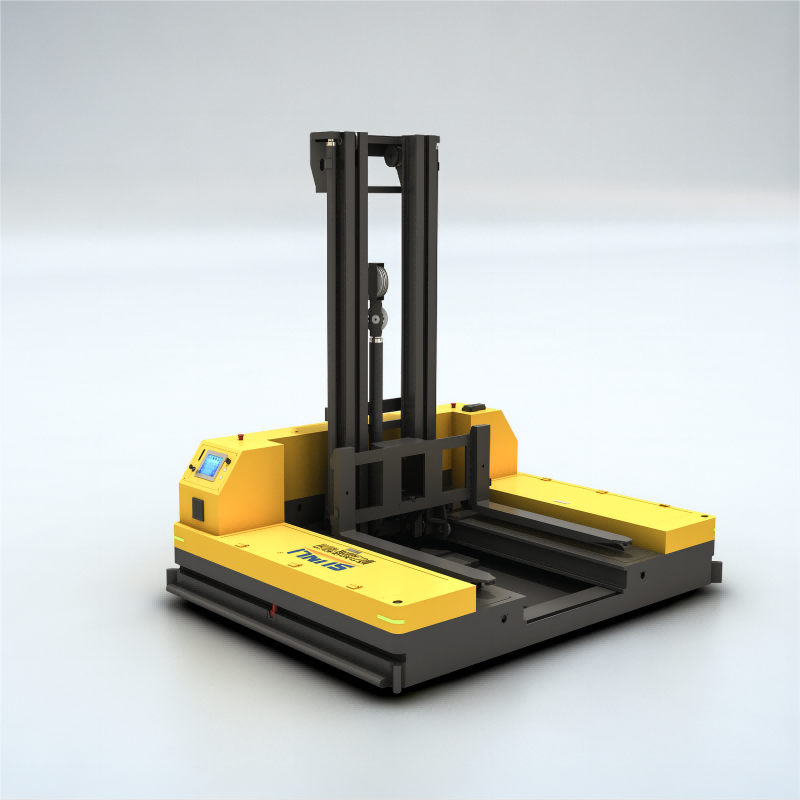
Older facilities often rely on infrastructure-dependent navigation. We evaluate magnetic tape and wire-guided systems for strict, unchanging routes. These systems follow physical lines installed in the floor. They offer extreme reliability. However, they lack flexibility. If your warehouse layout changes frequently, tape systems become a severe bottleneck. You must physically rip up the tape to alter a route.
Modern high-density storage frequently uses floor markers. When deploying a QR Code AGV, you must assess specific floor condition requirements. The cameras on the underside of the vehicles read these stickers to determine exact coordinates. You must also calculate payload limits carefully. Heavy loads can damage delicate floor stickers over time. Routine floor cleaning is strictly required to keep the codes readable.
Natural navigation utilizes LiDAR (SLAM) to map the facility. We weigh the flexibility of infrastructure-free routing against potential mapping disruptions. SLAM needs static landmarks like walls and columns to orient itself. Highly dynamic environments pose a problem. If you constantly stack pallets in different locations, the vehicle might lose its map. Best practices suggest combining SLAM with physical reflectors in highly variable staging areas.
Hardware specifications mean nothing if your building cannot support the robots. You must audit floor flatness before purchasing anything. We check FF/FL (Floor Flatness and Floor Levelness) ratings strictly. Uneven floors cause mast sway, which triggers safety stops. You must also measure aisle width clearances. Transition zones like ramps or automated fire doors often confuse sensors. Audit these environmental constraints thoroughly prior to vehicle selection.
Comparison Chart: AGV Navigation Technologies
| Navigation Type | Flexibility | Infrastructure Needed | Ideal Use Case |
|---|---|---|---|
| Magnetic Tape / Wire | Low | High (Floor embedding) | Fixed manufacturing lines |
| QR Code / Fiducial | Medium | Medium (Floor stickers) | Goods-to-Person grids |
| LiDAR (SLAM) | High | None to Low | Dynamic sorting & cross-docking |
Many operations fail to grasp the software complexity. The robots do not think for themselves. They rely on a structured hierarchy of commands. Orders flow from the overarching ERP system down to the WMS. The WMS decides what inventory moves. It sends this command to the Warehouse Execution System (WES). Finally, the WES talks to the AGV Fleet Manager. The Fleet Manager chooses the nearest available robot. If this software handshake breaks, the entire fleet stops moving.
Routing multiple vehicles in confined aisles creates traffic jams. Advanced logic is required for managing intersections and prioritizing tasks. If two robots meet in a narrow aisle, the software must resolve the conflict immediately. Deadlock prevention algorithms calculate alternate routes. They force lower-priority vehicles to wait in designated passing zones. Proper fleet management ensures high-priority outbound pallets bypass standard replenishment traffic.
Robots need a constant wireless connection to the server. You must evaluate your network infrastructure before deployment. Comparing Wi-Fi to private 5G requirements is a crucial step. Standard warehouse Wi-Fi often suffers from dead zones near dense metal racking. Dropped packets cause operational micro-stops. A vehicle will halt simply because it lost server contact for three seconds. Upgrading to a private 5G network prevents packet loss and guarantees seamless roaming.
Robots require maintenance just like standard forklifts. You must plan for preventative maintenance schedules. Ignoring these schedules leads to catastrophic hardware failures. Furthermore, you need proper battery charging infrastructure. Fast-charging lithium-ion stations require significant electrical panel upgrades. You must also build designated service bays. Taking a robot offline in the middle of a busy aisle blocks traffic. You need dedicated physical space to repair them.
Never automate the entire warehouse at once. We strongly advocate for phased rollouts. Starting with a single, highly predictable workflow serves as a Proof of Concept (PoC). This prevents operational paralysis. For example, automate the trash removal route first. Let the staff get used to the machines. Once the PoC stabilizes, you scale up to complex put-away processes. Gradual rollouts keep your daily operations running smoothly.
Your workforce will interact with these machines daily. You must manage this transition properly. Training floor staff on right-of-way protocols is non-negotiable. Humans must understand safety scanner limitations. A robot traveling at full speed needs braking distance. Employees cannot step blindly into automated aisles. You must also teach them emergency override procedures. If a robot blocks an evacuation route, your staff needs to know how to move it manually.
You face a major purchasing decision early on. Do you buy direct from a manufacturer, or use a system integrator? Deciding between direct-to-OEM purchases and agnostic system integrators depends on existing warehouse complexity. If you only need five robots for a simple loop, go direct to the OEM. If you need conveyors, robots, and automated storage talking together, hire an integrator. Integrators ensure all disparate sub-systems communicate flawlessly.
Hardware eventually breaks. Your contract protects your uptime. Evaluating guaranteed uptime percentages is a mandatory procurement step. Look closely at the mean time to repair (MTTR) promised by the vendor. Check their local spare parts availability. If a proprietary drive motor fails, you cannot wait three weeks for international shipping. Demand strict SLAs that penalize the vendor financially if they miss repair windows.
Do not invite vendors to pitch without doing your homework. Structuring a data-driven site audit is your immediate next step. Map your current workflows clearly. Measure your aisle constraints and transition zones accurately. Build an accurate baseline of your current manual throughput. When you issue vendor RFPs, provide them with this hard data. Vendors design better systems when they receive accurate facility limitations upfront.
Automation forces you to rethink your entire supply chain flow. Automated platforms act as a systemic upgrade, not a plug-and-play appliance. You cannot simply drop robots onto a messy warehouse floor and expect instant efficiency. They demand clean data, smooth floors, and stable software networks.
To succeed, focus heavily on preparation. Prioritize software compatibility and facility readiness over raw hardware specifications. Map your processes manually first. Fix broken workflows before you automate them. Train your staff early, and treat the integration as a collaborative IT and operations project. By doing so, you will build a resilient, scalable facility ready to handle future market demands.
A: The typical ROI window spans 18 to 36 months. This timeline depends heavily on your shift structures and local labor rates. Multi-shift operations see much faster payback because the robots work 24/7 without overtime pay. Facilities running only a single day shift will naturally experience a longer payback period.
A: Yes, they operate very safely around humans. They adhere strictly to PLd/SIL2 safety standards. They use dual-zone laser scanners to detect movement. If a human enters the warning zone, the vehicle slows down. If a person enters the critical stop zone, the vehicle stops entirely. However, mixing human and robot traffic lowers overall system efficiency.
A: Localized safety protocols remain active even without Wi-Fi. The vehicles will stop safely and avoid collisions using onboard sensors. However, fleet management communication fails. The robots cannot receive new destination commands or traffic routing updates. Tasks simply queue in the server until you restore the network connection.


