

Views: 0 Author: Site Editor Publish Time: 2026-09-19 Origin: Site


Deploying under-engineered storage infrastructure in high-throughput environments introduces severe operational and financial risks. Rack collapses lead to catastrophic inventory loss, massive safety liabilities, and extended facility downtime. Facility managers constantly balance the need to maximize vertical storage density with strict load-bearing limitations. You must also account for seismic compliance, concrete slab capacities, and daily operational workflow requirements. Achieving this balance requires a deep understanding of structural mechanics. You rely on proven engineering principles that allow modern systems to safely manage multi-ton loads without structural fatigue. This guide serves as a technical blueprint for evaluating and procuring the correct racking architecture. We will explore exactly how industrial shelving pallet racks support extreme weights while maintaining structural integrity. By understanding the physics of load distribution and material specifications, you can build a safer, more efficient distribution center.
Load transfer physics dictate how heavy storage systems function on the warehouse floor. Horizontal beams absorb the massive downward force of loaded pallets. They immediately transfer this weight as shear force to the vertical upright frames through engineered end connectors. The frames then channel this kinetic energy down the columns, dispersing it through steel base plates and into the concrete slab. If any component in this load path fails, the entire structure becomes compromised.
Engineered connectors play a vital role in this energy transfer. Teardrop, bolted, and slotted connectors secure the beams tightly against the upright columns. Safety pins and locking clips prevent beam dislodgement during dynamic load events, such as accidental upward forklift impacts. When a forklift operator misjudges a lift and strikes the bottom of a beam, the safety clip ensures the beam does not pop out of the upright frame, which would cause the pallets above to crash down.
Facility managers often prefer universal teardrop designs over proprietary slot designs. Teardrop profiles allow seamless facility expansions and component replacements across different facility locations. You can source replacement beams from multiple vendors if they utilize a standard teardrop punch. Bracing patterns within the upright frames ensure lateral stability. Diagonal and horizontal struts are welded or bolted between the vertical columns. These struts prevent the frames from twisting, buckling, or swaying under extreme capacities. The density of this bracing directly impacts the overall axial load capacity of the upright.
Roll-formed steel is manufactured through a cold-rolled process where flat steel coils are bent into shape at room temperature. It serves as the standard for general heavy storage. It is highly configurable, easy to adjust, and highly efficient for most distribution centers handling standard consumer goods. The teardrop punching allows warehouse teams to adjust beam levels quickly without specialized tools.
Structural steel utilizes a hot-rolled manufacturing process. Molten steel is extruded into solid C-channel shapes. You need structural steel for extreme heavy-duty applications. Environments handling heavy machinery, dense liquid storage, or fast-paced cold storage require this robust material. Structural steel offers superior yield strength and exceptional impact resistance. It withstands severe forklift collisions far better than roll-formed alternatives. When evaluating long-term durability in high-traffic operations, structural steel provides a much higher threshold for physical abuse. The bolted connections in structural systems also eliminate the risk of teardrop rivets shearing off under massive weight loads.
| Material Type | Manufacturing Process | Connection Method | Impact Resistance | Ideal Application |
|---|---|---|---|---|
| Roll-Formed Steel | Cold-rolled from flat coils | Teardrop rivets / clips | Moderate | Standard distribution, 3PLs, retail warehousing |
| Structural Steel | Hot-rolled C-channel | Heavy-duty grade 5 bolts | Extremely High | Cold storage, beverage distribution, heavy manufacturing |
Standard upright depths typically measure 42 or 48 inches. Beam lengths generally span 96, 108, or 144 inches. These dimensions align perfectly with standard 48x40-inch GMA pallet sizes. A 42-inch deep frame allows a 48-inch deep pallet to overhang exactly three inches on the front and back. This specific overhang ensures the heavy wooden pallet stringers rest directly on the load-bearing beams rather than relying on the weaker pallet deck boards. Proper sizing prevents pallet failure and uneven weight distribution.
You optimize the storage cube by calculating the clear height of your building, factoring in sprinkler clearances and lighting fixtures. Planning precise aisle widths is equally important for operational flow. Very Narrow Aisle (VNA) setups maximize density but require specialized wire-guided lift trucks that operate in aisles as narrow as 66 inches. Reach trucks typically require 9 to 10 feet of operating clearance. Standard counter-balance forklift aisles require 12 to 14 feet of clearance but allow faster maneuvering and utilize standard material handling equipment.
Static loads refer to stationary pallets resting quietly on the beams. Dynamic loads involve the active, shifting forces applied during loading and unloading. Your heavy duty shelving racks must handle both safely. You must calculate the maximum uniform distributed load (UDL) for each level. UDL assumes the weight is spread evenly across the entire length of the beam.
Point loading drastically reduces overall capacity. If you place a heavy engine block in the exact center of a beam, the stress concentrates in one spot rather than distributing evenly. This can cause immediate structural failure even if the total weight is below the beam's rated capacity. The industry-standard beam deflection limit is L/180. This means a 96-inch beam can safely deflect just over half an inch (96 divided by 180). Visible bowing beyond this limit indicates a critical safety failure.
Follow these steps to calculate your required UDL capacity per level:
Various decking options support non-standard pallets and loose cartons. Wire mesh, solid steel, heavy-duty resin, and timber are common choices. These materials help convert standard racks into high-capacity industrial shelving. Wire mesh decks feature welded support channels that rest on the beam steps, providing a rigid surface that prevents small items from falling through while supporting the bottom of weak pallets.
Hybrid configurations are highly effective for modern fulfillment operations. You can convert lower levels for small-item order picking and hand-stacking. Meanwhile, you maintain heavy palletized storage on the upper reserve levels. Fire safety compliance is critical when selecting decking. Solid decking blocks water penetration from overhead sprinkler systems, which violates many local codes. Porous materials like wire mesh ensure compliance with National Fire Protection Association (NFPA) guidelines by allowing water to flow through to lower levels and maintaining open flue spaces.
Selective racking is the most common industrial pallet rack system globally. It offers 100% selectivity, meaning every single pallet is directly accessible from the aisle without moving other inventory. The trade-off is lower overall storage density compared to deep-lane systems, as you need numerous aisles to access the racks. You can maximize heavy load capacity using structural reinforcements. Double-deep configurations allow you to store pallets two-deep, reducing aisle count. Reinforced base plates and heavier gauge steel significantly increase weight limits in these selective setups.
Drive-In racks provide Last-In, First-Out (LIFO) storage. They are ideal for heavy, uniform products with low rotation requirements. Standard horizontal beams are replaced by engineered support rails running the depth of the system. Forklifts drive directly into the storage bays to deposit loads. This eliminates aisles entirely, creating massive density. However, operators must drive carefully to avoid striking the internal uprights.
Push-Back systems utilize nested carts on inclined steel rails. Forklifts push existing pallets backward up the incline to load new ones. When a front pallet is removed, gravity rolls the next pallet forward smoothly. You must carefully monitor specific weight limitations here. The moving components, wheels, and rails require regular maintenance to function safely under heavy loads. Debris on the tracks can cause thousands of pounds of inventory to jam, requiring dangerous manual intervention to clear.
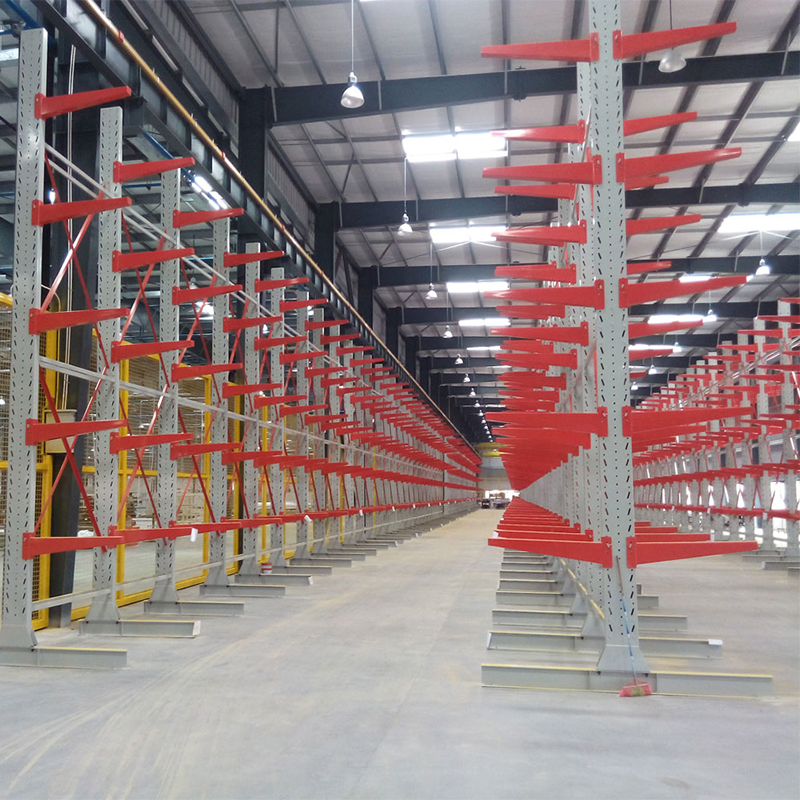
Not all inventory fits neatly on a wooden GMA pallet. Cantilever systems are the required solution for heavy, long, or awkwardly shaped materials. Lumber, steel pipes, sheet metal, and large furniture require this specialized architecture. The load distribution mechanics rely on a robust center column anchored heavily to the floor.
Heavy-duty load-bearing arms extend outward from the center column to support the materials safely. Because there are no front vertical columns to restrict access, forklifts can easily load items of varying lengths. The bases of cantilever racks act as stabilizing counterweights to prevent the structure from tipping forward under heavy loads. The arms can be adjusted vertically to accommodate different bundle sizes, making it a highly versatile solution for building materials and steel service centers.
A strict regulatory landscape governs all industrial storage solutions. OSHA's General Duty Clause mandates that employers provide a safe working environment free from recognized hazards. Rack Manufacturers Institute (RMI) guidelines provide the engineering baseline for achieving this safety. You must display visible load capacity plaques on all systems. These plaques must clearly state the maximum permissible unit load and the maximum uniformly distributed load per level. Exceeding these stated limits exposes facility managers to severe legal liabilities and catastrophic physical risks.
Strict safety protocols during installation protect warehouse teams and inventory. Racks must be erected perfectly plumb and level. The industry standard requires columns to be plumb within a half-inch per ten feet of height. Installers use steel shims beneath the base plates to correct uneven concrete floors. Installers must execute precise torqueing of all anchor bolts according to manufacturer specifications. This guarantees the structural integrity of the entire framework.
Follow this standard sequence for safe rack assembly:
Geographic seismic zones dictate specific rack engineering requirements. High-risk zones require heavier base plates, larger diameter anchoring bolts, and specialized structural designs. Engineers calculate the site-specific spectral response acceleration to determine how the ground will move during an earthquake. The racking must be designed to flex safely without dropping heavy inventory or collapsing entirely.
You must critically evaluate the warehouse concrete slab before installation. Check the slab thickness and the compressive strength (PSI rating). A standard 6-inch slab might support standard loads, but extreme heavy storage may require an 8-inch reinforced concrete slab with a 4000 PSI rating. Heavy racks are completely useless if the concrete floor fails, cracks, or spalls beneath the base plates due to punching shear forces.
Mandatory rack inspections prevent catastrophic failures. Inspectors must identify deflected beams, sheared floor anchors, and dented upright columns. Implement a strict monthly visual inspection schedule for warehouse staff, supplemented by an annual structural audit by a qualified professional. Look for flaking paint, which often indicates the steel beneath has bent and yielded past its elastic limit.
| Damage Indicator | Location | Severity Level | Required Action |
|---|---|---|---|
| Deflection exceeding L/180 | Horizontal Beams | Critical | Unload immediately. Replace beam. Do not attempt to bend back. |
| Creased or dented steel | Upright Columns (bottom 48") | High | Unload affected bays. Install engineered repair kit or replace frame. |
| Missing safety pins | Beam Connectors | Moderate | Replace pins immediately before allowing forklift traffic in the aisle. |
| Loose or sheared wedge anchors | Base Plates | High | Re-torque loose anchors. Drill new holes for sheared anchors. |
Installing protective accessories offers a massive return on investment. Column protectors shield the vulnerable base of the uprights from direct forklift tines. End-of-aisle guards protect the entire depth of the rack row where traffic turns sharply. These small steel additions absorb impact energy and significantly extend the lifespan of your infrastructure.
You must differentiate between a standard equipment distributor and a certified pallet rack manufacturer. A true manufacturer employs in-house structural engineers who design systems specifically for your load profiles. A reputable warehouse shelving supplier must provide mandatory documentation before you sign a contract. Always request stamped engineering drawings and site-specific seismic calculations. Ensure they provide official RMI certification for their products, proving the materials have passed rigorous physical testing.
Move beyond upfront material costs when selecting a partner. Evaluate their manufacturing lead times, freight logistics, and professional installation services. Managing multiple contractors for freight, unloading, and assembly often leads to delays and hidden costs. A supplier that handles turnkey installation reduces your operational headache and ensures the system is built exactly to the engineered drawings.
Review the warranty terms carefully. Confirm the long-term availability of replacement parts, especially if you are using proprietary connectors rather than universal teardrop designs. The best suppliers conduct future safety audits and capacity re-evaluations as your operations grow and your inventory weights change over the years.
A: A standard system typically holds between 2,500 and 5,000 pounds per pallet position. Maximum capacity depends entirely on beam length, upright density, and vertical beam spacing. Structural steel systems can be engineered to hold significantly more weight than roll-formed alternatives. Always consult the manufacturer's load plaque for exact limits.
A: Standard upright frames usually measure 42 or 48 inches in depth. Common beam lengths are 96, 108, and 144 inches. These dimensions are specifically designed to accommodate standard 48x40-inch GMA pallets without dangerous overhang or improper weight distribution across the beams.
A: Roll-formed steel is suitable for standard warehouse environments and general palletized goods. You need structural steel if your facility handles extreme weights, operates heavy machinery, or functions as a cold storage environment where forklift impacts are frequent and severe.
A: The industry standard limit for beam deflection is L/180. This means the beam length divided by 180 equals the maximum safe bowing distance. For a 96-inch beam, the acceptable deflection is roughly 0.53 inches under a uniform distributed load.
A: Facilities should conduct visual inspections weekly to catch obvious forklift damage. Comprehensive structural audits by a qualified professional should occur at least annually. High-traffic facilities or those in seismic zones require even more frequent professional evaluations to ensure safety.
A: High seismic zones require heavily reinforced racking systems. Engineers must specify thicker base plates, larger anchor bolts, and tighter bracing patterns. The system must be designed to flex safely during an earthquake without collapsing or dropping heavy inventory onto the floor.


