

Views: 0 Author: Site Editor Publish Time: 2026-08-26 Origin: Site


Operating a high-capacity storage facility carries incredibly high stakes. A single localized failure can disrupt global supply chains overnight. Furthermore, these catastrophic events trigger severe regulatory fines. They also seriously threaten the lives of your personnel.
Warehouse managers often rely on reactive repairs. They wait until damage occurs rather than preventing it. Shifting your focus changes this dangerous operational dynamic completely. You must move toward proactive structural integrity. Compliance management must become a daily habit. You protect your people and your inventory simultaneously.
This guide provides an evidence-based, operational framework. You will learn how to critically evaluate your current safety protocols. We will show you how to upgrade infrastructure strategically. You can mitigate material handling risks before they escalate. Read on to build a truly resilient storage environment.
Inconsistent damage reporting creates massive business problems. It leads to compounding structural fatigue over time. These hidden weaknesses eventually create immense compliance liabilities for your company.
You must evaluate your current practices against strict criteria. Measure your inspection frequency accurately. Check your documentation accuracy regularly. Adherence to regulatory standards matters deeply. The OSHA General Duty Clause provides excellent baseline metrics. SEMA guidelines offer rigorous international standards.
Implement a clear strategy to standardize these checks. Use a tiered approach to capture every hazard.
Mitigate risks using standardized damage categorization. A traffic light system works best. Green means the structure remains fully safe. Amber requires monitor scheduling or minor repairs. Red demands immediate offloading of all inventory. This prioritizes maintenance budgets efficiently. You avoid shutting down operations unnecessarily.
Best Practices: Digitize your inspection checklists. Tablets allow staff to upload photos of bent steel instantly. This creates an unalterable audit trail.
Common Mistakes: Do not let floor managers skip Level 2 audits. Pencil-whipping safety logs creates a false sense of security. It destroys your liability defense entirely.
| Risk Zone (Color) | Damage Description | Required Action Steps | Resolution Timeline |
|---|---|---|---|
| Green (Acceptable) | Negligible dents or paint scuffs. | Log the location. Continue normal use. | Review at next scheduled audit. |
| Amber (Hazardous) | Minor deflection exceeding SEMA limits. | Do not load further. Monitor closely. | Repair or replace within 4 weeks. |
| Red (Critical) | Severe buckling or sheared safety pins. | Unload the entire bay immediately. Isolate area. | Immediate replacement required. |
You must upgrade your load-bearing surfaces carefully. They need to match modern operational demands perfectly. Traditional solutions often fail under intense industrial pressure.
Why does this matter so much? Traditional wood degrades quickly under heavy point-loading. Wood splinters and rots in humid environments. Light wire mesh often bends under concentrated weight. These aging materials create hidden failure risks across your facility.
Evaluating high-capacity surfaces requires looking at performance outcomes. Better materials deliver superior weight distribution. You eliminate localized warping completely. Strong metal resists environmental factors effectively. It withstands moisture and extreme warehouse temperature shifts.
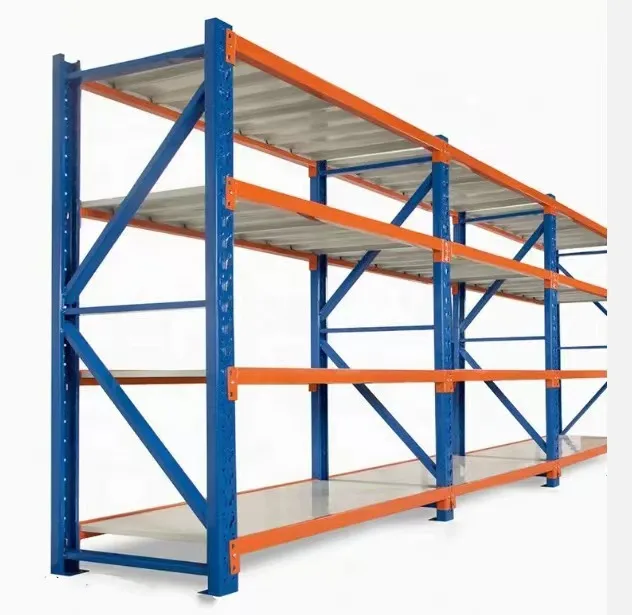
Upgrading to Steel Deck Pallet Racking solves many of these issues instantly. It handles uneven loads effortlessly.
Safety and compliance improve drastically. Non-combustible materials support stricter warehouse fire codes. Solid wood blocks water flow during emergencies. Properly perforated metal improves overhead sprinkler penetration significantly. This aligns seamlessly with National Fire Protection Association (NFPA) requirements.
Consider your return on investment logically. Higher upfront capital expenditure occurs initially. However, near-zero maintenance requirements offset this rapidly. You gain an extended lifecycle. You also often secure reduced insurance premiums.
Apply simple shortlisting logic. Audit your current inventory weights today. Target specific zones handling heavy loads. Specify stronger surfaces for irregularly shaped inventory.
Best Practices: Always match the deck capacity to the beam capacity. A strong beam fails if the surface collapses first.
Common Mistakes: Never place undersized pallets on wire mesh. The feet will punch through the gaps. This creates an immediate tipping hazard.
Decking Material Comparison Overview
| Feature Category | Solid Wood Panels | Light Wire Mesh | Heavy-Duty Steel Decking |
|---|---|---|---|
| Point-Load Resistance | Low (Prone to cracking) | Medium (Prone to deflection) | High (Maintains structural shape) |
| Fire Safety Code Compliance | Poor (Combustible) | Excellent (High water flow) | Excellent (Non-combustible) |
| Environmental Durability | Low (Absorbs moisture/rot) | Medium (Can rust if scratched) | High (Galvanized protection) |
| Maintenance Frequency | High (Frequent replacement) | Moderate (Occasional flattening) | Low (Install and forget) |
Forklift impacts account for most upright deformations. Material Handling Equipment (MHE) collisions threaten structural stability constantly. You must isolate your infrastructure from moving vehicles.
Deploy a layered solution approach. Isolate different hazard zones using specific physical barriers.
Evaluate these systems using strict dimensions. Compare material yield strength carefully. Polymer systems flex and absorb shock well. They bounce back into shape. Rigid steel deflects heavy impacts aggressively. Steel takes the hit but might deform permanently.
Ease of installation matters greatly. Space constraints play a crucial role too. Ensure guards never narrow your operational aisle widths dangerously. Tight aisles increase accident rates significantly.
Acknowledge implementation realities early. Guards protect the frame itself. They do not protect the moving equipment. Floor anchors transfer massive collision energy downwards. Ensure your concrete slabs can handle this sudden impact transfer. Otherwise, you risk cracking the warehouse floor severely. Spalled concrete requires incredibly expensive repairs.
Best Practices: Inspect floor anchors monthly. Vibrations from nearby machinery loosen wedge anchors over time.
Common Mistakes: Do not bolt upright protectors directly to the column. If the protector gets hit, it transfers the shock directly into the frame. Bolt them entirely to the floor instead.
Creeping overload happens silently across many facilities. Unauthorized weight adjustments slowly compromise original structural safety factors. A bay designed for two tons slowly absorbs three tons.
Establish strict operational criteria. You must govern how teams load every single bay.
Make load plaques highly visible. Display vendor-certified Safe Working Load (SWL) signs clearly. Mount them at eye level on every single aisle. These plaques serve as legal documents during safety audits.
Enforce strict pallet standardization. Pallet quality must match specific configurations exactly. Cheap, broken pallets cause dangerous beam-spread. They also trigger localized surface failures quickly. Remove damaged wooden pallets from circulation immediately.
Control weight distribution meticulously. Enforce the "heaviest items at the bottom" rule strictly. This maintains a predictably low center of gravity. A low center of gravity resists seismic events effectively. It also stabilizes the frame against accidental forklift nudges.
Trustworthiness is critical when modifying structures. Never allow internal warehouse teams to alter beam heights independently. Always consult the original equipment manufacturer (OEM) first. Alternatively, hire a certified structural engineer. Adjusting beam elevations fundamentally alters overall limits. Increasing the vertical distance between beams reduces column capacity instantly. A safe frame becomes incredibly dangerous without professional recalculations.
Integrating these strict loading protocols alongside comprehensive warehouse rack safety systems ensures long-term operational stability. It creates a predictable, highly controlled environment.
Best Practices: Color-code your pallets based on weight classifications. Visual cues help drivers make faster, safer loading decisions.
Common Mistakes: Do not assume all beams support the same weight. A 10-foot beam holds significantly less than an 8-foot beam of identical thickness.
Brilliant engineering solutions fail easily. Reckless operator behavior ruins the best infrastructure. You cannot engineer your way out of a bad culture.
Define clear success criteria. You need a measurable reduction in near-misses. Unreported impacts must drop to zero. Drivers must respect the equipment implicitly.
Build a robust implementation framework. Start with human psychology.
Establish a genuine "no-blame" reporting culture. Accidental impacts happen in busy environments. However, unreported damage creates massive legal liability. A hidden dent is far worse than a reported mistake. If drivers fear losing their jobs, they hide accidents. The dent weakens the upright silently. Days later, the entire bay collapses.
Require specialized spatial awareness training. Focus specifically on tight interactions. Teach proper mast clearance heights thoroughly. Practice safe turning radii extensively. Use empty aisles for training simulations. Drivers must understand exactly how their chassis swings during reversing maneuvers.
Implement advanced telematics on all forklifts. These smart systems log sudden impacts instantly. You can pair impact data seamlessly across specific aisles. You can track this data across different operational shifts. This pinpoints exact training needs rapidly. It removes all guesswork from incident investigations.
Best Practices: Reward teams for consecutive days without safety incidents. Positive reinforcement builds stronger compliance habits than punishment.
Common Mistakes: Ignoring minor nudges sets a terrible precedent. If management ignores a small scrape, drivers assume larger impacts are also acceptable.
Transitioning from reactive maintenance builds proactive resilience. You secure your facility against catastrophic failures effectively. Waiting for a collapse costs far more than preventing one.
True protection requires a holistic approach. It combines robust infrastructure, solid physical barriers, and rigorous inspection cadences. Upgrading load surfaces eliminates point-loading risks entirely. Guarding your uprights deflects inevitable vehicle collisions.
Take immediate action today. Conduct a documented baseline audit of all high-traffic aisles. Cross-reference your current decking materials against actual stored load weights. Replace inadequate surfaces immediately to prevent sudden material fatigue. Protect your people, secure your inventory, and streamline your operations confidently.
A: Industry best practices recommend an independent, professional rack inspection at least once every 12 months. Standards like SEMA support this annual requirement strongly. However, high-traffic facilities should conduct internal visual inspections daily or weekly to catch obvious hazards early.
A: Minor deflections can sometimes be repaired. Certified technicians install engineered rack repair kits safely. However, if the damage compromises structural geometry entirely, you must unload it. It must be replaced immediately. Never weld or "hammer out" damaged rack components yourself.
A: Yes. Unlike solid wood decking, corrugated or perforated steel decking is completely non-combustible. Properly designed steel decking allows better water flow-through from overhead sprinkler systems. This aligns perfectly with stringent NFPA (National Fire Protection Association) compliance codes.
A: The primary cause is cumulative, unreported damage. Forklift impacts to lower rack columns weaken the frame silently over time. This is followed closely by overloading racks beyond their engineered Safe Working Load (SWL) limits.


