

Views: 0 Author: Site Editor Publish Time: 2026-08-18 Origin: Site


Chronic labor shortages and rapidly rising operational costs force logistics leaders to rethink traditional workflows. Manual processes struggle to keep pace. The shift toward robust automation is no longer optional. While these robotic systems offer measurable efficiency gains, they are not simple plug-and-play panaceas. You cannot just drop them into a chaotic warehouse and expect immediate success. You must align vehicle capabilities closely against specific operational bottlenecks. This article provides operations leaders an actionable, framework-driven guide. We explore how integrating automated guided vehicles material handling technology impacts your bottom line. You will learn to evaluate different configurations, mitigate deployment risks, and scale effectively. The goal is long-term operational resilience.
Logistics facilities face constant pressure to perform. You need continuous, 24/7 operations to meet modern consumer demand. Manual labor simply cannot sustain this intense pace indefinitely. Automated fleets neutralize major operational risks. We see three core areas where they deliver immediate, measurable value.
Common Mistake: Do not deploy robots simply to replace headcount. Deploy them to stabilize throughput. Headcount reduction is a secondary financial benefit.
Deploying the wrong vehicle type guarantees operational failure. You must match the hardware exactly to your specific material flow. A one-size-fits-all approach does not exist in logistics. Let us examine the most common setups available today.
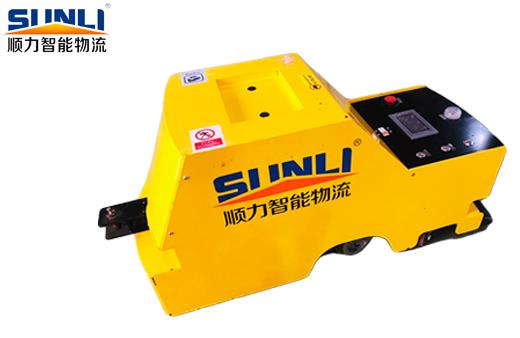
A Tugger AGV excels at executing multi-stop lineside delivery. Manufacturers often use them for routine "milk runs" across large facilities. They efficiently move heavy, non-palletized payloads over long distances. Their impact is highly visible on the floor. A single unit replaces multiple manual trips. It drastically reduces overall forklift traffic in congested areas. It also enables highly efficient batch delivery of raw materials. This keeps assembly lines fed constantly.
These specialized units handle complex vertical movements. They are best utilized for floor-to-floor transfers. You can use them to clear congested staging areas quickly. They also manage mid-level rack put-away operations seamlessly. Standardizing pallet sizes helps these machines operate flawlessly. Forklift automation reduces severe accidents in narrow aisles. It ensures pallets rest perfectly on their designated rack beams.
These systems transport discrete, standardized items. They integrate directly onto powered conveyors. They also interface seamlessly alongside Automated Storage and Retrieval Systems (AS/RS). This integration provides seamless, hands-free handoffs. The product never touches the floor. You achieve continuous material flow without human intervention.
AGV Configuration Comparison Chart
| Vehicle Type | Best Workflows | Primary Benefit | Ideal Environment |
|---|---|---|---|
| Tugger AGV | Lineside delivery, milk runs, long distances | Reduces floor traffic, bulk transport | Large manufacturing floors |
| Automated Forklifts | Staging areas, mid-level put-away | Vertical integration, floor transfers | Standardized racking aisles |
| Unit Load Handlers | Conveyor / AS/RS integration | Seamless hands-free handoffs | High-density fulfillment centers |
Choosing an automation partner requires strict, objective vetting. You must evaluate the underlying technology infrastructure deeply. Superficial demonstrations often hide software flaws. We break this evaluation process down into three core pillars.
Navigation logic defines how your fleet moves. You generally choose between fixed paths and natural navigation models.
Hardware matters little if the controlling software fails. You must evaluate vendor APIs closely. The fleet manager software must communicate bi-directionally alongside your existing WMS or WES.
Traffic control logic is another crucial operational element. You must understand exactly how the system handles deadlocks. Ask vendors how their software manages complex intersections. Verify how it prioritizes urgent, ad-hoc tasks over routine moves. A poorly designed traffic manager causes massive bottlenecks.
Robots need reliable power to operate continuously. You must carefully compare opportunity charging against physical battery swapping. Your decision depends entirely on your specific shift structures. Evaluate required vehicle uptime before committing to a charging strategy. Opportunity charging works well during staggered employee breaks. Battery swapping suits highly aggressive, uninterrupted 24/7 schedules.
Leaders often underestimate deployment complexities. You must address the hidden realities of warehouse automation head-on. Properly engineering your environment ensures a smooth transition. Ignore these realities, and your project will fail.
Automation requires precise physical tolerances. Vehicles demand specific, non-negotiable floor conditions. You must audit floor flatness and friction coefficients thoroughly. Crack sealing is absolutely mandatory. Wide joints trap robot wheels instantly.
Network stability is equally critical for fleet operations. You need robust industrial Wi-Fi or 5G coverage everywhere. Dead zones will cause dropped tasks. Dropped tasks halt production lines completely. You must commission a professional wireless site survey first.
We must clearly acknowledge operational limitations. Automated fleets struggle significantly under specific edge cases. They cannot handle severely damaged or leaning pallets. They fail when navigating unpredictable debris in driving lanes. They also struggle in mixed-traffic aisles lacking strict pedestrian protocols.
Best Practice: Enforce strict housekeeping rules before deploying any automated fleet. Clean floors and standardized pallets are prerequisites for automation success.
Do not ignore the complex human element. You need clear strategies for retraining manual operators. They must learn to work safely alongside automated fleets. You shift their daily labor from vehicle operation toward exception handling. They become fleet supervisors rather than simple drivers. This upskilling process requires patience. It demands transparent communication from leadership.
Financial justification requires a comprehensive, honest approach. You must track both hard and soft metrics carefully. Do not rely solely on labor savings to justify the expense.
Hard metrics directly impact the immediate balance sheet. These include headcount reallocation and reduced hourly wages. You also see decreased equipment leasing costs. You buy fewer manual forklifts.
Soft metrics provide indirect, yet massive financial benefits. Safety gains lead to substantially reduced insurance premiums. You experience far fewer damaged goods. Seamless system integrations also yield significantly improved inventory accuracy. Your stock levels remain perfectly synchronized.
Do not accept glossy marketing claims at face value. Ask hard, technical questions during the vendor vetting process.
Never automate an entire facility at once. We strongly recommend a phased, methodical rollout. Start by automating one simple, point-to-point route first. Validate your financial and operational assumptions completely. Only pursue a facility-wide deployment once the initial route succeeds. This mitigates massive capital risk.
Automated guided vehicles enforce strict process discipline across your facility. They replace unpredictable human variability. Fixed-rate predictability becomes your new operational standard. However, your environment must be meticulously engineered for automation before you deploy a single robot.
You cannot ignore sub-optimal floor conditions or weak network architecture. You must prepare your workforce for fundamental change. Decision-makers should take immediate, concrete action. Audit your most repetitive, high-traffic material flows today. Map out exact distances and payload weights. Use these specific findings as the baseline for your first vendor RFP. The faster you define your exact bottlenecks, the sooner you realize a meaningful return on your investment.
A: AGVs rely on fixed-path reliability. They follow predefined routes using embedded wires or magnetic tapes. AMRs offer dynamic obstacle circumvention. They navigate freely using complex sensors. You choose AGVs when strict predictability trumps flexibility. AMRs work better in highly unstructured, chaotic environments.
A: A standard Tugger AGV deployment requires three to nine months. Physical vehicle delivery happens relatively fast. However, custom software integration takes significant time. Facility mapping, employee training, and rigorous API testing always extend the overall timeline.
A: Yes, but environmental constraints demand specific hardware upgrades. They require specialized IP ratings for moisture protection. You need heated sensors to prevent sudden condensation blinding the vehicle. You must also use modified battery chemistries specifically designed for freezing temperatures.
A: Modern units utilize built-in fail-safe protocols. They immediately stop in place securely. They use localized memory to remember their current, active task. Robust automated operations always require redundant network architecture to prevent these costly, unexpected workflow interruptions entirely.


