

Views: 0 Author: Site Editor Publish Time: 2026-08-18 Origin: Site


While automated guided vehicles (AGVs) are often marketed as plug-and-play robots, their actual value relies heavily on the specific navigation technology and software ecosystem governing them. Many facilities fail to realize expected gains because they underestimate system complexity. For operations managers and supply chain directors evaluating automation, understanding the underlying mechanics of AGVs is critical. Moving from manual material handling to an automated fleet requires aligning vehicle capabilities with existing facility constraints, network infrastructure, and throughput targets. You must integrate these mobile robots into a larger intralogistics strategy smoothly. This guide breaks down the physical and digital workflows of AGVs to help you evaluate which systems align with your operational realities and physical thresholds. You will discover exactly how do automated guided vehicles work to transform modern warehouse environments.
Every successful physical movement begins with a digital command. Your Warehouse Management System (WMS) or Warehouse Execution System (WES) serves as the primary brain. It identifies an inventory relocation requirement. The software then sends a data packet to the Fleet Management System (FMS). The FMS acts as the tactical dispatcher. It surveys the entire floor map in real time. It evaluates the current status of every vehicle in your fleet. The system assigns the optimal AGV based on geographic proximity, payload capacity, and current battery charge levels. This instantaneous digital handshake prevents empty travel miles. It ensures maximum operational throughput.
Vehicles require precise environmental context to move safely. Navigation methods fall into two primary categories. Fixed-path navigation represents the traditional approach. You install magnetic tapes, inductive wires, or RFID tags directly into the concrete floor. The vehicle follows these physical guides blindly. This method delivers exceptional reliability. However, it severely limits operational flexibility. It works best for highly static, repetitive routes.
Conversely, modern systems utilize natural feature navigation. Laser and LiDAR technologies power Simultaneous Localization and Mapping (SLAM). The vehicle actively scans its surroundings dynamically. It compares real-time laser reflections against a digital facility map. This approach grants higher routing flexibility. You avoid cutting concrete or laying tape. You can change routes instantly via software updates. However, SLAM navigation requires relatively clear lines of sight. It struggles in highly dynamic areas where temporary pallets frequently block permanent architectural features.
Industrial environments pose severe risks to human personnel. Safety cannot remain an afterthought. Reputable AGVs utilize PLd (Performance Level d) or SIL (Safety Integrity Level) certified laser scanners. These components generate invisible protective zones around the moving chassis. The vehicle slows down if a person enters the outer warning zone. It triggers an emergency halt if an object breaches the inner protective zone.
You must understand the distinct operational differences between obstacle detection and obstacle avoidance. Standard AGVs utilize obstacle detection. They halt their movement entirely when their path becomes blocked. They wait patiently until an operator clears the aisle. Autonomous Mobile Robots (AMRs) typically deploy obstacle avoidance. They calculate a new trajectory around the blockage instantly. Today, manufacturers frequently blend these capabilities. Many modern AGVs now feature limited avoidance protocols to bypass minor debris safely.
The mechanical drivetrain dictates how tightly a vehicle can maneuver. Differential drive systems represent the industry standard. They utilize two independently powered wheels located on either side of the chassis. Varying the speed between these wheels dictates the turning radius. It mimics how a tank steers.
Omnidirectional steering provides a premium alternative. These systems employ mecanum wheels or independently rotatable drive modules. The vehicle can crab-walk sideways or rotate completely on its own center axis. Omnidirectional steering proves invaluable in narrow aisles. It maximizes usable floor space by eliminating sweeping turn requirements.
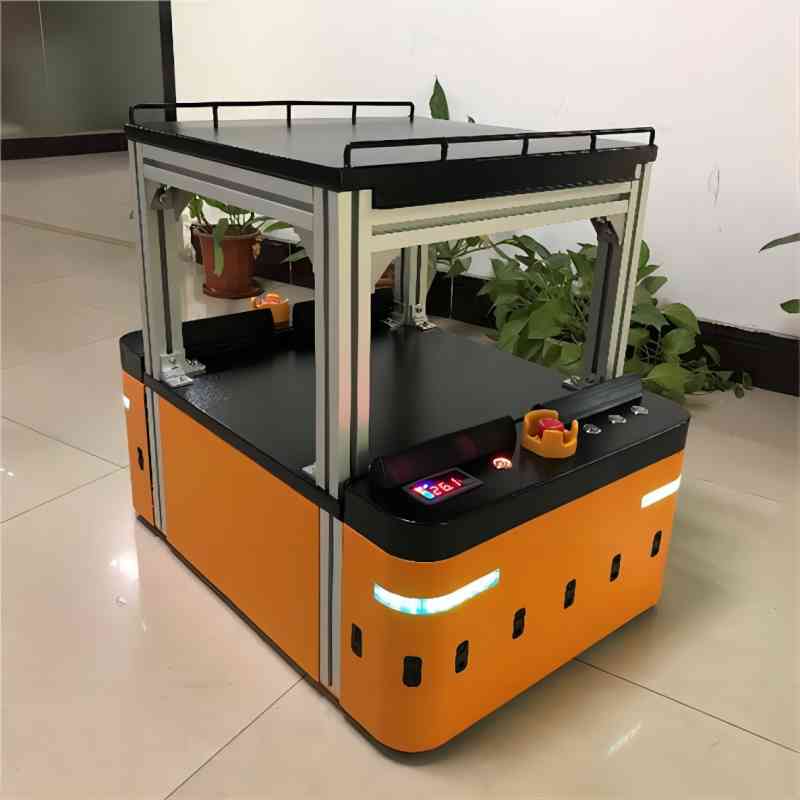
Hardware functions poorly without central coordination. The Fleet Management System acts as an autonomous air traffic control tower. It monitors every vehicle continuously. The FMS manages complex intersection priorities automatically. It calculates approach speeds to prevent traffic jams in main corridors. Deadlock prevention algorithms represent its most critical feature. The software anticipates moments where two vehicles might block each other in a narrow aisle. It forces one unit to wait in a designated passing zone. It also issues dynamic speed adjustments. Vehicles move faster in designated clear zones and crawl cautiously through active picking areas.
Your vehicles rely entirely on continuous data streams. Poor network infrastructure severely degrades fleet performance. Standard enterprise WiFi often struggles in metallic warehousing environments. Pallet racks and heavy machinery create unpredictable signal bounce. Moving through different access point zones often causes packet loss. High packet loss forces vehicles to halt for safety reasons.
Many modern facilities now deploy private 5G networks. Private 5G provides seamless roaming handoffs. It guarantees low latency for real-time tracking data. Latency remains a critical safety factor. The central server must issue override commands instantly if a hazard emerges. You must conduct comprehensive radio frequency heat mapping before deploying any automated fleet.
Automation requires meticulous energy management. You must evaluate how the fleet sustains continuous operations. Opportunity charging utilizes lithium-ion batteries. The FMS monitors battery levels actively. It routes vehicles to automated charging docks during natural idle periods. A five-minute charge during a shift change adds significant runtime. This eliminates manual intervention completely.
Traditional lead-acid batteries demand manual battery swaps. Personnel must extract depleted batteries using a dedicated gantry crane. This process requires significant labor and safety oversight. You must also evaluate physical charging station layouts. High-density fast chargers demand substantial floor space. They also draw massive electrical currents. You must verify your facility's electrical grid capacity before committing to automated charging systems.
Vertical storage applications demand specialized equipment. Automated forklifts and reach trucks excel at lifting heavy pallets into high racking bays. They replace traditional manual mast equipment. These units utilize heavy counterweights and extended safety scanners. They require wider operational aisles to swing pallets safely into position. Furthermore, high-lift automation demands extreme floor flatness tolerances. A minor dip in the concrete multiplies exponentially at a height of thirty feet. You must meet strict Fmin floor-grade specifications to utilize these machines effectively.
Moving goods across massive facility footprints requires volume efficiency. Automated tow tractors provide the ideal solution. They connect to multiple unpowered carts simultaneously. This creates a highly efficient tugger train. Tow tractors deliver maximum throughput for horizontal transport. They can move dozens of pallets in a single trip. However, they suffer from extremely low maneuverability. The trailing carts require wide turning radii. They suit long, straight corridors connecting manufacturing lines to staging areas perfectly.
E-commerce fulfillment and modular assembly demand high agility. You need vehicles that navigate tight operational spaces flawlessly. The Two-way Platform AGV represents a premium solution for these constraints. Bidirectional movement allows the vehicle to drive forward and backward with equal speed and precision. This mechanical capability eliminates the need for dedicated turnaround spaces at the ends of aisles. You can narrow your storage aisles strictly to the width of the vehicle and its payload. This drastically improves overall facility storage density.
You should also evaluate specialized unit-load AGVs. These platforms convey individual totes or custom sub-assemblies directly to human operators. They integrate seamlessly with automated conveyor belts. They facilitate highly ergonomic goods-to-person workflows at localized pack stations.
| AGV Type | Primary Application | Aisle Requirement | Payload Type |
|---|---|---|---|
| Automated Forklift | Vertical high-bay storage | Wide | Heavy Pallets |
| Tow Tractor | Long-haul horizontal transport | Very Wide | Multiple Carts |
| Bidirectional Platform | Dense goods-to-person fulfillment | Narrow | Racks / Custom |
| Unit-Load Conveyor | Pack station integration | Moderate | Totes / Cartons |
The physical state of your facility dictates deployment complexity. Greenfield deployments occur in brand-new, purpose-built warehouses. They offer streamlined integration. You pour the concrete floors to exact flatness specifications. You design the racking layouts strictly around the AGV turning radii. You install optimized IT infrastructure before moving any inventory.
Brownfield deployments involve retrofitting existing, active facilities. They introduce severe engineering challenges. You will uncover hidden operational hurdles. Uneven concrete joints cause navigational errors. Heavy vibrations from adjacent stamping presses confuse laser scanners. You often must move fixed racking systems or upgrade legacy network switches. These environmental modifications require extensive planning to prevent massive operational downtime.
Hardware acquisition represents only a fraction of automated deployment. You must evaluate the ongoing operational realities that keep the fleet moving. Recurring software licensing models often surprise facility managers. Fleet management platforms frequently require annual subscriptions. You must also account for continuous sensor calibration schedules. LiDAR scanners degrade in accuracy if subjected to heavy dust or impacts. Maintenance Service Level Agreements (SLAs) guarantee emergency repair response times. You need ironclad SLA conditions to ensure maximum uptime. Evaluating these lifecycle integration points proves far more critical than simply inspecting the vehicle's metal chassis.
True automation systems must grow alongside your business. Scaling a fleet requires distinct technical capabilities. You must verify how easily the FMS accepts new network nodes. Adding a new vehicle to an existing digital map should take hours, not weeks. Expanding the fleet shouldn't demand complete system reboots.
Change management addresses human factors. Human workers frequently distrust or misunderstand automated traffic. You must implement robust training protocols. Warehouse staff need clear instructions on how to interact safely with automated corridors. They must understand safety scanner behaviors. Operational friction spikes when employees manually bypass blocked AGVs or obscure navigation markers with misplaced pallets.
Marketing brochures rarely reflect harsh warehouse realities. You must challenge vendors to validate their navigation claims directly on your floor. Demand live demonstrations of their SLAM or laser technologies. Test the vehicles under your specific lighting conditions. Highly reflective shrink wrap often blinds standard optical sensors. Massive banks of skylights cast harsh shadows that confuse vision-based systems. Introduce dynamic obstacles during the test. Drive manual forklifts past the automated units. Observe how quickly the algorithms reacquire their physical location after temporary blinding.
Proprietary software ecosystems trap you into single-vendor reliance. You must assess a vendor's software agnosticism strictly. Inquire whether their fleet manager integrates via open, standard APIs. The VDA 5050 protocol represents the gold standard for interoperability. It allows vehicles from multiple different manufacturers to communicate through one centralized master controller. Systems forcing heavy vendor lock-in limit your future expansion options. Open architecture ensures you can adapt your hardware mix as your operational needs evolve.
Never accept simulated throughput metrics as final proof. Digital twins operate in perfect virtual environments. Your facility does not. Demand a rigorous, limited-scope pilot program. This Proof of Concept must test critical operational thresholds under real shift conditions. Monitor actual payload stability during emergency braking events. Measure the precise WMS integration latency during peak network traffic. Track battery drain rates during heavy lifting cycles. You need empirical data generated inside your specific facility before authorizing full fleet deployment.
| Evaluation Phase | Key Requirement | Red Flag Warning |
|---|---|---|
| Navigation Test | Handles reflective surfaces and dynamic moving objects. | Vehicle requires a completely empty aisle to map correctly. |
| Software API | Supports VDA 5050 or open REST APIs. | Mandates proprietary middleware for basic WMS updates. |
| Pilot Program | Tests physical battery drain and payload stability on-site. | Vendor insists on software simulation data only. |
Understanding the mechanics behind automated material handling is rarely about the robotics alone. It centers entirely on system-wide orchestration. The most advanced hardware chassis will fail rapidly if your facility's physical floor, digital network, or warehouse management software cannot support it seamlessly. Successful integration demands bridging the gap between mechanical engineering and IT infrastructure.
To begin your automation journey correctly, take immediate action on these steps. First, conduct a comprehensive internal facility audit. Measure your concrete floor flatness rigorously. Second, generate a detailed heat map of your wireless network to identify active dead zones. Finally, map out your current workflow bottlenecks manually. Establish your baseline throughput metrics before soliciting RFPs from any manufacturers. This data-driven preparation guarantees you select a system tailored exactly to your operational reality.
A: AGVs follow fixed or strictly mapped paths and stop completely when they encounter obstacles. AMRs navigate autonomously using onboard intelligence and actively route themselves around unpredicted obstacles. However, modern automated units frequently blend these technologies, giving AGVs limited avoidance capabilities.
A: Bidirectional drive systems remove the mechanical need for turning radii. The vehicle drives forward and backward identically. This allows facility managers to narrow aisles strictly to the physical width of the vehicle and its payload, eliminating dead turnaround spaces.
A: Most modern systems utilize edge computing for localized safety protocols. If the server connection drops, the vehicles will safely halt operations immediately. Alternatively, they may finish their immediate, pre-downloaded localized task and park themselves until server connectivity is fully restored.
A: A standard deployment realistically takes between 3 to 9 months. Physical hardware delivery occurs quickly. However, extensive software API integration, facility modifications, and complex safety map plotting require significant testing time before full commissioning.


