

Views: 0 Author: Site Editor Publish Time: 2026-09-17 Origin: Site


Warehouse operations hit a hard ceiling when inventory outpaces floor space. Facility capacity limits max out rapidly as product volumes grow. Real estate costs surge, making physical expansion a last resort for most operators. Disorganized floor storage creates massive operational friction across the entire facility. Upgrading to engineered industrial shelving pallet racks solves these bottlenecks directly. Inefficient space utilization inflates labor costs. It slows down picking times, causes severe inventory damage, and elevates safety risks on the floor. Transitioning from ad-hoc block stacking to a structured racking architecture allows you to scale throughput efficiently. You maintain strict SKU visibility and protect valuable inventory from crush damage. This strategic upgrade defers the massive expense of relocating to a larger building. We will break down how to identify failing storage methods, evaluate different racking configurations, and integrate the right hardware to maximize your current warehouse footprint.
You must first define the baseline metrics of a failing storage setup. Relying on horizontal scaling creates a dangerous floor space fallacy. Facilities often resort to block stacking when they run out of racking space. Stacking pallets directly on top of each other leads to severe crush damage. The bottom pallets bear the entire weight of the loads above them. This practice severely limits accessibility and ultimately causes significant product loss.
A failing storage system typically exhibits several measurable symptoms:
Choosing the wrong racking architecture initiates a cascade of operational failures. It inflates labor requirements and creates severe bottlenecks during peak picking hours. Disorganized floor storage forces workers to move multiple pallets just to access a single target SKU. This unnecessary material handling drastically reduces your picks-per-hour metric. It also introduces unnecessary safety hazards as operators navigate cluttered, unpredictable aisles. Forklift drivers spend more time hunting for products than actually moving them to the loading dock. This inefficiency drains profitability and frustrates your warehouse staff.
The honeycombing effect further degrades floor storage efficiency. When you remove a pallet from a block-stacked row, you create an empty space. You cannot fill that space with a different SKU without mixing inventory. This leaves massive gaps of unusable space across your facility floor. Your theoretical storage capacity looks high on paper, but your actual usable capacity remains severely restricted. Upgrading your infrastructure eliminates these hidden operational costs and reclaims your floor space.
Facilities waste thousands of cubic feet of valuable overhead space. Exploiting the vertical cube multiplies your storage density without expanding the building footprint. You simply build upward into the clear height of the facility. Modern racking structures can safely reach heights exceeding thirty feet. You must account for fire suppression systems and required flue spaces when designing vertical layouts. Proper vertical integration transforms empty air into revenue-generating storage locations.
Optimizing the horizontal footprint requires a careful balance between rack depth and aisle width. Standard aisles offer flexibility for standard counterbalance forklifts. Narrow and very narrow aisle (VNA) setups maximize floor space utilization. You must align these configurations with your specific material handling equipment. A VNA layout requires specialized wire-guided turret trucks to navigate the tight spaces. The investment in specialized equipment often pays for itself through massive gains in storage density.
| Aisle Configuration | Typical Aisle Width | Required Equipment | Storage Density Impact |
|---|---|---|---|
| Standard Aisle | 12 to 14 feet | Counterbalance Forklift | Baseline density, maximum equipment flexibility |
| Narrow Aisle | 8 to 10 feet | Reach Truck | Increases density by up to 20% over standard |
| Very Narrow Aisle (VNA) | 5 to 7 feet | Turret Truck / Order Picker | Maximum density, requires wire or rail guidance |
Structured racking enables logical SKU slotting based on velocity. Using an ABC analysis, you position fast-moving goods at ground level. Slower-moving inventory belongs in the higher rack positions. This physical structure protects high-value goods from moisture, forklift strikes, and compression damage. You keep products off the concrete floor and away from potential flood zones. Structured bays ensure every pallet has a dedicated, protected location.
Implementing proper flue spaces is mandatory for facility safety. Longitudinal and transverse flue spaces allow heat to vent upward during a fire. This activates the overhead sprinkler systems faster. It also allows the water to penetrate down through the racks to extinguish the flames. Proper rack design inherently enforces these mandatory safety gaps. You maximize your capacity while remaining fully compliant with fire codes.
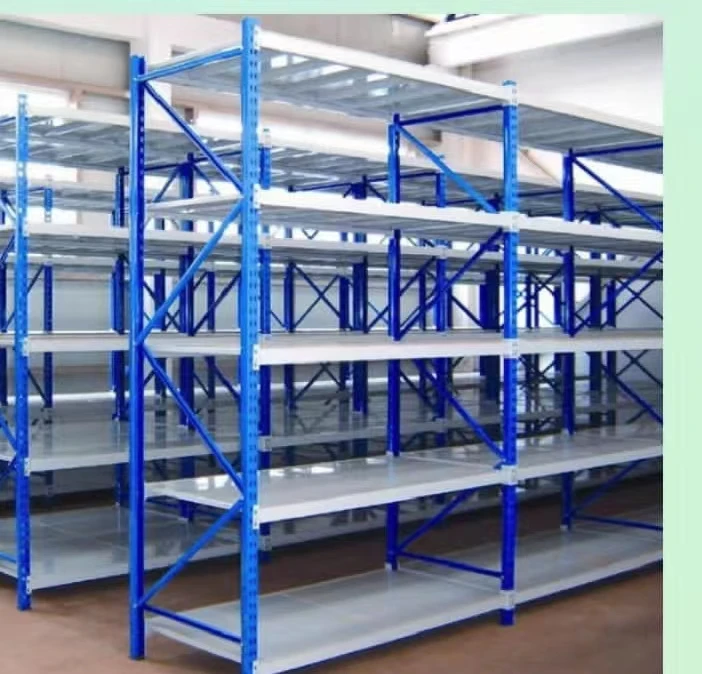
Selecting an industrial pallet rack system requires matching hardware to your workflow. You cannot force a generic solution onto a complex supply chain. Let's break down the primary configurations and their ideal use cases.
This remains the undisputed industry standard. It provides maximum accessibility with 100% SKU access at all times. While it offers lower overall density, it is highly versatile. It works best for high SKU counts and varied inventory profiles. You can adjust beam levels easily to accommodate changing pallet heights. It is the most common system found in general distribution centers.
These systems provide extremely high density but low accessibility. They operate on strict LIFO or FIFO principles. Forklifts actually drive into the rack structure to deposit or retrieve pallets. Use these for large volumes of homogeneous products where space optimization outweighs selectivity. They are common in cold storage facilities where real estate is exceptionally expensive and cooling costs demand dense storage.
This system offers dynamic LIFO storage using nested carts on inclined rails. When you load a new pallet, it pushes the existing pallets backward. When you remove a pallet, gravity brings the next one forward. It balances high density with much better selectivity than drive-in setups. Each lane can hold a different SKU, offering excellent flexibility for medium-turnover goods.
This provides dynamic FIFO storage using gravity rollers. You load pallets on one side and retrieve them on the opposite side. It is ideal for perishable goods, strict date-code management, and high-turnover inventory. Speed controllers ensure the pallets glide safely down the lane without gaining dangerous momentum. Food and beverage distributors rely heavily on this architecture.
You must map these features to your specific operational outcomes. Match your inventory profile, turnover rate, and batch sizes to the correct architecture. This prevents operational bottlenecks and keeps goods flowing smoothly from receiving to shipping.
| System Type | Storage Density | Pallet Accessibility | Inventory Flow | Ideal Use Case |
|---|---|---|---|---|
| Selective Racking | Low | 100% | Random Access | High SKU counts, varied inventory, fast picking |
| Drive-In Racking | High | Low | LIFO | Homogeneous products, bulk storage, cold rooms |
| Push Back Racking | Medium-High | Medium | LIFO | Multiple pallets per SKU, space saving, medium turnover |
| Pallet Flow Racking | High | Medium | FIFO | Perishables, date-sensitive goods, food and beverage |
Throughput velocity dictates warehouse efficiency and customer satisfaction. Specific rack designs reduce forklift cycle times and support faster order fulfillment. Integrating heavy duty shelving racks streamlines the entire material handling process. You eliminate the guesswork from the picking process. Operators know exactly where to go and what to retrieve. This precision drastically reduces travel time across the warehouse floor.
Physical rack locations must map accurately to your Warehouse Management System (WMS). You affix highly visible barcode labels to the rack beams. Forklift operators scan these barcodes to confirm pallet drops and retrievals. This integration allows for optimized routing and automated inventory tracking. It gives you absolute control over stock levels and prevents lost pallets. Real-time visibility ensures your inventory counts remain perfectly accurate during peak seasons.
Ergonomics play a massive role in pick path optimization. You adapt lower-level rack configurations specifically for case picking and piece picking. Keeping heavy items in the golden strike zone reduces worker strain. This zone typically ranges from waist to shoulder height. It improves safety and accelerates the manual picking process. You can install carton flow tracks on the bottom levels for dynamic piece picking while storing bulk reserve pallets above.
Routing algorithms within your WMS depend on logical rack layouts. You implement serpentine picking paths or branch-and-pick strategies based on aisle design. The physical layout of your aisles dictates which strategy works best. Wide cross-aisles allow forklifts to bypass congested areas safely. Proper integration between software and physical infrastructure guarantees maximum operational efficiency.
Warehouse storage carries inherent implementation risks that you must manage proactively. Forklift impacts, overloading, and improper installation are the primary hazards of pallet racking. Structural integrity relies heavily on engineered load capacities. You adhere strictly to engineered load limits and beam deflection tolerances. The industry standard dictates that beams should not deflect more than the length divided by 180 (L/180). Uniform weight distribution is critical to ensure worker safety and prevent catastrophic collapses.
Regulatory and seismic compliance are non-negotiable elements of industrial storage solutions. You must meet local building codes and strict OSHA guidelines. Facilities in earthquake-prone regions require specific seismic zone engineering. This involves larger footplates, thicker steel gauges, and specialized seismic bracing. You cannot legally or safely install standard racks in a high seismic zone. A licensed structural engineer must stamp the design drawings before installation begins.
You should invest heavily in damage mitigation accessories. Column protectors shield the vulnerable base of the upright frames from forklift tines. End-of-aisle guards protect the entire row from sweeping turns by heavy machinery. Safety netting or wire mesh panels prevent loose cartons from falling into pedestrian walkways. These accessories require a small upfront investment but prevent massive liabilities.
Proper anchoring is the foundation of rack safety. Every upright frame must be securely bolted to the concrete slab using wedge anchors. The size and depth of the concrete anchors depend on the seismic requirements and load capacities. You never alter or weld rack components without explicit manufacturer approval. Unauthorized modifications instantly void the warranty and compromise the structural integrity.
Evaluating a new racking system requires looking past the initial material and freight costs. The true value lies in long-term operational savings. High-density systems cost more per pallet position upfront than standard selective racks. However, the labor savings generated by reduced forklift travel time and faster picking speeds quickly offset that initial investment. You reclaim floor space, which defers the need to lease additional warehouse square footage.
You must balance storage density with picking speed. Dynamic systems like pallet flow require a larger capital outlay but drastically reduce the labor required to rotate perishable stock. You design the system to match your specific operational bottlenecks. If labor availability is your main constraint, invest in systems that minimize manual material handling.
Modularity ensures your infrastructure adapts to long-term business growth. A well-engineered system allows you to reconfigure beam levels as your SKU profiles change. You can add extensions to upright frames if you move to a facility with higher ceilings. Future-proofing your warehouse means selecting standard teardrop or structural designs that allow for easy component additions down the road.
Ongoing maintenance dictates the lifecycle of your investment. You must conduct mandatory rack safety inspections and replace damaged components immediately. Ignoring a dented upright frame puts your entire inventory and workforce at risk. Budgeting for annual safety audits and minor component replacements extends the safe operational life of your racking system by decades.
Sourcing hardware requires rigorous vendor evaluation and due diligence. You demand facility audits, CAD layouts, and custom engineering from your pallet rack manufacturer. Avoid off-the-shelf purchasing for large-scale industrial applications. Every warehouse has unique column spacing, ceiling heights, and concrete slab limitations. A qualified manufacturer sends engineers to measure your facility precisely before quoting the project.
Material quality and fabrication methods matter immensely. You differentiate between roll-formed and structural steel systems. Roll-formed racks use cold-rolled sheet metal shaped into columns. They are cost-effective and suitable for most standard applications. Structural steel racks use hot-rolled steel channels. Specify structural steel for environments with high operational abuse levels and heavy forklift traffic. They withstand impacts significantly better than roll-formed options.
Installation carries its own set of severe risks. Using unvetted third-party installers compromises the structural integrity of the entire system. They may use incorrect anchors or fail to plumb the uprights perfectly straight. Always prioritize certified installation teams provided by a reputable warehouse shelving supplier. These teams understand the specific tolerances and hardware requirements of the system they are building.
Assess the vendor's warranty and post-sale support capabilities. Ensure they supply replacement parts quickly when damage inevitably occurs. Verify their ability to conduct annual safety audits and support your future warehouse expansions. A strong supplier acts as a long-term infrastructure partner, not just a one-time equipment vendor.
Industrial shelving pallet racks represent a highly engineered infrastructure investment that dictates warehouse profitability, safety, and inventory protection. To optimize your facility, you evaluate current bottlenecks, define SKU velocity, and assess your vertical and horizontal dimensions. Safety compliance remains the top priority throughout the design and installation process.
Take the following next steps to upgrade your storage infrastructure:
A: Selective racks offer 100% accessibility to every pallet, making them ideal for facilities with diverse SKU counts. High-density systems, like drive-in or push-back racks, sacrifice immediate accessibility to store more pallets in a smaller footprint. They are better suited for bulk storage of homogeneous products.
A: Load capacities vary significantly based on the engineering and materials used. Standard roll-formed beams typically hold between 2,500 and 5,000 pounds per level. Structural steel systems can support much heavier loads. Always consult the manufacturer's load application plaque to ensure safe weight distribution.
A: Floor storage relies on block stacking, where pallets rest directly on top of one another. This causes severe compression and crush damage to the bottom loads. Racking systems provide independent, structured support for each pallet, completely eliminating weight transfer and protecting fragile goods.
A: Upright frames typically range from 8 to 24 feet in height, with standard depths of 36, 42, or 48 inches. Beam lengths usually span 96, 108, or 120 inches to accommodate standard pallet sizes. However, most industrial systems are custom-engineered to fit specific facility dimensions.
A: Industry standards recommend conducting comprehensive visual inspections at least once a month. You should also schedule a formal, documented inspection by a certified professional annually. Any racks subjected to a forklift collision must be inspected and repaired immediately before bearing weight again.
A: Look for a supplier with in-house structural engineers who understand local building codes. They must provide stamped engineering drawings proving the system can withstand seismic activity. The supplier should specify larger footplates, heavy-duty anchoring, and reinforced bracing designed explicitly for your specific geographic fault lines.


