

Views: 0 Author: Site Editor Publish Time: 2026-07-11 Origin: Site


Investing in a new Automated Storage & Retrieval System acts as a high-stakes capital expenditure. This critical decision dictates your facility workflow for the next decade. Operations leaders must act strategically to ensure success. Modern warehouses face a harsh collision of labor shortages and limited physical space. Rising real estate pressures make expanding your facility footprint difficult. At the same time, demands for higher daily throughput make manual order picking entirely unsustainable. Relying on outdated manual processes caps your operational growth permanently.
Selecting the ideal system requires looking far beyond basic vendor spec sheets. You must accurately match physical hardware capabilities to your unique inventory profiles. Facility constraints and existing software ecosystems require equal attention. This guide explains how to define your true operational bottlenecks clearly before purchasing equipment. Readers will learn to evaluate core hardware categories and assess critical software integration requirements. You will discover practical methods to mitigate hidden implementation risks efficiently.
Defining operational bottlenecks (space vs. throughput) is the necessary first step before evaluating hardware.
System categories range from micro-fulfillment vertical lifts to heavy-duty pallet ASRS systems, each solving fundamentally different inventory challenges.
True ROI depends on accurately forecasting Total Cost of Ownership (TCO), including integration downtime, floor modifications, and ongoing maintenance.
Vendor selection should prioritize software integration capabilities (WMS/WES) and post-deployment service level agreements (SLAs).
Identify your primary facility constraint immediately. Determine if your core issue revolves around storage density or picking efficiency. Cube utilization matters deeply when physical floor space runs out. Lines per hour become the priority when fulfillment velocity lags. You cannot optimize both extremes simultaneously without compromise. Establish which operational metric drives your current pain points.
Analyze your inventory profiles thoroughly. Document SKU velocity across your entire product range. Track payload dimensions and exact weight capacities carefully. Map out typical order profiles across different seasonal shifts. Items moving rapidly require placement near quick extraction points. Slow-moving stock belongs deeper inside the storage matrix. This precise data dictates the mechanical requirements of your future equipment. A common mistake is buying hardware suited for standard pallets when your operations actually demand mixed-case fulfillment.
Set rigid baseline metrics before contacting vendors. Establish your current error rates and exact labor dependency ratios. Track the precise time operators spend walking between pick faces. Calculate your current order cycle times meticulously. Create a verifiable baseline to measure future performance gains. Without these foundational numbers, evaluating post-deployment success remains impossible.
Avoid over-engineering your operations. Assess whether a massive automated overhaul is truly necessary. Sometimes, targeted modular automation serves the operational strategy far better. Deploying specific, isolated automated zones can eliminate bottlenecks without disrupting the entire warehouse. Focus on practical problem-solving rather than flashy technological upgrades. Small, precise mechanical upgrades often deliver faster improvements.
Warehouse environments demand specific mechanical solutions. System categories vary wildly in physical size, speed, and application. Understanding these differences helps you avoid misaligned investments.
Vertical Lift Modules (VLMs) feature enclosed tray systems. They are best for storing small parts and providing high-density storage. They excel in facilities possessing high clear heights but severely limited footprints. They protect sensitive items from dust and unauthorized access. Operators retrieve items ergonomically at waist height. The primary limitation involves capped throughput. Retrieval speed relies entirely on a single internal extractor mechanism. It can only fetch one tray at a time.
Unit-Load / Pallet Systems manage massive inventory blocks. A pallet ASRS system is best for handling heavy loads and full-pallet movements. They dominate high-bay warehousing setups. They retrieve massive loads smoothly using automated cranes. You often see them operating in environments too harsh for human workers, like deep cold storage. The main limitation is heavy infrastructure dependency. They require significant engineering investments and highly specific racking structural reinforcement.
Mini-Load and Shuttle Systems operate at blistering speeds. They are best for high-throughput environments dealing heavily in totes, cases, or cartons. They fetch individual cartons rapidly for immediate packing. Modern fulfillment nodes rely on them to hit tight shipping deadlines. Their major limitation is sequencing complexity. They require incredibly robust Warehouse Execution Software (WES) to sequence orders and prevent traffic bottlenecks inside the aisles.
Horizontal Carousels rotate inventory bins along a floor-level track. They are best for facilities facing lower ceiling heights. They handle high-speed sorting and batch picking tasks well. Their primary limitation is lower overall storage density compared to vertical solutions. They consume significant floor space. They also require strict safety zoning to protect warehouse staff from moving machinery.
System Category | Best Suited For | Primary Limitation |
|---|---|---|
Vertical Lift Modules | Small parts, high ceilings, limited floorspace | Throughput capped by single extractor mechanism |
Unit-Load Pallet Systems | Heavy loads, cold storage, manufacturing buffers | Requires heavy structural engineering investments |
Mini-Load & Shuttle | Totes, cartons, high-speed fulfillment | High software sequencing complexity |
Horizontal Carousels | Low ceilings, batch picking, sorting | Lower storage density, strict safety zoning needed |
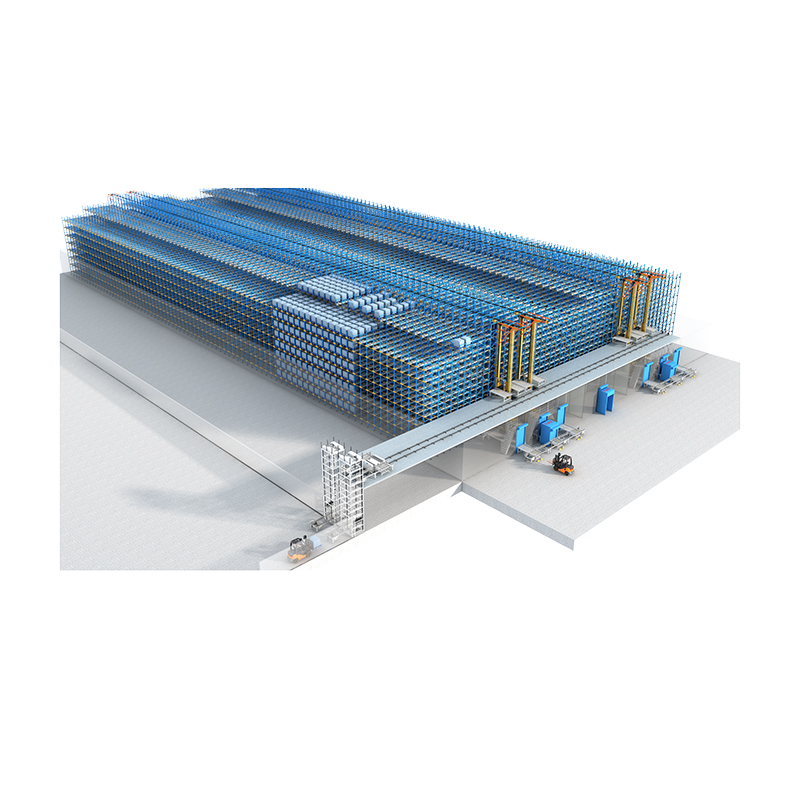
Evaluating hardware involves looking past the raw speed metrics. Focus heavily on how the equipment adapts to your daily reality.
Scalability and Modular Expansion: Consider how the system adapts to sudden seasonal peaks. You want a system capable of growing organically alongside your business. Assess whether adding capacity requires halting operations completely. The best platforms allow you to add new shuttle modules seamlessly. Rigid systems force you to rebuild entirely when operational growth occurs.
Software Ecosystem and Integration: Hardware remains completely useless without intelligent software control. Evaluate the handshake between the vendor’s Warehouse Control System (WCS) and your existing Warehouse Management System (WMS). Information must flow bi-directionally without latency. Poor software integration inevitably causes endless fulfillment delays.
Throughput vs. Capacity Trade-offs: Acknowledge the natural inverse relationship between extreme storage density and rapid retrieval speeds. Deep-lane storage maximizes facility space but heavily slows down individual item extraction. Determine the most acceptable compromise for your specific daily operation.
Redundancy and Reliability: Examine the proposed system for any single points of failure. If a crane goes down in a critical aisle, what happens next? You must know if that specific inventory becomes completely inaccessible. Modern setups utilize independent shuttles to bypass broken units easily.
Many deployments face massive delays due to overlooked facility requirements. Detail all structural and environmental prerequisites early. Verify your floor slab load-bearing capacities with structural engineers. Standard concrete often fails under the immense point loads of automated racking. Check concrete flatness tolerances meticulously. Automated cranes require perfectly level tracks to function safely and smoothly. Ensure complete compliance with local seismic zoning laws.
Understand the profound differences between deployment environments. Brownfield installations occur inside active, functioning facilities. They demand phased rollouts and temporary storage buffers to maintain operations. Installing massive steel structures around active workers requires extreme logistical coordination. Greenfield deployments take place in brand-new builds. They offer a clean slate but require massive upfront architectural coordination to align building columns with aisle dimensions.
Prepare your team for the integration "Trough of Sorrow". Anticipate an inevitable productivity dip during the initial commissioning phases. Testing the complex WMS and WCS integration takes extended time. Glitches will happen. Software handshakes often fail during initial stress tests. Plan your staffing levels accordingly to absorb these temporary operational shocks safely.
Factor in the long-term physical demands of the equipment. Plan rigid preventive maintenance schedules immediately. Secure adequate physical space for essential spare parts inventory. Evaluate the daily energy consumption requirements of the new machinery carefully. Upgrading your facility's electrical grid is frequently necessary to support heavy automated loads. Failing to account for these ongoing operational realities leads to frustrating system downtime.
Choosing a vendor requires strict empirical validation. Demand data-backed simulations from every candidate. Require them to run your actual historical order data through their specific simulation software. They must prove their claimed throughput rates using your real-world scenarios. Never accept generic benchmark numbers. Your unique order profiles will stress the system differently than standard tests.
Scrutinize all post-sales Service Level Agreements (SLAs). Evaluate the vendor's local technician availability carefully. Read the fine print regarding guaranteed emergency response times. Ensure they offer robust remote diagnostic capabilities. Remote troubleshooting solves minor software faults without requiring a technician site visit. This dramatically reduces minor outage durations.
Conduct thorough site visits before signing any contracts. Tour live facilities currently utilizing the proposed equipment. Observe the actual operational noise levels on the floor. Heavy machinery can exceed safe decibel levels rapidly. Note any user interface friction experienced by the operators. Ask the floor staff about their daily mechanical realities. Their honest feedback reveals the true nature of the equipment.
Form an internal cross-functional evaluation team. Bring Operations, IT, and Maintenance leaders together. Draft a unified Request for Proposal (RFP) based on consensus. This document should detail your exact operational metrics and physical facility constraints. Sending a unified requirement document prevents vendors from making assumptions about your goals.
The right automated solution strictly aligns with your exact operational data. It is never simply the machine touting the most impressive marketing specifications. Successful automation actively bridges the complex gap between hardware mechanics and software intelligence.
Focus deeply on addressing your true operational bottlenecks first.
Ensure your WMS and the new WCS communicate flawlessly before deployment.
Prepare your facility physically for massive structural demands.
Demand empirical proof of throughput via rigorous order data simulations.
Encourage your leadership team to request a comprehensive facility data audit today. Consult an independent systems integrator to formalize a robust, data-driven automation roadmap. Making precise, informed decisions now ensures your facility remains agile and competitive for years.
A: Generally, expect a timeline spanning 3 to 7 years. This depends heavily on local labor rates, facility shift structures, and overall system complexity. Facilities running multi-shift operations naturally see faster returns due to higher equipment utilization rates. Precise efficiency gains and reduced labor dependency drive this operational timeline.
A: Yes, the industry refers to this as a brownfield installation. However, it requires strict structural analysis. You must carefully evaluate the existing ceiling height, floor slab load capacity, and current fire suppression systems. Retrofitting an older building presents unique physical challenges compared to new constructions.
A: The timeline varies significantly based on system scale. It ranges from a few weeks for modular vertical lifts to several months for structural unit-load setups. Strategic deployment phasing remains critical. You must isolate installation zones carefully to maintain ongoing warehouse operations throughout the build.
A: Automated systems require robust backup infrastructure. You must install reliable backup generators and Uninterruptible Power Supplies (UPS). These prevent catastrophic data loss within the warehouse control software. They also provide enough residual power to allow safe manual extraction of inventory if absolutely necessary.


