

Views: 0 Author: Site Editor Publish Time: 2026-08-28 Origin: Site


A rack collapse rarely happens overnight. You might view a structural failure as a sudden, unpredictable disaster. In reality, it often results from ignored, minor damages compounding over time. Routine forklift bumps weaken the metal frames silently. Ignoring these small impacts invites catastrophic failure. Consistent evaluation cycles protect your entire operation. They drive three core business outcomes directly. First, you ensure strict OSHA and regulatory compliance. Second, you boost operational efficiency by minimizing unexpected downtime. Third, you sharply reduce legal and financial liability risks. This article provides a clear, evidence-based framework. We will help you determine exact review frequencies for your facility. You will learn how to evaluate structural integrity accurately. Finally, we guide you on deciding exactly when to call independent engineers. Start building a proactive safety culture today.
Many facility managers misunderstand federal safety regulations. OSHA does not publish a specific standard naming storage racks. Instead, regulators rely heavily on the General Duty Clause. This foundational rule requires employers to provide a workplace free from recognized hazards. If a collapse injures an employee, OSHA will cite you under this broad mandate. You cannot claim ignorance of structural degradation.
You must look to established industry experts for concrete guidance. The Rack Manufacturers Institute (RMI) sets the primary standards across North America. In Europe, SEMA provides equivalent operational guidelines. Both authoritative bodies demand rigorous safety protocols from warehouse operators. They explicitly require at least one comprehensive, documented review annually. A qualified professional must conduct this yearly audit. These guidelines establish your baseline for operational due diligence.
Ignoring these safety baselines carries heavy consequences. You face severe OSHA fines following any workplace incident. Insurance companies frequently deny claims following uninspected system failures. They classify ignored maintenance as gross negligence. Ultimately, you risk catastrophic asset loss and tragic human injuries. Proactive compliance costs far less than managing a preventable disaster.
Best Practice: Always maintain a digital logbook of your compliance efforts. Regulators will ask for documentation immediately during a surprise walkthrough.
A reliable safety framework divides responsibilities clearly across your team. We break this evaluation schedule down by frequency, ownership, and scope. This creates a highly functional adoption model. You can implement this structure seamlessly into your daily operations.
Owner: Forklift operators, floor staff, and shift supervisors.
Focus: Your floor teams should look for glaring anomalies continuously. They must spot unreported forklift impacts immediately before loading pallets. Operators should check for out-of-plumb uprights leaning into aisles. They must ensure no safety pins are missing from beam connectors. Staff should identify overloaded bays before they buckle. A strong reporting culture encourages workers to flag issues without fear of punishment.
Owner: Your Warehouse Safety Officer or a designated internal champion.
Focus: The safety officer conducts a documented, aisle-by-aisle walkthrough. They must use a standardized checklist covering every zone. This monthly review verifies your daily reporting functions correctly. Assessors look for subtle damage patterns missed during busy daily shifts. They check for minor rust, loose anchors, and slight beam deflections. You must store these monthly reports safely to prove ongoing compliance.
Owner: A certified independent rack inspector or a structural engineer.
Focus: Independent experts perform comprehensive structural analyses. They verify load capacities rigorously against original engineering blueprints. Auditors look for hidden metal fatigue and sheared baseplates. Finally, they deliver formal compliance reporting. A routine warehouse rack inspection ensures you meet all legal safety mandates perfectly.
Three-Tiered Inspection Schedule Comparison
| Frequency | Primary Owner | Core Focus Area | Documentation Required |
|---|---|---|---|
| Daily/Weekly | Forklift Operators | Glaring anomalies, immediate impacts | Shift handover logs |
| Monthly | Safety Officer | Systematic aisle walkthroughs | Standardized checklist forms |
| Annually | Third-Party Engineer | Structural integrity, capacity verification | Certified engineering reports |
Routine checks handle normal wear and tear efficiently. However, specific sudden events demand immediate action. You cannot wait for the next scheduled monthly review. Certain triggers compromise system stability instantly.
Forklift Collisions: Operators bump frames frequently in tight aisles. Even minor dents require immediate attention. A visually acceptable dent might compromise structural integrity entirely. The impact changes how the metal distributes weight. You must perform an immediate stress-load evaluation. Never load the affected bay until experts clear it.
System Retrofits or Reconfigurations: Warehouses change layouts to accommodate new products. Adjusting beam levels changes system dynamics drastically. Moving a beam up creates a taller unbraced span on the upright. You risk altering the fundamental weight distribution. Always consult the original manufacturer's load application data (LAD) before moving beams.
Seismic Events or Extreme Weather: Earthquakes stress metal connections severely. Tremors shear anchor bolts hidden beneath baseplates. You must ground all operations following seismic activity. Re-verify all structural tolerances before resuming work. Extreme weather, like warehouse flooding, also causes rapid baseplate corrosion.
Changes in Inventory Profiles: Moving to heavier loads increases collapse risk. Storing liquid goods approaches maximum capacity limits rapidly. Liquids are significantly denser than paper or plastic goods. Reassess your uprights to ensure they support the new burdens safely.
Post-Trigger Action Steps:
Experts evaluate specific mechanical points during a thorough audit. This demonstrates deep technical expertise. Knowing exactly what to look for uncovers hidden flaws before they cause a disaster.
Inspectors check for severe beam deflection first. Beams naturally bow under heavy weight. However, this bowing must not exceed the acceptable L/180 ratio. If a 180-inch beam bows more than one inch, it fails the test. They also identify torsional damage on uprights. Twisting metal indicates severe overloading or unreported vehicle impacts. Sheared anchor bolts and compromised baseplates signal dangerous instability at floor level.
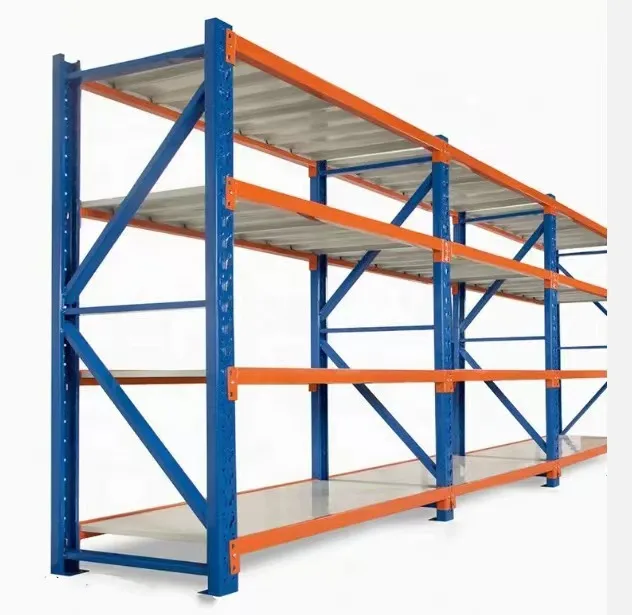
Different materials require specialized attention. When evaluating Steel Deck Pallet Racking, inspectors check for proper seating. They verify weld integrity across all panel joints. They ensure uniform load distribution across the solid metal surfaces. Point loading happens when small, heavy items rest directly on weak spots. You must watch for localized deck surface warping constantly. Warping usually indicates point-loading failures or metal fatigue.
Small components play massive roles in overall stability. Missing row spacers weaken back-to-back configurations significantly. Row spacers keep tall frames aligned uniformly. Dislodged safety clips allow beams to pop out easily during pallet retrieval. Damaged column protectors offer zero defense against the next forklift strike. You must replace cracked protectors immediately to shield the main upright.
Decision-makers often struggle to choose the right evaluation model. Balancing budgets against safety mandates proves challenging. We offer a transparent comparison to simplify this choice for your leadership team.
The Limits of In-House Inspections: Internal teams provide cost-effective daily monitoring. Using your own staff saves money initially. However, relying solely on them creates dangerous liability gaps. Internal staff often suffer from "facility blindness." They walk past the same dent daily and eventually ignore it. Furthermore, they usually lack formal engineering expertise. Floor workers cannot accurately assess structural shear capacity. They guess whether a bent frame remains safe.
The Value of Third-Party Expertise: Independent auditors bring unbiased reporting. They see flaws your team overlooks. Using external professionals effectively transfers liability away from your internal staff. They provide certified documentation. This paperwork satisfies OSHA regulators and insurance auditors instantly. Spending money on an external audit yields massive ROI. It prevents multi-million dollar lawsuits following a structural collapse.
Common Mistake: Do not use third-party auditors to replace daily checks. External experts cannot monitor daily forklift damage. You need both internal vigilance and external validation.
Recommendation: Use your in-house teams for daily hygiene. Rely on them for monthly checklist walkthroughs. Contract third parties for the mandatory annual audit. Always use external experts for post-collision evaluations.
In-House vs. External Audit Comparison Chart
| Evaluation Model | Primary Benefit | Major Limitation | Best Application |
|---|---|---|---|
| In-House Inspection | High frequency, zero extra cost | Facility blindness, liability risks | Daily visual checks |
| Third-Party Audit | Unbiased, legally certified | Requires scheduled budgeting | Annual compliance reviews |
Collecting data is meaningless unless you act on it. Finding a damaged upright solves nothing by itself. You need a clear framework for handling discovered structural damages quickly.
The Traffic Light Tagging System:
Implement this visual system for immediate clarity on the warehouse floor. It removes confusion about which bays remain safe.
Repair vs. Replace:
You must establish rules for fixing compromised components. Do not let maintenance teams improvise solutions. Engineered repair kits offer cost-effective, faster solutions for minor upright damage. Certified installers bolt these heavy-duty sleeves over the damaged sections. This restores original weight capacities quickly. However, you must replace entire uprights when facing severe structural compromise. Never attempt uncertified welding on high-stress steel. Uncertified heat changes the steel's temper, making it brittle and highly dangerous.
Best Practice: Only an external engineer or a certified safety officer should possess the authority to remove a Red Tag. Floor staff must never remove tags to bypass safety rules.
Asking "how often" is just the starting point. The real goal involves building a continuous culture of safety. You secure this culture through daily vigilance and annual third-party verification. Minor damages accumulate silently until the metal gives way. You control this risk through disciplined, scheduled reviews. Following the three-tiered model protects your inventory and shields your workers from harm.
Do not wait for a catastrophic failure. Audit your current documentation today. Ensure your daily logs accurately reflect floor conditions. Download a standardized monthly checklist for your safety team immediately. Finally, contact a certified professional to schedule your overdue annual evaluation. Protect your people and your business proactively.
A: Steel racking does not have a strict expiration date. However, continuous use leads to material fatigue over time. Routine wear, environmental factors, and repeated load cycles degrade structural integrity. Regular evaluations help determine when fatigue makes the system unsafe. Proper maintenance can extend the lifespan of your infrastructure by decades.
A: No, your internal team should not perform makeshift repairs. Uncertified welding alters the temper of high-strength steel. This drastically reduces the load-bearing capacity. You should only use engineered repair kits installed by certified professionals. Severe damage always requires full component replacement to maintain compliance and safety.
A: The duration depends heavily on facility size and layout. A small warehouse might take only a few hours to assess. A massive distribution center can require several days. Generally, inspectors evaluate between 500 and 1,000 pallet positions per day. Accurate timelines require assessing your specific square footage.
A: While OSHA lacks a standard specifically named for racking, enforcement remains strict. They use the General Duty Clause to penalize unsafe environments. Courts and insurers view industry standards (like RMI and SEMA) as legal benchmarks. Failing to follow these annual evaluation guidelines makes you legally liable during a collapse.


