

Views: 0 Author: Site Editor Publish Time: 2026-06-10 Origin: Site


Storing heavy loads transforms standard logistics into a critical structural engineering challenge. Pallets exceeding 2,500 pounds require meticulous planning beyond basic warehouse dimensions. A simple miscalculation leads to catastrophic system failures. You risk severe OSHA compliance violations and inefficient footprint utilization.
Selecting the optimal heavy-duty system requires a delicate balance. You must prioritize structural integrity, inventory rotation methods, and strict safety tolerances. Guesswork has no place in high-capacity storage environments. Relying on estimates compromises your entire supply chain infrastructure.
We will explore precise sizing formulas and non-negotiable safety limits. You will discover how dynamic impacts differ from static loads. We will also outline layout strategies to maximize your available space. By following these engineering principles, you can build a resilient, efficient, and compliant storage facility.
Density vs. Selectivity: Your inventory variety dictates the system. High SKU counts require Selective racking; uniform heavy bulk demands Drive-in or Push-back systems.
Strict Dimensional Formulas: Precise sizing must account for mandatory safety margins, including 18-inch minimum fire sprinkler clearances and specific pallet overhang limits.
Non-Negotiable Safety Limits: Heavy loads require strict adherence to deflection limits (e.g., max 0.53-inch permanent sag for 96-inch beams) and mandatory physical anchors.
Designing a high-capacity storage system begins with accurate load profiling. You cannot base structural decisions purely on average pallet weights. Heavy-duty applications demand a granular understanding of weight distribution and dynamic forces.
You must differentiate between static load limits and dynamic impact risks. Static capacity refers to the maximum weight resting motionless on the beams. For example, a system might safely hold 1,000kg per level under static conditions. However, dynamic capacity accounts for the kinetic energy generated during loading. When a forklift lowers a heavy pallet, it exerts a sudden downward force. The steel structure must absorb this shock without warping.
Weight distribution also dictates your structural requirements. Identify whether your goods present uniform loads or point loads. Boxed liquids distribute weight evenly across the entire pallet footprint. In contrast, irregularly shaped items like engine blocks concentrate massive weight onto a small surface area. Point loads easily puncture standard decking and severely stress isolated beam sections.
Precision prevents structural failures. Use strict formulas to determine your necessary dimensions. Never eyeball clearances when dealing with massive weights.
Height Calculation: Start with your facility ceiling height or the lowest sprinkler head. Subtract 18 inches to satisfy mandatory fire code gaps. Finally, subtract the height of your tallest pallet load. The resulting number represents your maximum allowable top beam height.
Depth Calculation: Measure your total pallet depth and subtract 6 inches. This determines your required frame depth. Applying this formula guarantees a safe 3-inch overhang on both the front and back. Proper overhang distributes the pallet weight safely onto the structural beams rather than the unsupported wire decking.
Pitch Adjustability: Vertical space requirements change over time. Prioritize systems featuring micro-adjustments. Frames offering 50mm increment adjustments allow you to adapt level heights easily. This maximizes your vertical space utilization as load dimensions evolve.
Every facility possesses unique operational rhythms. Matching your inventory flow to the correct structural framework prevents bottlenecks. Below, we break down the four dominant heavy-duty configurations.
A selective Warehouse Rack serves as the industry standard for accessibility. This setup typically yields around 40% floor utilization and 90% volume utilization. It provides operators 100% immediate forklift accessibility to every single pallet. We highly recommend this configuration for facilities managing high SKU counts. The primary drawback involves dedicating substantial floor space to operational aisles.
Drive-in systems maximize floor utilization, pushing it up to 65%. They rely on a Last-In, First-Out (LIFO) inventory flow. Operators drive forklifts directly into the storage lanes to deposit pallets. This design caters perfectly to large batches of homogeneous heavy goods. However, you must monitor the "honeycombing effect." This phenomenon occurs when lanes are not fully emptied, leaving wasted vertical space behind newer pallets. These high-density frames also experience higher forklift collision risks.
Push-back racking achieves roughly 75% floor utilization. This system uses inclined steel rails and nesting carts. As an operator loads a new pallet, it pushes the existing pallets backward. Systems typically range from two to six pallets deep. Push-back configurations excel at maximizing space against structural walls. They offer significantly better selectivity than drive-in lanes while maintaining a LIFO rotation.
Pallet flow setups dominate First-In, First-Out (FIFO) environments. They deliver 70% to 75% floor utilization. Pallets glide down inclined roller tracks from the loading aisle to the picking aisle. This automated rotation perfectly suits heavy, perishable, or time-sensitive goods. You must schedule regular maintenance for the rollers and internal brake components to ensure safe pallet descent.
System Type | Floor Utilization | Inventory Flow | Best Application | Primary Risk / Limitation |
|---|---|---|---|---|
Selective | ~40% | Direct Access | High SKU counts, mixed heavy goods | Requires extensive aisle space |
Drive-In | ~65% | LIFO | Homogeneous batches, cold storage | Honeycombing, high collision risk |
Push-Back | ~75% | LIFO | Maximizing wall space, medium SKU variety | Requires specialized nesting carts |
Pallet Flow | ~70-75% | FIFO | Perishables, strict date-rotation needs | High mechanical maintenance needs |
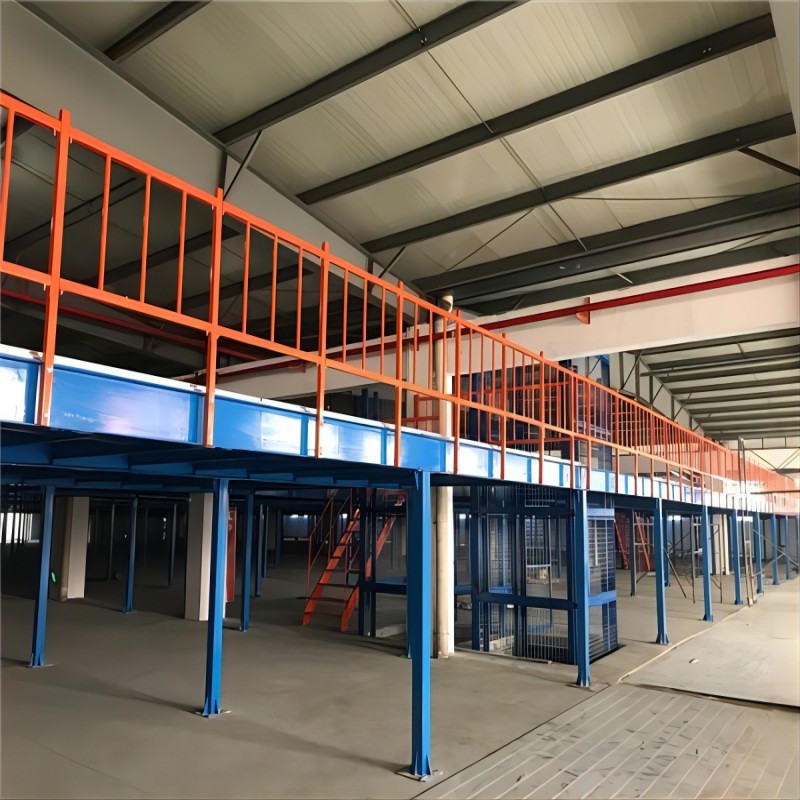
Sourcing storage infrastructure requires careful risk assessment. While acquiring repurposed steel seems straightforward, structural integrity degrades over time. You must rigorously evaluate equipment history and engineering documentation.
Procuring new frames guarantees baseline structural performance. Manufacturers provide 10-to-25-year warranties, ensuring long-term operational stability. More importantly, new installations include precise custom engineering. If you plan to build systems exceeding 20 feet in height, factory engineers will calculate the exact steel gauge required. You also receive immediate seismic compliance documentation and OSHA-certified load capacity labels. These documents prove critical during facility safety audits.
Second-hand components carry invisible operational burdens. Facility managers often overlook mandatory engineering inspection requirements. You must hire independent structural engineers to verify the steel's integrity. These rigorous inspections frequently reveal compromised components.
You can expect a 10% to 20% beam replacement rate due to microscopic fractures or internal rust. Furthermore, used systems rarely include certified load capacity labels. Installing high-capacity frames without engineer-stamped load limits directly violates strict safety protocols. Operating unlabeled equipment exposes your facility to severe regulatory penalties and catastrophic liability.
Mixing different manufacturing brands introduces massive structural risks. Even a millimeter difference in pin alignment drastically reduces maximum capacity.
Teardrop Connectors: The standard teardrop design offers the widest compatibility across various brands. It uses a wedge-shaped slot to secure beam pins securely under gravity.
Keystone Connectors: Also known as Republic-style, these slots use a rectangular opening. They strictly limit future expansion because they remain incompatible with teardrop beams.
Structural T-Bolt: Heavy-duty structural systems often bolt together rather than using snap-in pins. You must verify precise hole spacing before attempting to integrate new beams into an existing T-bolt upright.
Heavy loads exert immense stress on carbon steel. Routine visual inspections prevent minor material fatigue from evolving into catastrophic collapses. Train your warehouse personnel to identify these specific structural warning signs.
You must measure physical deformation using strict mathematical limits. Do not rely on visual estimations.
Inspect your upright frames for lateral bowing or twisting. Any bending exceeding 1/8-inch per linear foot represents a critical structural failure. A forklift collision often causes this specific deformation. Once an upright bows beyond this threshold, the frame loses its vertical load-bearing strength. You must unload the affected bays and replace the upright immediately.
Monitor support beam deflection closely. Beams naturally bow slightly under heavy loads, but they must return to a perfectly horizontal state once unloaded. Measure the beam when empty. A permanent sag exceeding 0.53 inches on a standard 96-inch beam indicates severe material fatigue. This permanent deformation means the steel has surpassed its yield strength. The beam can no longer safely support its rated capacity.
Bare steel frames require additional safeguards to survive harsh industrial environments. Always integrate these safety accessories into your system design.
Column Guards & Protectors: Install heavy-duty steel guards at the base of every aisle-facing upright. These devices absorb forklift impacts, preventing collisions from buckling a fully loaded frame. They remain mandatory in high-traffic zones.
Drop Pins / Safety Clips: Operators sometimes accidentally catch the underside of a beam while lifting a heavy pallet. Without safety clips, the upward force dislodges the beam from the upright slots. Drop pins lock the beam securely into place.
Wire Mesh Decking: Standard setups leave open space between the front and rear beams. Wire mesh decking acts as a safety net. It prevents loose inventory, broken pallet fragments, or split loads from plummeting onto personnel below.
Your floor plan dictates your operational efficiency. You must align your structural setup with your material handling equipment and environmental goals.
Balancing limited land availability drives modern layout decisions. Pushing your storage footprint horizontally consumes massive amounts of space. Conversely, shifting to a vertical strategy allows you to build upward, sometimes exceeding 20 meters. This approach requires Very Narrow Aisle (VNA) setups. While vertical expansion maximizes cubic volume, you must balance this against the operational requirements of specialized articulated or turret forklifts. These advanced machines require highly trained operators and specialized maintenance schedules.
Your chosen forklift fleet completely alters your storage density. A heavy-duty selective layout requires standard 12-foot aisles to accommodate standard sit-down counterbalanced trucks. This wide turning radius consumes valuable floor space. If you transition to specialized reach trucks, you can compress your aisles down to 8 or 10 feet. Condensing aisles across a massive facility drastically increases the total number of pallet positions you can install.
Modern warehouse design must factor in environmental sustainability and long-term scalability. Design your initial framework to accept additional vertical levels later. Over-engineering your base plates and lower uprights initially allows you to expand upward without replacing the entire system.
Integrate your Environmental, Social, and Governance (ESG) goals directly into the structural layout. Heavy-density blocks often suffer from poor natural lighting. Mount automated, motion-sensor LED lighting arrays directly onto the top ties of your frames. These smart systems only illuminate active aisles, drastically reducing energy consumption in deep, high-density areas.
Selecting the ideal infrastructure for massive weights demands a formulaic approach. You must balance available floor utilization, necessary inventory rotation methods, and rigid structural safety limits. Neglecting any of these factors compromises your entire operational ecosystem.
Take actionable steps before issuing an RFP or sourcing steel components. First, conduct a comprehensive volumetric audit of your heaviest SKUs to understand your true dynamic load requirements. Second, map out your desired forklift flow to determine exact aisle constraints. Finally, consult an independent structural engineer to define your baseline capacity requirements and ensure full regulatory compliance.
A: While standard pallets handle up to 2,000 lbs, heavy-duty configurations typically support 2,500 to over 5,000 lbs per level. The exact limit depends entirely on the specific beam length, the steel gauge of the uprights, and the spacing of the beam levels. Always consult the manufacturer's engineered capacity chart.
A: You should inspect high-risk, high-traffic zones every 3 months. Low-risk zones require comprehensive checks at least every 6 months. These inspections must aggressively monitor for permanent beam deflection, upright bowing, missing safety pins, and compromised concrete floor anchors.
A: Generally, no. Even if two separate brands utilize a standard "Teardrop" design, slight manufacturing variances exist. Differences in steel gauge, pin thickness, or locking slot alignment severely compromise the maximum load rating. You must verify brand compatibility with a certified structural engineer before mixing components.
A: Static capacity refers to weight sitting completely motionless on the support beams. Dynamic capacity accounts for the kinetic force exerted when a forklift drops, slides, or abruptly stops a heavy pallet onto the structure. Heavy-duty systems must be specifically rated to absorb these severe dynamic impacts safely.


