

Views: 0 Author: Site Editor Publish Time: 2026-09-18 Origin: Site


Warehouse profitability correlates directly to optimized vertical space utilization. Hidden operational drains from inefficient material handling consume resources daily. When storage infrastructure misaligns with inventory flow, severe bottlenecks occur on the floor. You see this friction most often between bulk pallet storage and case-pick fulfillment operations. Selecting the right infrastructure represents a strategic facility engineering decision rather than a basic equipment purchase. This choice dictates throughput velocity, safety compliance, and long-term scalability for your entire operation. You need to understand exactly what industrial shelving pallet racks are used for to maximize your available cubic volume. We will explore core uses, system types, and implementation strategies to help you engineer a high-performing, safe, and scalable facility that adapts to changing inventory demands.
A standard storage bay relies on several heavily engineered primary components designed to transfer massive weight loads safely to the ground. Vertical upright frames carry the structural load down to the concrete slab. Installers drill through steel base plates directly into the concrete using rotary hammers, driving heavy-duty wedge anchors deep into the slab. If the floor is uneven, installers place steel shims beneath the base plates to ensure the entire column stands perfectly plumb. Horizontal load beams connect these uprights to create multi-level storage rows. Diagonal bracing welded or bolted within the upright columns prevents twisting and sway under dynamic loads. Engineers specify exact steel gauges and beam profiles to guarantee the frame will not buckle under pressure. Safety pins or locking clips secure the beams to the uprights, preventing accidental dislodgment when a forklift operator lifts a pallet.
The primary function of these structures is organizing unitized loads vertically. You maximize cubic volume across warehouses and distribution centers by building upward rather than expanding outward. Forklifts place heavy wooden or plastic pallets directly onto the load beams. This vertical stacking clears valuable floor space for active staging, cross-docking, and transit aisles. High-throughput fulfillment centers rely on this density to house massive inventory reserves during seasonal peaks. Without this vertical infrastructure, facilities quickly run out of square footage. Inventory ends up sitting on the loading dock, halting inbound shipments and creating severe safety hazards on the floor. Standard 48-by-40-inch GMA pallets fit perfectly across standard 42-inch deep frames, allowing a controlled three-inch overhang on the front and back to ensure the pallet rests securely on both beams.
Modern operations frequently blend storage methods within a single aisle to accelerate fulfillment. You can integrate wire decking, punched steel plates, or solid metal panels into the lower rack levels. This modification accommodates hand-loaded inventory and active carton picking directly off the rack. Workers fulfill individual orders on foot below the bulk reserve storage, often operating within engineered pick tunnels. Meanwhile, reach trucks operate in the same aisle or adjacent replenishment aisles, dropping pallets from the upper reserve levels into the lower picking slots as active inventory depletes. This hybrid approach eliminates the need to transport goods across the building from a separate bulk storage zone to a dedicated picking zone, drastically reducing travel time and labor costs.
Standard commercial shelves collapse instantly under industrial weights. You need specific engineering capabilities to safely suspend multi-ton loads high in the air. Structural steel components handle massive dynamic forces generated by forklift impacts and the placement of heavy pallets. Engineers calculate strict beam deflection limits to ensure horizontal supports do not bow dangerously when fully loaded. A standard safety rule dictates that a beam should not deflect more than 1/180th of its total span length. For a standard 96-inch beam, the maximum allowable deflection is roughly half an inch. If a beam bows further, the level is overloaded or the steel has yielded. These strict tolerances separate true industrial infrastructure from light-duty commercial fixtures.
Industrial shelving typically restricts access to standard human height. Workers access these shelves on foot, occasionally using rolling step ladders to reach the top tier. This limits the usable height to roughly eight to twelve feet. Vertical steel storage structures utilize the full clear height of a facility. Mechanical lifts elevate operators or pallets up to forty feet high. You must match the physical structure to your intended retrieval method. Forcing workers to manually pick heavy items from elevated positions introduces severe ergonomic strain and safety hazards. If your facility has a 30-foot clear height, relying solely on static shelving wastes 20 feet of vertical space.
Hand-loaded shelving fails structurally when unit weights exceed a few hundred pounds per level. Forklift-accessible racking becomes mandatory for heavy, unitized loads. You must integrate these structures with specific material handling equipment. Reach trucks navigate narrow aisles to place pallets high in the rack, requiring perfectly level floors and precise mast controls. Counterbalance forklifts require wider aisles but handle heavier, bulkier loads with ease. Order pickers elevate workers wearing safety harnesses to hand-pick items from upper levels. The structural design dictates the exact type of machinery permitted in the aisle. You cannot operate a wide-stance counterbalance forklift in an aisle designed for a narrow reach truck.
Static shelving offers high accessibility but extremely low storage density. Workers can grab any item instantly, but the overall footprint required to house the inventory is massive. Racking structures prioritize rapid mechanical loading and unloading. Forklifts move thousands of pounds in a single motion, drastically reducing travel time per item. You trade granular, hand-level accessibility for massive bulk throughput velocity. Designing an efficient pick path requires analyzing how fast inventory turns over and assigning the fastest-moving goods to the most accessible rack locations. Slow-moving bulk goods belong in the highest, least accessible positions.
Product dimensions dictate your required structural framework. Uniform pallets fit perfectly on standard load beams, resting securely on the front and rear supports. Odd-shaped, non-conveyable items require different support mechanisms to prevent them from falling through the rack. Shelving utilizes horizontal surfaces and vertical dividers to separate individual SKUs. This keeps small, loose parts organized and prevents inventory mixing. Racking handles large, homogeneous blocks of inventory without needing granular dividers. When pallet quality degrades, broken boards can cause loads to shift, making proper wire decking essential even in bulk applications to catch falling debris.
| Feature | Pallet Racking | Industrial Shelving |
|---|---|---|
| Primary Load Type | Unitized pallets, multi-ton loads, bulk containers | Hand-loaded cartons, loose parts, individual units |
| Retrieval Method | Forklifts, reach trucks, mechanical lifts, automated cranes | Manual picking, rolling step ladders, utility carts |
| Height Utilization | Uses full facility clear height (often exceeding 40 feet) | Limited to ergonomic human reach (typically under 10 feet) |
| Storage Density | Extremely high for bulk goods and large reserves | Low to moderate, requires numerous walking aisles |
| Structural Components | Heavy-gauge uprights, load beams, wire decking, base plates | Light-gauge posts, solid shelves, vertical dividers, bin fronts |
| Forklift Type | Minimum Aisle Width | Maximum Lift Height | Primary Application |
|---|---|---|---|
| Counterbalance | 12 to 14 feet | 20 feet | Fast loading and unloading of standard selective racks. |
| Reach Truck | 8 to 10 feet | 35 feet | High-density narrow aisle storage and retrieval. |
| Very Narrow Aisle (VNA) | 5 to 7 feet | 40+ feet | Maximum density wire-guided retrieval in tall facilities. |
| Order Picker | 4 to 5 feet | 30 feet | Manual case picking from elevated storage levels. |
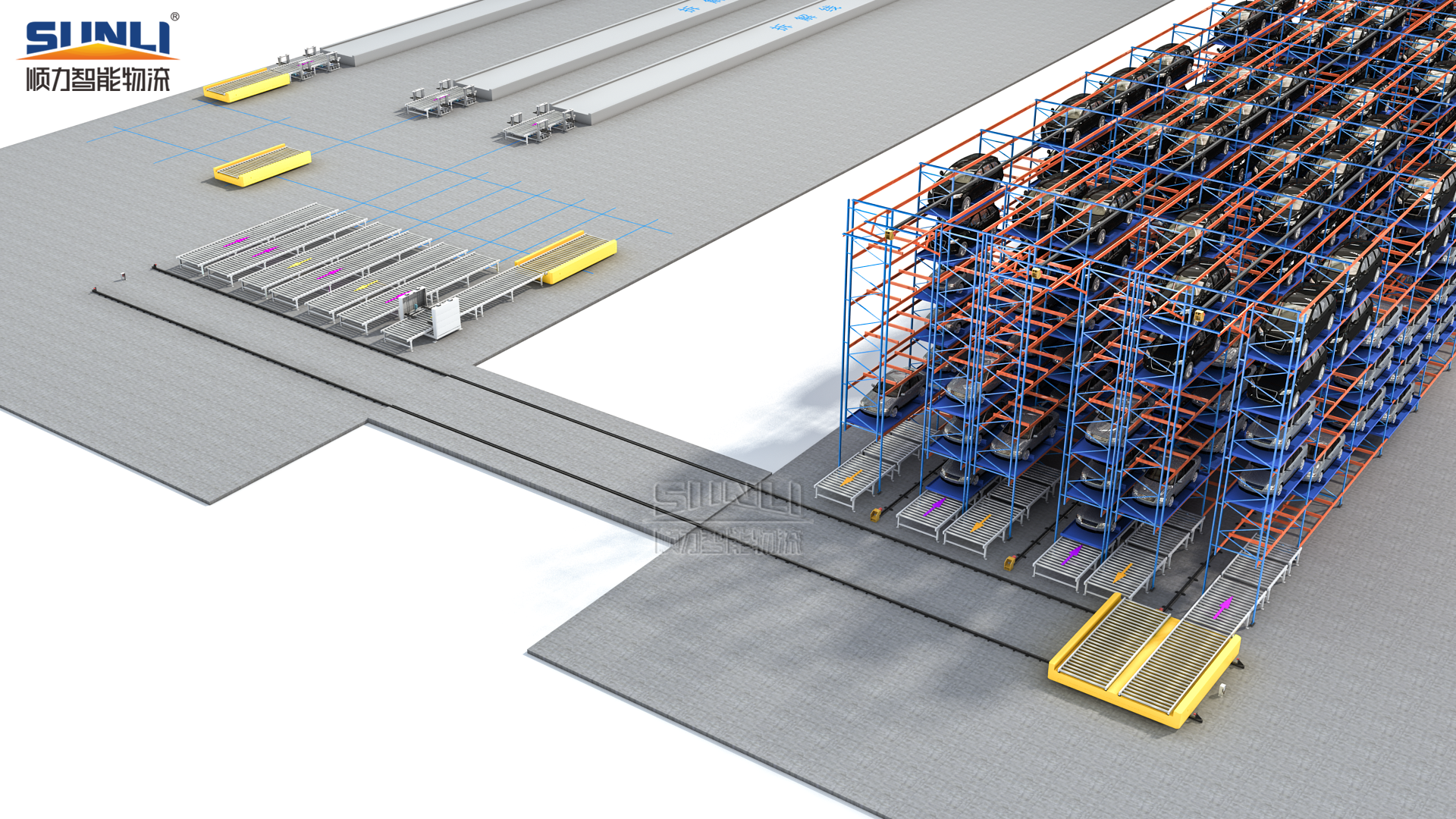
The standard single-deep system remains the most common warehouse infrastructure globally. It offers a massive operational advantage: 100 percent SKU accessibility. Forklifts can reach any specific pallet without moving another one out of the way. This makes it ideal for operations managing thousands of unique items with varying turnover rates. However, this accessibility comes with a high aisle-to-storage footprint ratio. You sacrifice significant floor space to maintain numerous operational aisles. Some facilities utilize double-deep selective racking, which requires a specialized reach truck equipped with pantograph forks to store pallets two deep. This slightly increases density while reducing immediate selectivity.
These systems provide deep-lane storage designed for high volumes of homogeneous products. Forklifts drive directly into the storage bays to deposit pallets on continuous horizontal rails. Drive-in systems operate on a Last-In, First-Out (LIFO) inventory management model, making them suitable for non-perishable goods or long-term seasonal storage. Drive-thru systems allow entry from both sides of the structure, enabling First-In, First-Out (FIFO) rotation. Both options drastically reduce aisle space to maximize density. However, they suffer from the honeycomb effect, where empty slots deep within a lane cannot be utilized until the entire lane is cleared, potentially lowering the actual utilization rate of the warehouse.
Dynamic, gravity-fed systems offer high-density storage while maintaining separate SKUs per lane. Push-back systems use nested carts resting on inclined steel rails. When a forklift deposits a new pallet, it pushes the existing pallets backward. When a pallet is removed, gravity pulls the remaining pallets forward. This creates a high-density LIFO system. Pallet flow racks use wheeled tracks to roll pallets from a rear loading aisle to a front picking aisle, guaranteeing strict FIFO rotation for perishable goods. These systems introduce mechanical complexity. You must account for the ongoing maintenance requirements of wheeled tracks, braking rollers, and moving carts to prevent jams and ensure smooth operation.
Many facilities deploy heavy duty shelving racks to handle mixed inventory that defies standard palletization. These utilize structural or roll-formed steel frames equipped with heavy-duty decking. You integrate horizontal decking and vertical dividers to separate individual items within a larger rack structure. This setup excels for tooling storage, heavy die storage, automotive parts, and oversized hand-stacked goods. It provides the immense structural strength of a pallet rack combined with the granular organization of a shelf. Facilities often add modular drawers or bin fronts to these racks to secure high-value, small-footprint items that require strict inventory control.
You must understand the critical differences between roll-formed and structural steel. Roll-formed steel is manufactured by cold-rolling flat metal coils into specific geometric shapes. It is highly adaptable and suitable for most standard warehouses. Structural steel is hot-extruded, offering massive impact resistance for heavy-duty, high-turnover applications where forklift collisions are frequent. Site-specific seismic engineering is an absolute necessity. Engineers must calculate base plate sizing and anchoring requirements based on local fault lines, soil types, and the concrete slab's thickness. A system installed in a high-seismic zone requires significantly heavier bracing and specialized footers compared to a standard installation. Properly engineered industrial storage solutions account for these geographic variables during the initial design phase.
Your inventory profiles will inevitably change over time. You must assess how easily beam levels can be adjusted to accommodate taller or shorter pallets. Consider how efficiently new bays can be added to the existing structure without dismantling the entire row. Evaluate the standardization of your connections. Teardrop connections dominate the market due to their universal compatibility and tool-less adjustment capabilities. Workers can easily unseat a beam and move it to a different elevation by tapping it with a mallet. Slotted or bolted connections offer rigid stability and are often preferred in structural steel applications, but they require significantly more labor and specialized tools to reconfigure.
Optimizing your footprint requires precise mathematical frameworks. You calculate the clear height of a facility by measuring from the floor to the lowest hanging overhead obstruction, such as lighting fixtures, HVAC ducts, or sprinkler heads. Match this clear height to your upright frame dimensions to maximize verticality while maintaining required clearances. You must also maintain strict flue space compliance. Fire codes mandate specific longitudinal and transverse gaps between back-to-back racks and adjacent pallets. A standard transverse flue space is three inches, while a longitudinal flue space is typically six inches. These flue spaces allow sprinkler water to penetrate down through the storage levels to suppress fires effectively.
Under-sizing aisles for specific forklift turning radiuses causes daily operational damage and slows down throughput. Operators will inevitably strike uprights if they lack sufficient maneuvering clearance. You must match the aisle width exactly to your specific lift equipment specifications, accounting for the right-angle stacking aisle requirements of the largest forklift in your fleet. Altering beam elevations without recalculating the system's overall capacity rating is incredibly dangerous. Moving a beam level changes the unsupported span of the upright frame. Increasing the distance between beam levels drastically reduces the total weight the upright column can safely hold before buckling.
Vetting vendors requires strict criteria to ensure long-term safety and operational continuity. Look for RMI (Rack Manufacturers Institute) certification to ensure baseline engineering standards are met. Demand robust engineering support, comprehensive project management, and clear warranty terms. A reliable warehouse shelving supplier will provide stamped structural drawings for your specific location and handle the complex permitting process. Avoid the severe risks of mixing components from different manufacturers. Even if teardrop beams seem to fit into another brand's uprights, mismatched manufacturing tolerances compromise the structural integrity of the entire industrial pallet rack system. Partnering with a dedicated pallet rack manufacturer guarantees component compatibility and preserves your liability protections.
Steel infrastructure degrades over time through repeated forklift impacts, overloading, and general wear. You must outline a necessity for documented, routine structural inspections. Train internal staff to conduct daily visual checks. Catching minor damage early prevents catastrophic structural failure, protects your workforce, and minimizes disruption to your fulfillment operations. Formal third-party engineering audits should be conducted annually to ensure ongoing compliance.
Industrial shelving pallet racks are never a one-size-fits-all commodity. Their operational value depends entirely on matching the structural design to your specific inventory flow, facility type, and material handling equipment. Prioritize selective racks for high SKU counts and rapid accessibility. Choose dynamic flow systems for maximum density and strict inventory rotation. Deploy hybrid shelving for mixed-picking operations that blend bulk storage with manual fulfillment.
A: Industrial shelving handles lighter, hand-loaded inventory and is limited to human reach heights. Pallet racking is engineered for multi-ton, unitized loads accessed by mechanical forklifts. Racking utilizes heavy-gauge steel to maximize the full vertical height of a facility, whereas shelving relies on lighter materials for granular SKU organization.
A: Capacity depends entirely on the engineering specifications. A standard pair of load beams can hold between 3,000 and 6,000 pounds. However, the overall upright frame capacity dictates the total bay limit. Increasing the vertical distance between beam levels significantly reduces the upright frame's total weight capacity.
A: No. Retrofitting shelving for pallet storage introduces severe safety risks. Shelving lacks the structural steel gauge, heavy-duty base plates, and beam-to-frame connections required to withstand forklift impacts and multi-ton dynamic loads. You must use purpose-built pallet racking for unitized load storage.
A: Fire codes strictly mandate longitudinal and transverse flue spaces. These are clear vertical gaps between back-to-back racks and adjacent pallets. These spaces allow overhead sprinkler water to penetrate through the storage levels to suppress fires. Blocking these spaces violates safety codes and endangers the facility.
A: Prioritize suppliers with Rack Manufacturers Institute (RMI) certification. Look for vendors offering site-specific engineering calculations, seismic compliance guarantees, and professional installation services. Avoid suppliers who cannot provide stamped structural drawings or who recommend mixing components from different manufacturers.
A: Internal staff should conduct visual inspections daily or weekly to spot missing safety pins, deflected beams, or forklift damage. Industry standards dictate that a formal, documented structural audit by a qualified third-party professional should occur at least once annually to ensure ongoing safety compliance.


