

Views: 0 Author: Site Editor Publish Time: 2026-07-10 Origin: Site


Warehouse operations face unprecedented pressure today. Facility land costs continue to skyrocket across major industrial hubs. At the same time, labor retention remains incredibly volatile, and daily throughput demands multiply rapidly. Relying solely on manual fulfillment strategies often creates dangerous bottlenecks. You simply cannot throw more people at seasonal peaks when your physical floor space hits absolute capacity.
Transitioning to an Automated Storage & Retrieval System acts as a calculated infrastructure upgrade. It serves to stabilize your long-term cost-per-pick rather than functioning as a magical cure-all. This guide moves far past basic hardware definitions. You will discover a realistic, return-driven evaluation of automation benefits. We will explore hidden implementation realities, outline strict vendor selection criteria, and help you determine precisely when to modernize your fulfillment operations.
AS/RS deployments typically recover 40% to 85% of floor space by leveraging vertical cube utilization.
Labor resources are reallocated from low-value travel/search tasks to high-value order consolidation and quality control.
Inventory accuracy and security drastically improve, creating reliable audit trails critical for strict compliance sectors (e.g., cold chain, pharmaceuticals).
Realizing these benefits requires strict evaluation of your current Warehouse Management System (WMS) integration capabilities and realistic downtime planning.
You eventually reach a strict operational ceiling using manual fulfillment. Expanding a physical warehouse becomes financially impossible when regional real estate costs skyrocket. You max out your existing physical footprint quickly. Furthermore, seasonal labor shortages consistently disrupt your peak fulfillment windows. Finding reliable temporary workers during holiday peaks becomes increasingly difficult every single year. Training these temporary hires drains massive resources from your core management team. These operational thresholds justify a heavy pivot toward automation.
Failing to modernize carries severe financial penalties. Manual processes conceal massive hidden expenses over time. Fleet managers constantly battle high forklift maintenance bills. Extensive manual handling inevitably multiplies product damage events. Employees drop boxes, misplace pallets, and bump racks accidentally. Moreover, physical fatigue among pickers drives up worker compensation claims rapidly. You lose margin on every delayed order.
Establishing clear success metrics ensures a grounded evaluation. Before adopting automation, define what operational victory looks like. We highly recommend tracking these specific performance indicators:
Cost-per-pick reduction: Measure the exact labor expense required per fulfilled item.
Lines-per-hour (LPH) acceleration: Track the sustained picking velocity during intense shifts.
Storage density improvements: Calculate how many pallets occupy a specific square footage footprint.
Best Practice: Audit your peak season performance data meticulously. Pinpoint exactly where travel time degrades your picking velocity most severely.
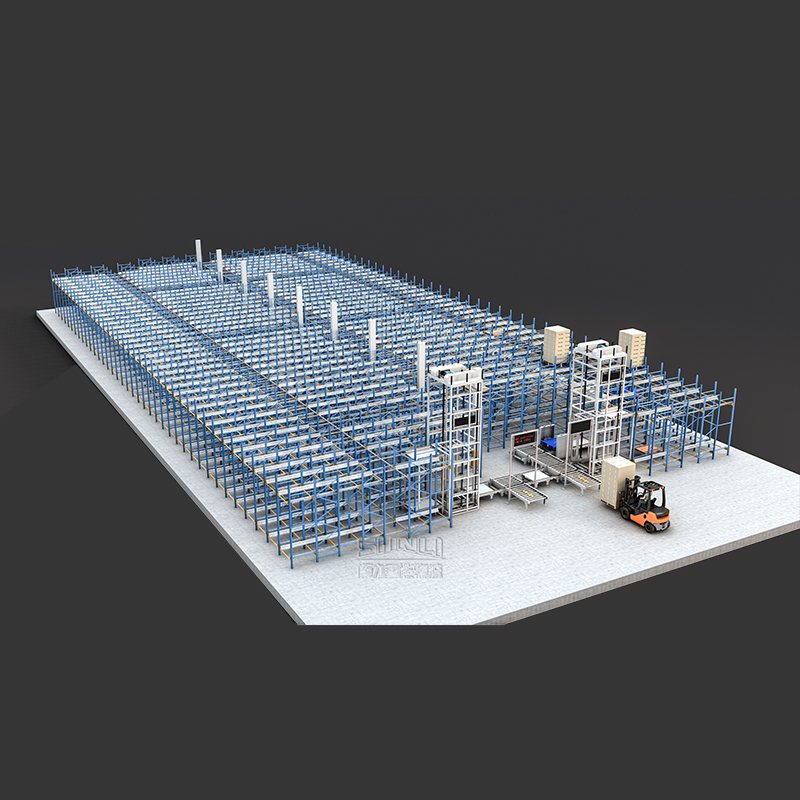
Upgrading to an automated warehouse storage system fundamentally reshapes your daily operations. Eliminating wide forklift aisles unlocks massive spatial efficiency. Facilities can finally build up instead of building out. This vertical cube utilization often delays expensive facility expansion projects entirely. You maximize the real estate capital already invested.
Automation entirely alters your labor allocation model. Traditional facilities rely heavily on inefficient "person-to-goods" workflows. Workers waste countless hours simply walking between distant aisles. Modern hardware introduces a highly efficient "goods-to-person" (G2P) methodology. The machinery delivers items directly to stationary picking stations. This shift guarantees incredibly consistent picking velocities. Picking speeds no longer degrade drastically at the end of a strenuous shift. You maintain peak throughput reliability around the clock.
Security and compliance also experience immediate improvements. Restricted physical access drastically reduces inventory shrinkage. Machines handle sensitive or high-value goods securely behind closed grids. Furthermore, automated tracking guarantees strict compliance enforcement. The software flawlessly executes First-In-First-Out (FIFO) or First-Expired-First-Out (FEFO) rules. This strict rotation proves essential for cold chain logistics and pharmaceutical handling. Cold storage facilities experience massive turnover rates due to harsh working conditions. Automating these freezing environments protects human workers while maintaining strict temperature controls.
Ergonomic benefits provide another massive operational advantage. G2P stations eliminate repetitive bending and overhead reaching entirely. System operators simply pick items presented at an optimal waist height. This ergonomic redesign sharply reduces musculoskeletal injuries among your warehouse staff.
Operational Metric | Manual Fulfillment | Automated Fulfillment (G2P) |
|---|---|---|
Space Utilization | Requires wide aisles for forklift maneuvers. | Dense vertical storage eliminates dead aisle space entirely. |
Picking Velocity | Degrades over the shift due to physical fatigue. | Remains consistently high throughout all operating hours. |
Inventory Rotation | Prone to human error and skipped aisles. | Strict software-enforced FIFO/FEFO compliance occurs seamlessly. |
Worker Safety | High risk of forklift collisions and physical strain. | Ergonomic workstations reduce physical injuries drastically. |
Financial evaluations require balancing heavy upfront capital expenditures against long-term operational savings. Modernizing a facility demands a significant initial investment. However, this capital expenditure (CapEx) rapidly reduces your daily operational expenses (OpEx). You slash recurring labor costs significantly. Dark-warehouse capabilities drastically lower your monthly lighting bills. Traditional high-intensity lighting generates massive heat. You spend money powering the lights, and then spend more money cooling the facility down. Dense storage configurations minimize the cubic footage requiring climate control. This specific HVAC reduction yields massive savings inside energy-intensive cold storage environments.
System scalability defines modern warehouse automation. Legacy systems often required massive, rigid installations. Today, grid-based robotics and shuttle architectures offer incredible modularity. You can execute a phased expansion easily. Your operations team can deploy additional robotic shuttles as seasonal volume scales up. You can extend physical racking structures without halting your existing daily operations. This modular approach aligns capital spending directly alongside your actual revenue growth.
Achieving a standard three-to-five-year return on investment (ROI) requires deep operational transparency. You must maintain highly sustained order volumes. System downtime will quickly destroy your projected financial returns. Continuous preventive maintenance protects this investment.
Common Mistake: Overestimating initial throughput without factoring in your newly trained operators' learning curve. Always model a structured ramp-up period when calculating your exact ROI timeline.
Deploying complex robotics rarely happens without friction. Software integration roadblocks present the largest hidden risk. You must connect the new automated Warehouse Control System (WCS) directly into your legacy ERP or WMS platforms. This digital handshake is rarely a simple plug-and-play scenario. Data mapping requires rigorous testing. Your legacy WMS might batch orders differently than the new WCS expects. Resolving these logic conflicts requires extensive sandbox testing. Never test these integrations in a live production environment. Your inventory logs must sync flawlessly across all software platforms.
Physical facility constraints often dictate your hardware choices. You must commission thorough environmental audits early. Structural engineers must verify your concrete slab load-bearing capacities. Dense vertical racking focuses immense weight onto very small floor sections. You must measure ceiling height clearances meticulously. Furthermore, dense storage configurations typically trigger mandatory fire suppression code updates. You will likely need in-rack sprinkler systems installed before municipal inspectors approve the deployment.
Change management demands equal attention during deployment. You must actively manage the human element. Staff members undergo a massive professional transition. You must retrain physical material handlers to become sophisticated system operators. They will shift from lifting heavy boxes to managing software exception screens. This cultural pivot requires immense patience and highly structured training programs.
Here is a checklist of critical facility audits you must complete:
Concrete Slab Integrity: Test PSI ratings and floor flatness thoroughly.
Vertical Clearances: Map out HVAC ducts and lighting fixtures to prevent obstruction.
Power Infrastructure: Verify electrical panel capacities specifically for robotic charging stations.
Fire Code Compliance: Review local municipal regulations regarding highly dense vertical racking.
Selecting the perfect hardware configuration demands thorough analysis of your specific payload data. You must match the physical technology directly to your daily SKU velocity profile. Solutions differ wildly based on the exact items you move.
Unit-load systems expertly handle massive, heavy pallets. They dominate bulk reserve storage environments. Conversely, mini-load systems manage smaller plastic totes or individual cases perfectly. They excel in broken-case picking workflows. High-speed robotic shuttles offer incredible flexibility. These energetic shuttles dart across horizontal rails rapidly. They retrieve highly active SKUs during intense fulfillment windows. You must categorize your inventory accurately before selecting a specific hardware category.
Evaluating long-term vendor support proves just as critical as the hardware itself. Machinery will eventually experience mechanical wear. You need guaranteed uptime via strict Service Level Agreements (SLAs). Prioritize integration partners offering localized maintenance teams. Proximity matters immensely when a robotic unit fails mid-shift. Global supply chain disruptions easily delay obscure replacement sensors. Your contract must stipulate vendor retention of critical local inventory. Downtime costs thousands of dollars per minute in high-velocity operations.
Do not rush directly into flashy vendor demonstrations. Flashy robots easily distract from fundamental operational gaps. We strongly recommend commissioning a data-driven throughput analysis first. Hire an independent integration engineer to conduct a comprehensive facility study. Let neutral data dictate your exact hardware requirements.
Modern warehouse automation represents a highly strategic operational asset. It permanently insulates your supply chain against unpredictable space constraints and severe labor volatility. You successfully transition from reactive firefighting to predictable, highly scalable fulfillment operations. Automation transforms a strained cost center into a reliable logistical advantage.
Successful deployments never happen by accident. They demand rigorous upfront data analysis. You must conduct brutally honest assessments regarding your physical facility readiness. Software integration challenges require meticulous planning. Never underestimate the massive cultural shift required among your warehouse staff.
Take a proactive step toward operational stability today. Stop letting manual bottlenecks dictate your growth potential. Schedule a comprehensive facility audit immediately. Partner with an experienced integration engineer to analyze your historical throughput data deeply. Build your automation strategy purely on verified operational metrics.
A: Implementation timelines vary heavily based on system scale and facility readiness. A standard deployment requires anywhere from 9 to 18 months. This timeline stretches from initial design approval through final commissioning. Software integration and physical racking installation consume the majority of this deployment schedule.
A: No. Your Warehouse Management System (WMS) still governs overall inventory logic and order processing. The automation utilizes a specialized Warehouse Control System (WCS). The WCS acts as middleware. It translates high-level WMS orders into precise mechanical movements for the robots and shuttles.
A: Modern grid systems feature built-in redundancy. If one robot fails, other units immediately route around the blockage. Facilities must maintain preventive maintenance schedules to minimize mechanical issues. Operations teams also implement manual override protocols and backup generators to ensure critical orders ship during power failures.
A: Yes. Modular architectures excel during seasonal peaks. Grid-based bots and shuttle systems allow you to lease or purchase additional hardware temporarily. You can inject more robots into the grid to handle peak-season stress. This flexibility eliminates massive temporary hiring surges entirely.


