

Views: 0 Author: Site Editor Publish Time: 2026-06-05 Origin: Site


OSHA has launched a rigorous National Emphasis Program (NEP) targeting warehouses and distribution centers. This active enforcement campaign runs aggressively through 2026. It brings a high likelihood of unannounced facility inspections directly to your door.
Facility managers often struggle to find a single, definitive OSHA rulebook for racking. This regulatory gray area frequently leads to critical compliance gaps. You might face severe fines or highly restrictive engineered repair requirements if you guess wrong. A simple bent column can trigger a massive facility-wide audit.
We will demystify the overlapping layers of federal regulations and engineering consensus standards. You will get a clear framework to evaluate, secure, and maintain your Warehouse Rack systems. This actionable guide helps you prevent catastrophic failure and ensure total compliance.
The Compliance Overlap: Federal OSHA does not have a standalone standard for warehouse rack design; instead, inspectors enforce compliance using the General Duty Clause 5(a)(1) and cite ANSI/RMI MH16.1 as the engineering baseline.
Anchoring Fundamentals: Warehouse rack systems must be mechanically anchored to the floor according to manufacturer specifications; tying racks to facility walls is generally discouraged as it transfers unintended structural stress.
Capacity Transparency: Failure to post visible, accurate load capacity plaques is one of the most frequently cited safety violations.
Zero-Tolerance for DIY Repairs: Damaged uprights and beams must be evaluated by a qualified engineer and repaired with certified kits or replaced entirely—makeshift welding or unauthorized modifications void system integrity.
Federal OSHA does not publish one specific standard for racking. Inspectors rely on broader rules instead. They look closely at your daily material handling operations. We see this play out constantly during unannounced visits.
OSHA uses 29 CFR 1910.176 to regulate general material handling. This rule requires you to maintain safe clearances. It also mandates stable stacking. You must keep aisles free from hazards at all times. If you fail here, inspectors issue severe citations quickly.
Inspectors also leverage the General Duty Clause 5(a)(1). This acts as a powerful catch-all enforcement tool. OSHA penalizes employers for "recognized hazards" using this exact clause. A recognized hazard includes bent columns. It also includes overloaded beams or missing safety pins. OSHA can fine you heavily even without a specific racking code. They expect you to provide a safe workplace proactively.
ANSI MH16.1-2023 is the national consensus standard. It governs industrial steel storage racks perfectly. The International Building Code (IBC) formally recognizes this standard. It provides strict engineering baselines for every component.
ANSI is technically an industry guideline rather than a law. However, OSHA uses it as the definitive evaluation benchmark. They use it to judge your Warehouse Rack compliance accurately. If your system fails ANSI standards, OSHA considers it a recognized hazard automatically. You must align your facility directly with these engineering guidelines.
Table 1: Regulatory Framework Comparison | |||
Framework | Originator | Primary Function | Enforcement Power |
|---|---|---|---|
General Duty Clause 5(a)(1) | Federal OSHA | Catch-all requirement for a hazard-free workplace. | Direct fines and citations. |
29 CFR 1910.176 | Federal OSHA | Regulates material handling, clearances, and stacking. | Direct fines and citations. |
ANSI/RMI MH16.1 | ANSI & MHI | Provides engineering design and structural safety guidelines. | Used as the benchmark by OSHA to prove a "recognized hazard." |
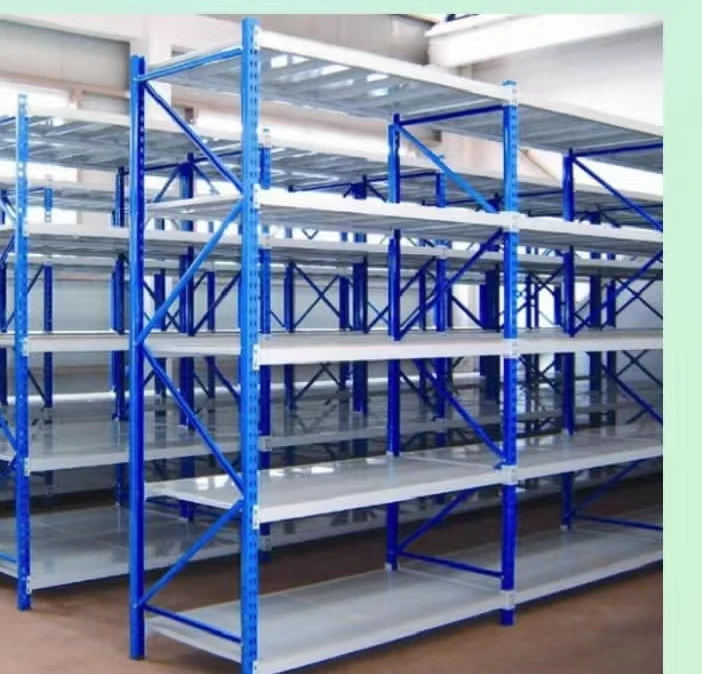
A safe facility relies on structural predictability. You must control how forces interact across your equipment. We highlight four foundational pillars below.
You must anchor baseplates securely to a concrete floor. You should always follow engineered specifications for this task. Proper anchoring prevents the system from tipping over entirely. It provides foundational stability during accidental forklift impacts.
Many operators mistakenly tie racks to facility walls. We strongly discourage using wall-ties. They introduce severe structural risks to your building. Transferring seismic or impact loads to walls causes extreme damage. Building walls cannot handle these lateral forces. A simple forklift bump could compromise your entire building framework.
High-visibility capacity plaques are completely mandatory. You must place them clearly at the end of every aisle. Failing to post these plaques invites severe safety violations. Workers need to see load limits clearly before placing pallets.
Load limits are never arbitrary numbers. Engineers calculate them based on specific beam configurations. Vertical spacing and concrete slab strength also dictate total capacity. You cannot alter beam levels without recalculating capacity. Doing so instantly voids your safety guarantees. Always consult an engineer before adjusting beam heights.
Fire safety dictates strict clearance rules globally. OSHA 1910.159 enforces the 18-inch clearance rule rigorously. You must leave 18 inches of vertical space. This empty space sits directly between stored materials and fire sprinkler deflectors. Water must flow freely during a fire event.
You must also maintain sufficient aisle clearances. Forklifts need adequate room to operate safely. Tight aisles create dangerous pinch points quickly. They also increase the risk of strike hazards. Wide, clear aisles protect both your workers and your infrastructure.
Uniform load distribution is essential for racking safety. You must place heavy items carefully across beams. Avoid concentrating immense weight in the center of a beam. This prevents dangerous beam deflection.
We also warn strongly against double-stacking pallets. Do not do this unless your system explicitly supports it. Double-stacking alters the center of gravity drastically. It creates a severe tipping hazard immediately. You should also use high-quality, standardized pallets. Broken pallets cause localized point-load failures. They compromise the stability of your entire Warehouse Rack system.
Damage happens in every busy facility. How you respond to that damage determines your compliance status. Ignoring minor dents often leads to catastrophic failure.
Facility managers need a reliable diagnostic checklist. You should inspect your equipment regularly. Use these nine critical points to assess structural damage rapidly:
Beams: Check for severe deflection or visible weld cracks.
Safety Pins: Identify missing or damaged locking pins on every level.
Footplates: Look for deformed or twisted baseplates near the floor.
Anchors: Spot sheared, missing, or loose concrete floor anchors.
Frames: Check for leaning or out-of-plumb upright frames.
Columns: Find crushed, dented, or twisted vertical columns.
Struts: Inspect horizontal and diagonal bracing for bends or breaks.
Decking: Look for broken wire mesh or warped decking panels.
Overloading: Watch for visibly bowing beams under heavy pallets.
"Good enough" maintenance creates severe operational hazards. You cannot take shortcuts with structural repairs. Some maintenance teams try uncertified welding to fix dents. Others pound out dents forcefully with a sledgehammer.
These makeshift repairs instantly compromise the load-bearing rating. They also invite severe OSHA citations during inspections. Swapping non-compatible OEM parts is equally dangerous. Every component must match the original engineering specifications precisely. Unauthorized modifications void your system integrity completely.
You need a logical approach for remediation. What happens when a forklift strikes a vital column? You must choose carefully between an engineered repair kit and full replacement.
Evaluate the operational downtime first. Unloading and replacing an entire upright takes days. It disrupts your material handling flow significantly. Conversely, bolting on an engineered, certified repair sleeve is much faster. It restores the original capacity without massive disruption. Always have a qualified engineer approve the final repair method.
Defending your structural assets prevents accidents before they happen. Physical safeguards provide incredible value for daily operations. You must shift from reactive fixing to proactive guarding.
Physical barriers act as your best line of defense. Installing preventative infrastructure reduces strike risks significantly. You should prioritize floor-mounted column protectors everywhere. These devices absorb low-speed forklift impacts effectively.
End-of-aisle heavy-duty guards are also highly crucial. They protect the most vulnerable frame sections from turning vehicles. Structural bollards can deflect heavy machinery away from critical structural points. Investing in these defenses prevents catastrophic structural collapses entirely.
You need multiple layers of inspection protocols. Internal warehouse staff should perform daily or weekly visual sweeps. They can spot obvious hazards easily. They look for missing pins or freshly struck columns.
However, simple visual sweeps are not enough. You must bring in an independent, third-party rack engineer. Schedule an annual, formally documented health audit. This creates a solid, auditable system of record. It proves your strong commitment to safety during an OSHA inspection.
Table 2: Internal Sweeps vs. Third-Party Audits | ||
Criteria | Internal Visual Sweeps | Third-Party Engineer Audits |
|---|---|---|
Frequency | Daily or Weekly | Annually (or after major damage) |
Performed By | Warehouse Staff / Supervisors | Certified Structural Engineers |
Focus Areas | Obvious damage, missing pins, misplaced pallets. | Plumbness, deflection limits, anchor shear, load limits. |
Documentation | Internal checklists. | Certified engineering reports. |
Regulatory scrutiny is higher now than in previous decades. You cannot wait for an inspector to point out your flaws. You must prepare your facility immediately.
OSHA is actively running a strict National Emphasis Program. This program targets warehouses and distribution centers relentlessly. The active inspection window runs continuously through 2026. OSHA focuses heavily on injury rates and material handling practices.
They also scrutinize forklift operations near storage systems. You need a logical next-step framework to survive this period. Follow these three urgent steps to prepare your facility:
Schedule a third-party audit to identify hidden structural weaknesses.
Verify all load plaques match your current beam configurations perfectly.
Quarantine any damaged Warehouse Rack immediately until certified repairs are made.
Warehouse rack safety requires constant, ongoing operational discipline. It bridges strict structural engineering with daily material handling. It is never a simple one-time installation checklist. You must monitor conditions continuously.
Proactive audits and physical column guards offer immense value. Engineered repairs prevent minor operational damage from becoming fatal. These strong measures protect you from structural collapse liability directly. They also shield your business from top-tier OSHA fines.
Advise your decision-makers to act decisively now. Initiate a facility-wide load capacity verification today. Schedule a comprehensive structural inspection before the next regulatory audit arrives.
A: No. OSHA does not state a universal measurement. They require "sufficient safe clearances" for the specific mechanical handling equipment (like reach trucks or forklifts) used in that specific aisle.
A: No, and it is actively discouraged. ANSI standards recommend floor anchoring. Attaching racks to a building's wall can transfer forklift impact forces or seismic loads directly into the building's structural supports, creating severe secondary hazards.
A: There is no single legal height limit. The maximum height is dictated by the manufacturer's engineered load capacity, the strength of your concrete slab, forklift reach capabilities, and the mandatory 18-inch clearance below fire sprinkler heads.
A: Visual indicators include excessive beam deflection (bowing), leaning upright frames, or cracked welds. However, the only compliant way to ensure safe loading is to weigh pallets and strictly adhere to the posted engineering capacity plaques.


