

Views: 0 Author: Site Editor Publish Time: 2026-08-20 Origin: Site


Warehouse and manufacturing logistics are undergoing a massive transformation worldwide. We are rapidly moving away from manual material handling. Instead, modern facilities demand scalable, automated throughput to stay competitive. However, selecting the right automation introduces a significant core challenge. You must carefully match vehicle form factors and navigation systems to specific facility constraints. You have to account for aisle widths, payload limits, and daily workflows.
There is no universal solution because no single vehicle fits every possible use case. Successful deployment relies strictly on a rigorous evaluation of your specific operational needs measured against actual hardware capabilities. In the following sections, you will discover how to evaluate different robotic solutions. You will learn about structural payload handling and distinct navigation systems. Finally, we will help you identify the perfect match for your warehouse layout to maximize efficiency and safety.
Misaligning automation hardware causes severe operational bottlenecks. Companies often over-specify payload limits out of fear. This mistake wastes capital on unnecessarily heavy machinery. Heavy machinery also consumes more battery power during standard shifts. Conversely, underestimating aisle clearance leads to frequent traffic jams. Vehicles simply get stuck in tight corridors. You must frame the business problem accurately before buying hardware.
Defining success criteria requires looking at three distinct operational areas. First, evaluate your exact throughput demands. Measure how many items or pallets you move per hour. Compare peak seasonal operations against normal daily workflows. Your robotic fleet must handle maximum spikes seamlessly without causing secondary delays.
Second, analyze your spatial constraints thoroughly. Brownfield environments represent existing, often cramped spaces. They impose strict limitations on vehicle dimensions and turning radiuses. Greenfield environments are brand-new, optimized facilities. They allow you to design aisles specifically for robotic efficiency from day one.
Finally, assess your integration readiness. Automation rarely operates in isolation. You need seamless handoffs between your new fleet, human operators, and existing software infrastructure. Modern warehouses rely on smooth transitions into Automated Storage and Retrieval Systems (AS/RS). If fleet management systems cannot communicate directly via your WMS, daily operations will quickly stall.
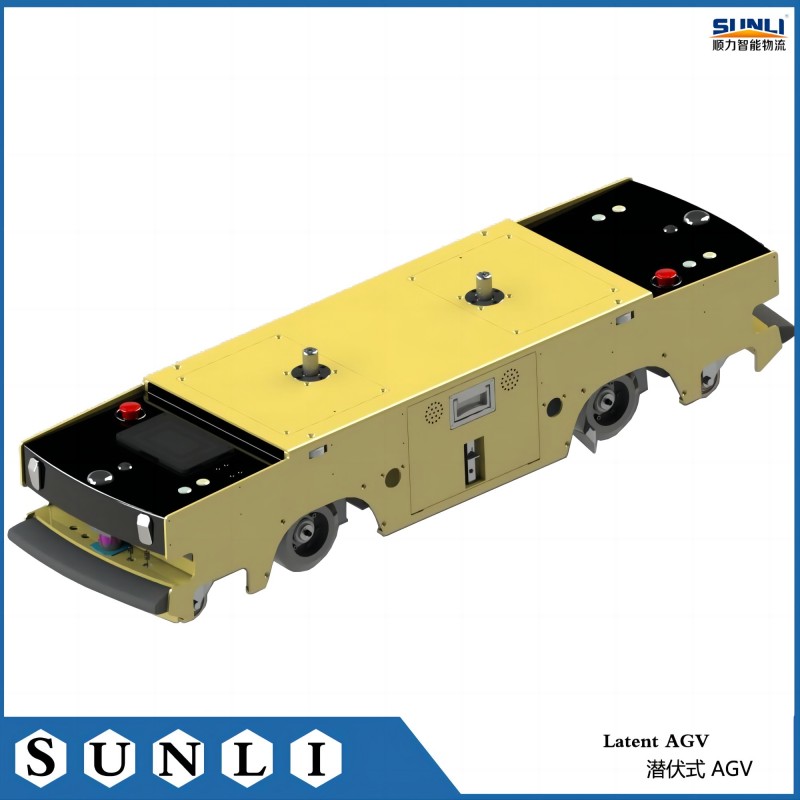
When exploring the automated market, you will find several distinct types of automated guided vehicles. Each form factor serves a highly specialized function. Matching the form factor to the physical payload guarantees safe handling.
Tugging vehicles excel at moving heavy, multi-cart loads. Automotive manufacturing and cross-docking facilities use them extensively over long distances. They transport raw materials sequentially to multiple assembly line stations. However, they possess distinct limitations. They require ample turning radius at intersections. Furthermore, they cannot self-load or vertically unload pallets onto storage racks.
This category includes automated pallet trucks and high-reaching machines. They handle vertical lifting, rack storage, and floor-to-floor pallet transfers. They mimic traditional forklift operations perfectly. You remove the intense labor dependency. Evaluation note: Mast operation requires extensive safety sensors. Mixed-traffic areas demand strict obstacle detection for safe overhead lifting. Proper payload balancing is mandatory here.
Top-loaded carriers manage conveyor-to-conveyor transfers flawlessly. Manufacturers equip them using custom top modules. Rollers, lifting decks, and belts integrate seamlessly into static production lines. They act as flexible bridges between stationary manufacturing stages. These carriers shine when moving heavy castings or large sub-assemblies continuously.
Underride or tunneling vehicles physically drive underneath a rack or cart. They lift the payload via a tow-pin mechanism or flat lifting deck. Next, they move the entire shelf to a human picker. This creates a highly efficient goods-to-person workflow. Facilities save thousands of human walking hours.
A specific standout in this category is the Bi-directional Latent AGV. This advanced configuration offers a massive spatial advantage. It moves forward and backward effortlessly. It never needs to rotate its chassis to change direction. As an outcome, it radically reduces required turning space. Fulfillment centers can implement significantly narrower aisles. This directly unlocks higher storage density and much faster retrieval times.
Form factors represent only half the equation. Vehicle navigation fundamentally determines facility adaptability. Sensor technology guides movement and dictates routing flexibility. Systems generally fall into two broad categories.
Physical guide paths rely on magnetic tape, embedded wire, or RFID tags. These systems offer extreme reliability. They boast lower upfront hardware costs and completely predictable routing. However, they remain incredibly rigid. Modifying routes requires physical floor labor. Facilities suffer mandatory downtime during track layout changes. Heavy warehouse traffic often degrades magnetic tape quickly.
Natural navigation operates differently. It creates an infrastructure-free environment. Vehicles use LiDAR and vision cameras to map spaces dynamically. They adapt instantly to complex layout changes. The downside is a higher initial vehicle cost. Additionally, SLAM requires stable environmental features. Highly dynamic environments constantly shift baseline maps. Moving inventory or temporary pallets can sometimes confuse navigation sensors.
Navigation Technology Comparison Chart
| Navigation Type | Primary Hardware | Initial Cost | Route Flexibility | Best Use Case |
|---|---|---|---|---|
| Fixed Path | Magnetic tape, Wires, RFID | Low | Rigid | Static manufacturing lines |
| SLAM / Natural | LiDAR, Vision Cameras | High | Highly Adaptable | Dynamic e-commerce warehouses |
Shortlisting vendors requires strict discipline. Do not just read glossy brochures. You must map specific hardware features directly to business outcomes. Consider these evaluation dimensions:
Buying robots is straightforward. Integrating them successfully presents complex challenges. You must identify adoption risks early. Ignoring facility readiness leads to stalled deployments.
Common Implementation Risks and Mitigations
| Risk Factor | Operational Impact | Recommended Mitigation Strategy |
|---|---|---|
| Network Dead Zones | Unexpected vehicle stops and traffic jams. | Conduct a comprehensive wireless heat-map audit before deployment. |
| Uneven Flooring | Loss of traction and navigation drift. | Repair cracks and apply specialized epoxy floor coatings. |
| Human Interference | Emergency stops and reduced throughput. | Establish dedicated travel lanes and enforce right-of-way training. |
The true "best" automated system does not exist in a vacuum. The ideal robot is simply the one resolving your specific operational bottleneck. It must achieve this without demanding prohibitive changes to your existing infrastructure. Careful planning always beats reactive troubleshooting. We strongly recommend conducting a structured site audit today.
You should actively map out daily payloads, measure exact aisle widths, and verify IT network readiness. Completing these foundational steps acts as your immediate next action. Only after verifying these exact metrics should you issue a formal Request for Proposal. Proper preparation guarantees long-term deployment success.
A: Yes, they can. Achieving this requires robust interoperability standards. The VDA 5050 protocol is the industry standard for this exact scenario. It allows Master Fleet Management software to control vehicles from different vendors. This prevents traffic jams and ensures coordinated task delegation across mixed fleets.
A: Industry baselines show a realistic ROI timeline between 18 to 36 months. This timeline depends heavily on your local labor rates and facility shift structures. Running multiple daily shifts accelerates the financial return rapidly. Single-shift operations usually sit closer to the 36-month mark.
A: Bi-directional Latent AGVs operate as strictly guided underride vehicles. They move backward and forward on highly predictable, optimized paths. This predictability maximizes storage density. Standard AMRs operate autonomously. They dynamically bypass obstacles by calculating new routes. AMRs prioritize flexibility over absolute spatial density.
A: It relies on safety field triggering. When sensors detect an obstacle, the vehicle initiates rapid deceleration. It will come to a complete, safe stop. Unlike an AMR, a traditional guided vehicle will wait for the obstacle to clear rather than autonomously rerouting off its designated path.


