

Views: 0 Author: Site Editor Publish Time: 2026-08-21 Origin: Site


Supply chain and manufacturing leaders face mounting pressure to automate material handling processes. Labor shortages severely constrain warehouse capacity. Rising safety concerns make traditional manual forklift fleets increasingly risky to operate. Purchasing an automated guided vehicle (AGV) system represents much more than a simple hardware acquisition. It triggers a fundamental shift in how your entire facility functions daily.
Many integration projects fail because buyers misunderstand the true nature of robotic investments. This guide strips away glossy vendor marketing. We aim to provide a realistic, objective breakdown of where these automated systems succeed and where they create frustrating bottlenecks. By the end of this guide, you will clearly understand how to evaluate your current operations against the demands of robotic integration. You will learn to identify operational friction points and establish concrete success metrics. You will be fully equipped to make data-driven procurement decisions.
You must evaluate your current operational friction points before looking at robotics. High forklift accident rates pose massive liabilities to your business. Inconsistent shift throughput disrupts downstream assembly workflows. Escalating manual labor costs eat directly into your profit margins. You need to pinpoint exactly where human intervention slows down the material flow. Operators often spend valuable hours driving empty pallets across massive warehouse floors. They waste immense energy on repetitive, low-value material transport tasks. Documenting these specific friction points provides your baseline data. This data determines if rigid automation actually solves your root problems.
Establish what a successful deployment looks like before you engage any vendor. Vague automation goals frequently lead to expensive, failed projects. You should define concrete, measurable metrics. Success might mean reducing pallet transit time by exactly 20 percent. It could mean achieving zero safety incidents in your high-traffic shipping zones. You might aim to drastically reduce your reliance on temporary seasonal labor during peak months. Clear metrics guide the entire engineering design phase. They keep vendors accountable during the final commissioning process. You can tie contractual payment milestones directly to these performance metrics.
Determine if your physical environment can realistically support rigid automation. These vehicles demand highly specific environmental conditions. Floor quality matters immensely. Potholes, expansion joints, or uneven slopes cause critical navigation errors. Assess your current aisle widths carefully. Can they safely accommodate the turning radius of an automated vehicle? Lighting conditions sometimes affect optical safety sensors. Network stability represents a hidden, critical failure point. You must maintain continuous, localized connectivity. Without a strong network backbone, automated units simply stop moving and flash error codes.
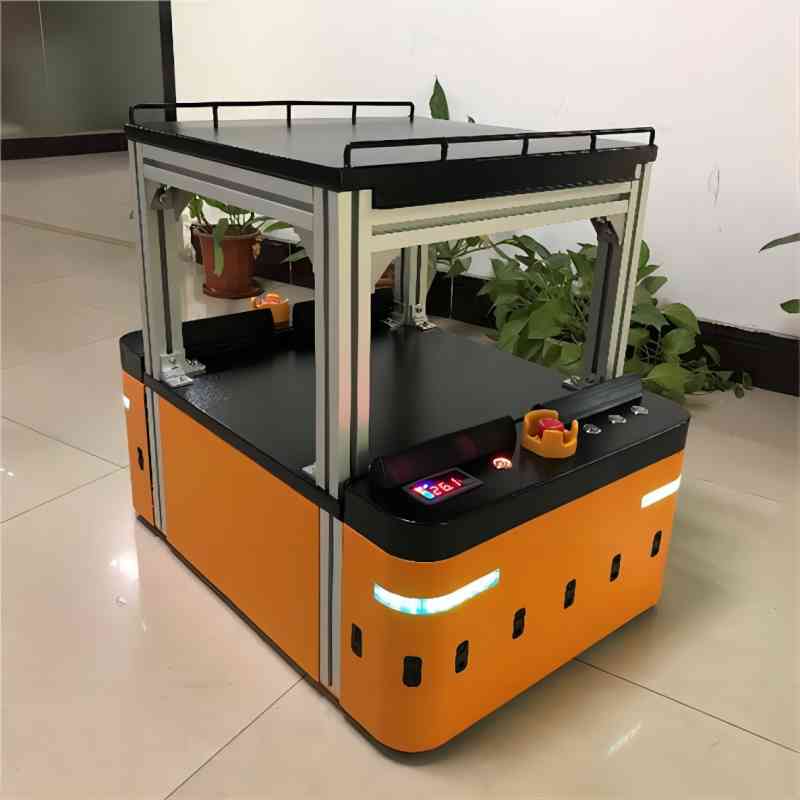
Machines deliver consistent operational capabilities around the clock. They do not experience shift fatigue. They never require unscheduled breaks. They maintain a constant, steady speed throughout an entire shift. This predictability revolutionizes production scheduling. You can perfectly time material deliveries to active manufacturing lines. Furthermore, automation removes human workers from tedious tasks. You shift them away from repetitive, low-value material transport. You can reallocate them to complex, high-value operations. Quality control requires nuanced human judgment. Exception handling needs critical thinking. You maximize your existing workforce by letting robots handle the monotonous driving.
Manual forklifts cause thousands of workplace accidents annually. Automated fleets drastically lower the risk of warehouse collisions. They utilize built-in LiDAR arrays and sensitive bumper sensors. They follow strict, mathematically programmed speed regulations. If a worker steps into a vehicle's path, it stops instantly. This uncompromising approach strictly protects your workforce. It also creates a measurable reduction in product and facility damage. Forklift tines frequently puncture valuable inventory. Human drivers occasionally clip rack uprights. Robots eliminate these careless human errors. You will see lower insurance premiums over time. Your racking replacement costs will drop significantly.
Choosing the right vehicle shape unlocks massive spatial efficiency. Manufacturers design specialized form factors for unique warehouse geometries. For example, utilizing a Two-way Platform AGV eliminates the need for turnaround space in narrow aisles. It simply drives forward, drops the load, and reverses straight out. This bi-directional capability drastically optimizes total warehouse storage density. You avoid wasting square footage on empty turning nodes. You match the vehicle exactly to your specific aisle constraints. This targeted application strategy guarantees higher throughput per square foot.
Traditional navigation systems require strictly fixed routes. They rely on magnetic tape, embedded wire, or strategically placed wall reflectors. You must map these paths perfectly during installation. Any subsequent layout change necessitates physical facility updates. Moving a simple drop-off point requires system downtime and reprogramming. This environmental rigidity makes traditional systems poorly suited for highly dynamic spaces. Furthermore, these units cannot independently navigate around unexpected obstacles. If a dropped pallet blocks the aisle, the robot stops entirely. It triggers an alarm and waits. A human driver or an AMR would simply route around the obstruction.
Robotic integration demands a massive initial capital expenditure. The initial costs extend far beyond the vehicle sticker price. You must fund WMS middleware integration to connect the fleet to your existing software. You must pay for expensive facility modifications. Pouring new concrete or grinding uneven floors adds up quickly. You need to install specialized charging stations. These stations require dedicated high-voltage electrical drops. Evaluating these upfront costs remains critical. You must account for the entire supporting infrastructure to determine accurate return on investment timelines.
Software synchronization often derails automation projects entirely. You face distinct risks when syncing modern fleet management software with outdated platforms. Legacy ERP or WMS platforms might lack necessary API endpoints. Custom coding becomes mandatory to bridge the communication gap. This creates expensive software development delays. Additionally, the vehicles depend on robust, uninterrupted localized Wi-Fi or 5G networks. Spotty coverage causes immediate fleet stalling. A minor network dead zone in a back aisle can trap multiple units. Upgrading your facility network infrastructure is usually a mandatory prerequisite.
To make an informed choice, you must compare competing methodologies. Traditional forklifts offer the lowest initial cost and the highest operational flexibility. However, they carry the highest ongoing labor and safety liabilities. Automated systems present a high initial cost and the lowest flexibility. Yet, they provide the absolute highest predictability for heavy, repetitive loads. AMRs (Autonomous Mobile Robots) sit comfortably in the middle. They require a moderate-to-high upfront investment. They offer high flexibility through natural navigation algorithms. They serve as the best option for highly dynamic, lighter-load environments.
| Equipment Type | Initial Investment | Routing Flexibility | Best Use Case |
|---|---|---|---|
| Traditional Forklift | Low | High (Human Driven) | Highly dynamic, unpredictable workflows |
| Automated Guided Vehicle | High | Low (Fixed Path) | Standardized, heavy pallet transport |
| Autonomous Mobile Robot | Moderate | High (Natural Navigation) | Lighter loads in changing layouts |
You must carefully assess how easily your facility can scale up capacity. Peak seasons demand rapid throughput increases. Renting an extra manual forklift takes one phone call. A trained operator can start driving it immediately. Scaling automated capacity proves far more complex. Deploying a new robotic node takes weeks of intensive planning. You must order the hardware months in advance. Engineers must integrate the new unit into the existing traffic control software. You must plan for peak seasonal scaling during the initial system design phase.
You cannot ignore the human element of warehouse automation. Successful rollouts require careful, deliberate change management. Workforce adoption dictates the ultimate success of the system. You must address job security anxieties immediately. Be highly transparent about your labor reallocation plans. Show workers how the technology removes dangerous tasks from their daily routines. Furthermore, you must train everyone on strict safety protocols. Even though the robots possess advanced sensors, workers need to understand automated traffic rules. Establishing mutual respect between human operators and robotic traffic prevents workflow disruptions.
Hardware degrades steadily over time. Mechanical wear affects wheels, optical sensors, and heavy drive motors. You must plan for routine preventative maintenance. Software updates also require scheduled system downtime. Evaluating the realities of these maintenance needs is vital. You should negotiate rigid Service Level Agreements (SLAs) with your chosen vendor. These SLAs must include strict uptime guarantees. They should outline highly specific response times for critical software failures. Do not accept vague support promises. Require dedicated technician availability during your peak operating hours.
You need a logical framework for moving forward. Do not rush into a massive, full-scale deployment. Follow a systematic approach to mitigate financial risk.
The final purchase decision requires brutal honesty about your warehouse operations. The automated guided vehicles pros and cons ultimately weigh heavily on a facility's demand for strict routine versus adaptive flexibility. If your environment changes layout weekly, fixed-path automation will fail. If you move heavy pallets across the exact same route 500 times a day, it will revolutionize your profit margins.
Always remember a crucial industry truth. Robots are not a silver bullet for broken processes. They serve as a powerful multiplier for already-optimized workflows. Do not automate a bad process. Fix the workflow first, then automate it. If you are ready to evaluate your floor realistically, take the next step. Download a comprehensive facility readiness checklist today. Schedule a technical consultation with an integration specialist to map out your initial pilot program.
A: The industry average for achieving a full return on investment spans 18 to 36 months. This timeline depends heavily on your specific shift structures. Facilities running 24/7 operations across three shifts see much faster returns. They offset labor expenses rapidly. Single-shift operations face longer payback periods due to lower equipment utilization rates.
A: Yes, they safely operate in mixed environments. They utilize multi-layered sensor redundancy, including laser scanners and physical bumpers. Top-tier systems strictly comply with ANSI/ITSDF B56.5 safety standards. These protocols govern stopping distances, warning lights, and audible alarms. They ensure vehicles yield to human pedestrians and manual forklifts at all times.
A: When a network fails, the fleet enters a standard downtime protocol. Most vehicles possess localized memory containing their current route instructions. They will safely complete their immediate movement and then stop. Fail-safes prevent them from driving blind. They remain paused until continuous connectivity is restored and the central server issues new commands.
A: Modifications depend entirely on the chosen navigation technology. Older systems rely on magnetic tape or embedded wire guidance. These absolutely require physical floor modifications. Newer laser-guided solutions or vision-based systems require far less physical disruption. They often only need reflective targets mounted on walls or racks, leaving the floor entirely untouched.


