

Views: 0 Author: Site Editor Publish Time: 2026-09-20 Origin: Site


Inadequate warehouse storage creates compounding operational costs. Structural failures risk employee safety and inventory loss, while inefficient space utilization bottlenecks order fulfillment. Upgrading to high-capacity storage solves these issues, but it requires precise engineering. You must match exact load requirements, material handling equipment, and facility constraints with the correct structural framework. Every facility operates differently. A distribution center moving palletized goods requires vastly different infrastructure than a fulfillment center picking individual parts.
Evaluating local storage options provides distinct operational advantages. Sourcing materials locally impacts freight costs, installation speed, and compliance with regional building codes. Heavy steel incurs massive shipping fees over long distances. Local vendors mitigate these logistical hurdles. Searching for heavy duty warehouse shelving near me connects you with regional experts who understand local seismic zones and fire regulations. This guide breaks down how to evaluate, select, and implement the right heavy-duty storage framework for your specific operational demands.
Capacity Dictates Structure: True heavy-duty shelving is defined by engineered load capacities, beam deflection limits, and gauge thickness, not just marketing terminology.
System Matching: Selecting between "The Big Three" (pallet racking, bulk racks, and boltless/rivet shelving) depends entirely on whether inventory is hand-loaded or machine-handled.
The Local Advantage: Sourcing from a regional supplier significantly reduces freight overhead, accelerates deployment, and ensures compliance with local seismic and fire codes.
Risk Mitigation: Proper implementation requires assessing floor slab capacity, forklift turning radiuses, and strict adherence to OSHA anchoring standards.
Marketing terms often confuse buyers. You must define strict minimum thresholds for heavy-duty classification. Look at the steel gauge first. Industrial applications typically require 14-gauge or 12-gauge steel uprights. Thicker steel provides higher impact resistance against forklift collisions. Next, evaluate the yield strength of the steel. High-capacity systems utilize steel with a minimum yield strength of 50,000 PSI. A true heavy duty warehouse shelving system supports thousands of pounds per level without exceeding the standard L/180 deflection limit. You also need to choose between structural steel and roll-formed steel. Structural steel is hot-rolled into a C-channel shape and withstands heavy forklift abuse. Roll-formed steel is cold-rolled and shaped into teardrop profiles. It works well for standard warehouse applications provided the gauge is sufficient.
Understanding weight distribution prevents catastrophic rack failure. Manufacturers rate shelving based on Uniformly Distributed Loads (UDL). UDL assumes your inventory weight spreads evenly across the entire shelf surface. Point loads concentrate weight in one specific area. Placing a heavy engine block in the center of a shelf creates a severe point load. The shelf might buckle even if the engine weighs less than the total UDL rating. You must calculate both metrics. If your operations involve dense, heavy items, you need reinforced decking. Adding flanged center supports or heavy-duty wire mesh decks helps distribute point loads safely across the load beams.
Your facility environment dictates the required material finish. Standard dry warehouses utilize powder-coated steel. The powder coating process bakes a dry powder onto the metal, resisting chipping, scratching, and basic wear. Harsh environments demand stronger protection. Cold storage facilities, outdoor yards, and high-humidity environments require hot-dipped galvanized steel. Galvanization coats the steel in a thick protective zinc layer. This prevents rust and structural degradation caused by moisture. Using standard powder-coated racks in a freezer environment leads to rapid corrosion at the weld points. Always audit your environmental conditions before selecting a finish. Chemical storage facilities require specialized epoxy coatings to resist corrosive spills.
Procurement must follow a strict facility audit. You cannot order racks without mapping your physical space. Failing to account for constraints leads to costly redesigns and delayed installations. Follow these steps to audit your facility:
Measure the clear ceiling height to the lowest hanging obstruction (joists, lights, heaters).
Map out the building column grid to ensure rack rows integrate without wasting floor space.
Identify all HVAC ducts and overhead doors that might interfere with forklift masts.
Calculate the required fire code clearances, typically mandating an 18-inch minimum gap between the top of stored inventory and ceiling sprinklers.
Locate all floor drains, expansion joints, and uneven concrete slabs that require specialized shimming.
Industrial storage relies on three foundational pillars: Selective Pallet Racking, Bulk Racks, and Boltless/Rivet Shelving. Each serves a distinct operational purpose. You must align the system type with your inventory handling methods. Mixing them up creates massive inefficiencies. Machine-loaded inventory requires different structural integrity than hand-loaded boxes. We will break down each system to help you match features to your workflow.
System Type | Loading Method | Decking Options | Best Application |
|---|---|---|---|
Selective Pallet Racking | Forklift / Machine | Wire mesh, pallet supports, solid steel | Palletized goods, heavy loads |
Bulk Racks | Hand-loaded | Particle board, wire grid, ribbed steel | Heavy boxes, unpalletized parts |
Boltless / Rivet Shelving | Hand-loaded | Particle board, melamine | Medium parts, archiving, bins |
Selective pallet racking dominates modern warehouses. It is the standard for machine-loaded, high-capacity storage. Forklifts place heavy pallets directly onto the load beams. This system offers 100% SKU accessibility. Forklift operators can reach any pallet without moving others out of the way. This accessibility speeds up order picking and replenishment. However, this system requires numerous aisles. More aisles mean less overall storage density. If you need maximum density and have low SKU counts, you might explore deep-lane systems like drive-in or push-back racks. For general versatility, selective racking remains the top choice. Ensure you specify the correct beam connector type, such as teardrop or slotted, to match any existing inventory.
Not all inventory arrives on pallets. Facilities handling medium-to-heavy unpalletized goods rely on bulk racks. These racks feature welded upright frames and heavy-duty step beams. They bridge the gap between light shelving and full pallet racking. Workers load these shelves by hand. Boltless or rivet shelving offers rapid assembly. You connect the components using rubber mallets instead of nuts and bolts. Selecting heavy-duty Z-beams allows rivet systems to hold substantial weight. You can scale these systems easily. They work perfectly for auto parts, hardware, and heavy retail inventory. They keep hand-picked items organized and accessible without requiring material handling equipment.
You must choose the right shelving material for hand-loaded goods. Solid steel industrial storage shelves provide maximum durability. They handle sliding metal parts and heavy point loads without denting. However, solid shelves block light and water. Heavy-duty wire shelving offers superior airflow. This prevents dust accumulation and maintains cleanliness. More importantly, wire shelving complies with strict fire codes. Water from overhead sprinklers passes directly through the wire grids to extinguish lower-level fires. Wire shelving also adapts easily. You can add heavy-duty polyurethane casters to create mobile storage units. This mobility allows you to reconfigure floor layouts quickly without sacrificing structural integrity.
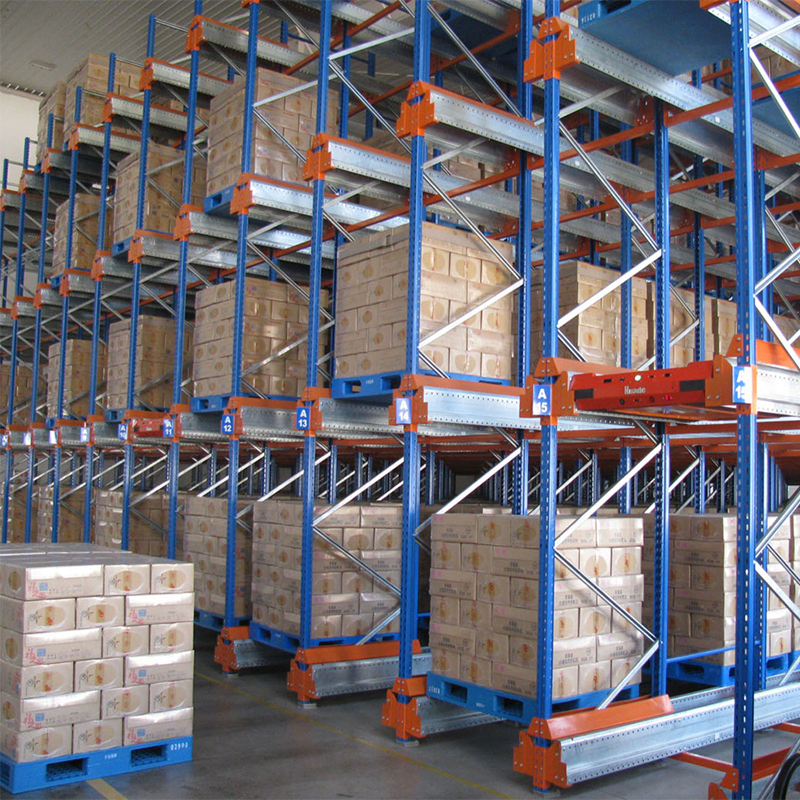
Shipping heavy steel destroys procurement budgets. Steel uprights and beams weigh thousands of pounds. Freight carriers charge by weight, classification, and distance. Ordering racks from across the country requires dedicated flatbed trucks or expensive Less-Than-Truckload (LTL) shipments. Localized sourcing protects your budget. When you buy locally, you drastically reduce freight mileage. These savings allow you to invest more capital into higher-quality steel or additional safety accessories like column protectors. Local vendors also offer faster delivery times. You avoid cross-country transit delays, weigh station hold-ups, and complex freight transfers. Rapid deployment gets your facility operational faster.
Building codes vary wildly by municipality. Out-of-state vendors often miss crucial local regulations. Local suppliers understand specific municipal building codes, fire regulations, and seismic zoning requirements. Warehouses in active seismic zones require specialized engineering. They need larger base plates, heavier wedge anchors, and specific beam-to-column connectors to withstand lateral forces. Failing to meet seismic codes results in failed inspections and mandatory tear-downs. Local vendors navigate these permitting processes daily. They ensure your rack design passes local structural engineering reviews the first time. They also know exactly what local fire marshals expect regarding longitudinal flue spaces and sprinkler clearances.
You must evaluate local vendors rigorously. Do not just accept the lowest bid. Look for a warehouse shelving supplier that offers comprehensive services. Use this criteria to vet potential partners:
Verify they offer in-house CAD design and provide detailed layout drawings before you commit.
Check their installation credentials to ensure they use certified, insured installation crews.
Ask about post-installation inspection services and routine maintenance programs.
Request a site visit so they can measure your space and verify your concrete slab specifications in person.
Visit their local showroom to inspect the material quality, weld penetration, and structural rigidity firsthand.
Your storage framework must align with your inventory management model. Facilities using First-In, First-Out (FIFO) require specific setups. Perishable goods, pharmaceuticals, and date-sensitive materials demand FIFO. Selective racking supports FIFO by allowing access to any pallet at any time. Pallet flow racks optimize FIFO by using gravity rollers to move older inventory to the picking face automatically. Conversely, Last-In, First-Out (LIFO) works for non-perishable bulk goods. Drive-in racks and push-back racks support LIFO. They maximize storage density by eliminating aisles. You must analyze your SKU velocity and turnover rates. Matching your warehouse storage solutions to your inventory flow prevents fulfillment bottlenecks.
Racks and forklifts operate as a single ecosystem. You cannot design a rack layout without knowing your forklift specifications. Aisle widths must accommodate your specific material handling equipment. You must also match rack heights to your forklift's maximum lift height. Ensure the top beam level sits safely within the forklift's reach capacity. Account for the mast height to avoid collisions with overhead fixtures.
Forklift Type | Minimum Aisle Width | Typical Application |
|---|---|---|
Standard Counterbalance | 12 to 14 feet | General warehouse, loading docks |
Reach Truck | 8 to 10 feet | High-density selective racking |
Turret Truck (VNA) | 5.5 to 7 feet | Very Narrow Aisle, maximum density |
Business growth requires adaptable infrastructure. Do not buy a rigid system that cannot evolve. Evaluate systems based on their scalability. Can you easily add extension bays later? Does the manufacturer offer standardized teardrop connections? Teardrop designs allow you to mix and match beams from different brands. Check if the system accepts vertical extensions. Splicing new uprights onto existing frames increases vertical capacity without expanding the footprint. Look for modular decking variations. You should be able to swap wire mesh decks for solid steel or add carton flow tracks as your product lines change. Scalable systems protect your initial capital investment.
The concrete floor is the foundation of your storage system. Installing heavy systems on inadequate concrete is the most common point of failure. You must verify your floor slab capacity. Standard warehouse slabs range from 4 to 6 inches thick with a 3,000 PSI rating. High-capacity racking might require 8-inch reinforced slabs. If the concrete is too thin, the rack columns will punch through the floor under heavy loads. Use oversized base plates to distribute the weight over a larger surface area. You must anchor every column to the floor. OSHA requires specific wedge anchors, typically 1/2-inch by 3-3/4-inch minimum. Follow the manufacturer's torque specifications exactly. Never skip floor anchoring, even for medium-duty systems.
Procurement teams often debate buying used racks to save money. Used heavy duty metal racks offer upfront cost savings, but they carry hidden risks. Metal fatigue is invisible to the naked eye. Previous forklift impacts compromise structural integrity. Used systems often lack original manufacturer load labels. Missing safety pins allow beams to dislodge during loading. Buying used also voids manufacturer warranties. If you choose used racks, execute a strict inspection checklist. Look for rust, bent uprights, twisted beams, and unauthorized field welds. Demand a structural engineer's certification before installing used equipment in high-traffic areas.
Safety compliance is non-negotiable. OSHA enforces strict warehouse storage regulations under section 1910.176(b). You must install mandatory safety accessories. Column protectors shield the base of the uprights from forklift impacts. End-of-aisle guards protect the entire rack row from sweeping turns. Install safety netting or wire mesh panels on the back of racks facing pedestrian walkways. This prevents loose boxes from falling onto workers. You must display clear load capacity labels on every rack row. Operators need to know the maximum weight limits instantly. Schedule routine structural audits. Train your staff to report dented columns or missing safety pins immediately. Proactive maintenance prevents catastrophic collapses.
Audit your facility to map clear ceiling heights, column grids, and HVAC obstructions before ordering materials.
Calculate your exact Uniformly Distributed Load (UDL) and point load requirements based on your heaviest inventory.
Measure your existing forklift fleet to determine the exact aisle widths and maximum lift heights required.
Contact regional suppliers to request CAD layouts, verify concrete slab specifications, and confirm local seismic code compliance.
A: Heavy-duty shelving is defined by structural engineering standards, not marketing terms. It typically features 14-gauge or 12-gauge steel construction. It must support high Uniformly Distributed Load (UDL) ratings, often exceeding 2,000 pounds per level. True heavy-duty systems utilize reinforced beams, secure floor anchoring, and rigid sway bracing to prevent deflection under maximum capacity.
A: Capacity varies significantly by system type and engineering. Hand-stacked bulk racks generally hold between 1,000 and 3,000 pounds per level. Industrial pallet racking systems support much heavier loads, often ranging from 4,000 to over 8,000 pounds per beam level. Always consult the manufacturer's load charts and ensure the floor slab supports the total bay weight.
A: Local suppliers eliminate massive long-distance freight costs associated with shipping heavy steel. They provide rapid delivery and faster installation timelines. Furthermore, local vendors possess vital expertise regarding municipal building codes, fire marshal regulations, and specific seismic zone mandates required for your facility's exact location.
A: Bulk racks are designed for hand-loaded, unpalletized inventory. They feature lighter frames and integrated decking for manual picking. Pallet racking is engineered for machine-loaded operations. It utilizes heavy structural or roll-formed steel to support fully loaded pallets placed directly onto the beams by forklifts.
A: Yes. OSHA guidelines and structural engineering standards require floor anchoring for heavy-duty systems. Anchoring prevents tipping, especially when the height-to-depth ratio exceeds 6-to-1. Proper floor bolts secure the base plates, maintain structural rigidity during forklift impacts, and comply with mandatory seismic zone regulations.
A: Start by determining the maximum weight of your heaviest pallet or product load. Multiply this by the number of loads stored per beam level. Add a 20% safety margin to account for variable inventory weights. Ensure you calculate based on Uniformly Distributed Loads (UDL) and verify that your concrete floor supports the total bay point load.


