

Views: 0 Author: Site Editor Publish Time: 2026-09-18 Origin: Site


Rising industrial real estate premiums and persistent labor shortages force supply chain leaders to maximize vertical space and throughput without expanding their physical footprint. Transitioning from traditional static storage to high-density automation requires significant upfront capital. Decision-makers often struggle to accurately forecast the complete financial impact due to hidden integration, infrastructure, and maintenance expenses.
To build a realistic business case, operations leaders must look beyond the sticker price of the hardware. You need a comprehensive understanding of what drives the automated warehouse racking system cost. This guide breaks down the true financial impact, evaluation criteria, workflow integration, and implementation risks of investing in an automated warehouse racking solution.
Cost Variance by Density: Initial capital expenditure (CapEx) ranges widely based on technology; traditional selective racking requires lower initial capital per pallet position, whereas high-density automated systems require a premium investment per position.
Financial Scope Extends Beyond Hardware: A realistic budget must account for Warehouse Management System (WMS) integration, facility modifications (e.g., floor slab leveling, fire suppression), and ongoing preventative maintenance.
ROI Drivers: Financial returns are primarily realized through reclaimed floor space (avoiding costly facility expansion), reduced reliance on manual labor, and minimized inventory damage.
Risk Mitigation: Partnering with an experienced warehouse automation supplier is critical to avoiding costly operational downtime, ensuring system durability, and guaranteeing the architecture scales with future SKU profiles.
Before analyzing specific equipment expenses, you must define the operational baseline. Upgrading to automation represents a fundamental shift in how a facility handles inventory. You need clear success criteria to justify the initial capital outlay and understand the physical limitations of your current building.
Industrial space is scarce. Leasing a new facility carries massive overhead. You must compare the expense of acquiring new square footage against the investment required to optimize your existing vertical space. Traditional selective racks waste vast amounts of cubic volume on forklift aisles. High-density automated systems eliminate these aisles. They compress storage footprints significantly. You measure success by calculating the investment per pallet position in a dense vertical system versus the recurring lease expenses of a larger conventional building. Reclaiming floor space allows you to add production lines or expand staging areas without pouring new concrete. You must also evaluate your clear height. If your building has a forty-foot ceiling but your forklifts only reach twenty-five feet, you are paying to heat and cool empty air.
Fulfillment speed directly impacts customer satisfaction. Manual picking operations hit hard physical limits. Forklift travel time, human fatigue, and routing inefficiencies throttle your maximum throughput. You must measure required order fulfillment speed against these current manual limitations. Automation streamlines inbound put-away and outbound picking workflows. Conveyors, shuttles, and cranes move inventory continuously. They do not take breaks. They do not suffer from shift fatigue. Assessing workflow improvements means tracking the reduction in cycle times from the receiving dock to the shipping trailer. You must establish a baseline of your current peak-hour pallet movements to determine if automation will actually relieve your specific bottlenecks.
Labor scarcity remains a critical bottleneck for distribution centers. Rising hourly wages cut into operational margins. High turnover rates force constant retraining. Manual material handling also carries inherent safety risks. Ergonomic injury claims and forklift accidents drive up insurance premiums. Calculating the financial offset of these labor challenges is vital. Automation reduces your reliance on a massive manual workforce. You transition from hiring dozens of forklift operators to employing a smaller team of skilled automation technicians. This shift stabilizes your labor expenses and drastically reduces safety incidents on the floor. You also eliminate the constant cycle of recruiting, onboarding, and certifying new equipment operators every quarter.
Volumetric Efficiency Calculation: Measure the exact cubic utilization of the current facility, factoring in wasted flue space and oversized forklift aisles.
Cycle Time Reduction: Track the minutes required to move a pallet from the receiving dock to the final storage location using manual labor.
Error Rate Baseline: Document current mispicks, misplaced pallets, and inventory discrepancies caused by manual handling errors.
Labor Dependency Metrics: Calculate the total hours spent on travel time rather than active picking or put-away tasks.
Not all automation serves the same purpose. The specific technology you deploy dictates your baseline capital requirements. You must match the equipment to your inventory profile. SKU count, turnover rates, and load weights determine which automated pallet rack system makes financial sense for your operation.
Pallet shuttles offer semi-automated deep-lane storage. Robotic carts run on specialized rails integrated directly into the rack structure. A conventional forklift places the shuttle and the pallet at the front of the lane. The shuttle then transports the load deep into the rack. This method provides a moderate entry point for automation. It requires less initial capital than fully automated cranes. It is also highly scalable. You can add more shuttles incrementally as your throughput demands increase. This technology fits perfectly for high-volume, low-SKU operations. It supports both Last-In-First-Out (LIFO) and First-In-First-Out (FIFO) configurations depending on the aisle layout. The rails must be perfectly aligned during installation. Any deflection in the steel causes the shuttle wheels to bind, leading to fault codes and manual intervention.
An automated storage and retrieval system represents the highest tier of density and speed. Fully automated cranes navigate narrow aisles to retrieve loads without human intervention. These systems require significant initial capital. They demand precise structural engineering and fixed infrastructure. The steel racking acts as the supporting structure for the cranes. Deflection tolerances are incredibly strict. You will see distinct financial differences between unit-load systems and mini-load systems. Unit-load AS/RS handles full, heavy pallets. Mini-load AS/RS handles individual cartons or plastic totes. Each requires different crane specifications, load handling devices, and structural steel gauges. The mast of the crane must remain rigid during high-speed acceleration and deceleration. If the mast sways, the telescopic forks will miss the pallet pockets, causing catastrophic drops.
Mobile robotics change the traditional storage paradigm. Instead of workers walking to the racks, the racks come to the workers. AMRs navigate the warehouse floor using advanced sensors and mapping software. They lift portable shelving units and transport them to ergonomic picking stations. This Goods-to-Person approach offers highly flexible capital expenditure. Many providers offer Robotics-as-a-Service (RaaS) models, shifting the investment from capital to operational budgets. AMR systems excel in environments with massive SKU variance. E-commerce fulfillment centers favor this technology because it scales rapidly during peak holiday seasons. The floor surface must be free of expansion joint gaps and surface spalling. AMRs have small drive wheels that get stuck in minor floor defects, requiring constant maintenance if the concrete is not prepped correctly.
Technology Type | Operational Mechanics | Capital Profile | Ideal Application |
|---|---|---|---|
Pallet Shuttle | Robotic carts transport pallets deep into rack lanes via integrated rails. | Moderate initial investment. Highly scalable by adding individual shuttles. | High volume, low SKU count. Bulk storage and beverage distribution. |
AS/RS (Unit-Load) | Fixed mast cranes navigate narrow aisles to retrieve full pallets automatically. | High initial investment. Requires heavy structural steel and precise engineering. | High density, high throughput. Cold storage and heavy manufacturing. |
AMR / Goods-to-Person | Mobile robots carry portable racks directly to stationary human picking stations. | Flexible investment. Often available through operational lease models. | High SKU variance, piece-picking. E-commerce and retail fulfillment. |
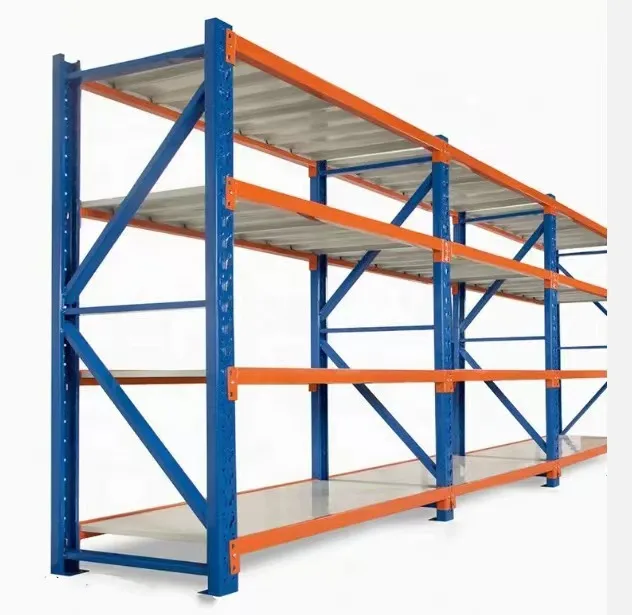
Understanding the final invoice requires dissecting the project into distinct categories. Hardware is only one piece of the puzzle. Software integration and facility modifications often represent a massive portion of the total budget. Failing to account for these secondary categories leads to severe project overruns.
The physical structure forms the backbone of your operation. You must evaluate the structural components carefully. Racking steel, guide rails, and safety barriers must withstand constant automated movements. Roll-formed steel might suffice for static storage, but structural steel is often necessary for the dynamic forces exerted by heavy cranes. The gauge of the steel directly impacts the material quote. Seismic zones dictate heavier baseplates, thicker column profiles, and larger anchor bolts. Next, you factor in the automation hardware itself. Shuttles, mast cranes, robotic arms, and connecting conveyor lines carry distinct price tags. Benchmarking the estimated investment per pallet position helps you compare different automation tiers accurately. You must also account for safety fencing, light curtains, and emergency stop circuits required to protect human workers from automated machinery.
Hardware cannot function without intelligent software. System architecture requires robust licensing and customization. Your Warehouse Management System (WMS) must communicate flawlessly with the new Warehouse Control System (WCS). The WCS acts as the traffic cop, directing the physical movements of the machines. Data migration and logic mapping require extensive engineering hours. You incur expenses mapping your existing inventory logic to the new automated framework. If the API handshakes fail, the physical machines sit idle. Seamless communication between enterprise software and floor-level hardware is a non-negotiable expense. Exception handling logic takes weeks to program and test. If a pallet has a broken bottom board and the crane cannot lift it, the software must know how to quarantine that location and route the crane to the next task without crashing the entire system.
Automated machinery demands a pristine operating environment. You rarely install these systems on an existing, untouched floor. Structural prerequisites are strict. Floor slab leveling is critical. AS/RS cranes require specific F-min (floor flatness and levelness) ratings. If your current concrete slab undulates, you must grind it down or pour a specialized topping slab. A quarter-inch variance on the floor amplifies to several inches at the top of a sixty-foot mast, causing the crane to strike the rack. Heavy cranes also require reinforced concrete footings. Beyond the floor, you face infrastructure upgrades. Automation draws significant power. You may need enhanced electrical grids, new transformers, and dedicated busbars. High-density storage also changes your fire risk profile. Specialized fire suppression systems, including in-rack sprinklers, are mandatory to meet local fire codes. The piping for these sprinklers takes up vertical flue space, which must be engineered into the rack design. Finally, precision electronics may require HVAC modifications to control humidity and prevent condensation on optical sensors.
Every capital project requires a rigorous financial defense. You must weigh the immediate pain of a large capital outlay against the long-term operational bleeding of a manual facility. Choosing a smart warehouse racking system changes your financial trajectory and operational capabilities.
The traditional warehousing model relies on low upfront capital. Standard selective racks and a fleet of leased forklifts get you operational quickly. However, this model guarantees high long-term operational expenses. You pay continuously for labor, forklift maintenance, battery replacements, and facility energy. The smart system model flips this equation. You face high upfront capital requirements. This is offset by dramatic long-term operational savings. You eliminate forklift leases. You reduce product damage caused by human error. You can even implement dark warehouse capabilities. Automated systems do not need bright lighting or standard human comfort heating, drastically lowering your utility bills. The depreciation schedules for heavy capital equipment also offer different tax advantages compared to standard operational labor expenses.
Automation is not universally appropriate. You must validate the investment based on volume. Determining the minimum throughput required to justify automation addresses common skepticism, especially for mid-sized operations. If you only move a few dozen pallets a day, a fully automated crane system will never pay for itself. However, if you run multiple shifts, struggle to find space for inbound freight, and face constant picking backlogs, the volume threshold is met. You calculate the break-even point by analyzing daily pallet movements and peak season demand spikes. You must also consider the physical constraints of your building. If your facility is chopped up by load-bearing columns every thirty feet, installing long, continuous AS/RS aisles becomes structurally impossible without major architectural renovations.
Business growth is rarely linear. Your storage system must adapt to changing market conditions. Modular expansion offers a distinct financial advantage. With shuttle systems or AMRs, you can add capacity incrementally. If demand grows, you buy more shuttles. You do not need to build a new aisle. Conversely, you must acknowledge the fixed constraints of rigid architectures. A crane-based AS/RS is highly efficient but inflexible. Once you build the aisles and install the cranes, you cannot easily change the layout. You risk outgrowing the system if your SKU profile shifts dramatically from full pallets to individual e-commerce parcels. You must project your inventory profile five to ten years into the future before locking into a rigid steel structure.
Deploying advanced storage technology carries inherent operational risks. A poorly executed integration can paralyze your supply chain. Proactive risk management protects your investment and ensures a smooth transition from manual to automated workflows.
Your choice of integration partner dictates the success of the project. You must assess a warehouse automation supplier through strict evaluation lenses. Look at their historical track record with your specific industry. Demand case studies and site visits to active facilities. Evaluate their financial stability; you need them to exist ten years from now to provide support. Scrutinize their post-installation Service Level Agreements (SLAs). Hardware is only as good as the software driving it. Ensure the supplier has proven integration expertise. They must demonstrate a history of successfully connecting their WCS with your specific ERP and WMS ecosystem. Ask for references specifically regarding software integration, as this is where most projects face severe delays.
You cannot simply shut down your distribution center for six months to install new racks. You must manage workflow disruption carefully. Phased rollouts are essential. Structure the installation to maintain baseline throughput. Build the new automated zone while the manual zone continues to ship orders. This requires meticulous project management and strict contractor scheduling. You must also calculate the impact of buffer inventory. During the transition period, your storage capacity will drop temporarily as old racks are torn down. You may need to hold safety stock at an off-site third-party logistics facility. Budget for these temporary storage and transportation expenses, as they are rarely included in the hardware vendor's proposal.
A comprehensive budget anticipates expenses that occur after the system goes live. Maintenance contracts are a major factor. Budget for ongoing preventative maintenance to keep the robots running smoothly. Be aware of proprietary spare parts inventory. Some manufacturers lock you into buying their specific motors and sensors. Understand these replacement expenses upfront. Finally, do not ignore change management. Transitioning from a manual facility to an automated one requires a culture shift. You must budget for retraining staff. Forklift operators need training to become automation supervisors. Software operators need training on the new WCS dashboards. Proper training prevents user-generated system faults and ensures you actually achieve the throughput speeds promised by the manufacturer.
An automated racking system transforms facility operations, but it demands rigorous upfront planning. The investment yields high returns only when the technology aligns perfectly with your SKU velocity, storage density, and growth projections. Prioritize modular scalability, proven durability, and seamless software integration over basic hardware quotes.
Conduct a comprehensive facility audit to measure exact floor flatness, clear heights, and existing power infrastructure.
Define baseline throughput metrics by tracking current manual cycle times, error rates, and peak season pallet movements.
Map your existing WMS logic to identify potential API integration gaps before selecting a hardware vendor.
Issue detailed RFPs to a shortlist of vetted integration partners to secure accurate, site-specific engineering proposals.
A: The total investment depends heavily on system type, facility size, and software complexity. Unit-load crane systems require significant capital for structural steel and precision engineering. Shuttle systems offer a more moderate entry point. Final budgets must include facility modifications, WMS integration, and preventative maintenance contracts alongside the hardware.
A: Most facilities achieve a return on investment within three to seven years. This timeline accelerates in regions with severe labor shortages or high industrial real estate premiums. Savings are realized through eliminated forklift leases, reduced manual labor dependencies, lower product damage, and avoided facility expansion projects.
A: No. Many automated systems are retrofitted into existing buildings. However, existing facilities often require structural upgrades. You may need to level the concrete floor slab to meet strict flatness tolerances, upgrade the electrical grid, or install specialized in-rack fire suppression systems to comply with updated safety codes.
A: You divide the total project budget by the maximum number of pallets the system can hold. The total budget must include the racking steel, automation hardware, software licensing, installation labor, and facility modifications. High-density systems require a higher initial investment per position but drastically reduce the required square footage.
A: Structural steel racking can last decades if properly maintained and protected from impacts. The automation components, such as shuttles and cranes, typically operate reliably for ten to fifteen years. Lifespans depend entirely on adherence to strict preventative maintenance schedules and the operating environment's cleanliness.
A: Beyond standard wear and tear, facilities must budget for proprietary spare parts, software updates, and specialized technician labor. Emergency support SLAs and annual WCS licensing renewals also impact the long-term budget. Transitioning staff from manual roles to automation supervisors requires ongoing training investments.


