

Views: 0 Author: Site Editor Publish Time: 2026-08-19 Origin: Site


Automation promises massive efficiency gains for modern supply chains. Facility managers often treat these complex systems as universal fixes. In commercial reality, industrial automated guided vehicles require highly specific conditions to deliver a verifiable return on investment. You must transition from conceptual interest to identifying precise material handling workflows. These targeted workflows must fit your existing floor constraints flawlessly. Success depends heavily on continuous material flow consistency. It also requires seamless warehouse management system integration rather than simply replacing human headcount. We will explore high-yield deployment environments today. You will understand specific form factors like the highly efficient Roller AGV. We will also uncover strict physical facility prerequisites necessary for deployment. Ultimately, you will learn how to frame a profitable automation business case. You can then test scalability limits for long-term operational resilience.
You must establish strict operational baselines before purchasing hardware. This prevents costly misalignments between fleet capabilities and facility realities. Automation demands rigorous upfront analysis. You cannot guess your operational thresholds.
You need to know when manual labor stops making financial sense. Identify scenarios where forklift operating expenses mathematically exceed automated fleet investments. Consider rising operator wages and intensive training programs. Factor in frequent rack damage incidents. High turnover rates also drain operational resources daily. Human operators require rest breaks and shift handovers. These pauses create compounding inefficiencies over time. Industrial fleets run continuously, providing highly predictable throughput rates. You must calculate these diverging expense lines accurately. The crossing point represents your definitive automation break-point.
Assess the ratio of standard routes to unpredictable material requests. Industrial automated guided vehicles demand predictable routes to maintain efficiency. Highly standardized paths yield the best operational metrics. Ad-hoc requests disrupt scheduled delivery cycles quickly. Evaluate your current warehouse management system data thoroughly. Map out the most frequently traveled facility corridors. Eliminate workflows heavily dependent on sudden human decision-making. Consistent material flow guarantees maximum asset utilization. You want machines performing repetitive tasks endlessly.
Determine the specific volume limits of your current facility. Static solutions become severe physical bottlenecks at high volumes. Conventional conveyors block valuable floor space rigidly. Conversely, entirely manual solutions become cost-prohibitive during seasonal demand spikes. Fleet automation bridges this critical gap effectively. Identify the exact throughput numbers triggering workflow congestion. Use these specific volume thresholds to justify transitioning toward flexible autonomous platforms. They provide scalability during peak operational seasons.
Certain facility environments inherently maximize autonomous fleet performance. Targeting these specific zones ensures faster project payback periods. We look for repetition, danger, and continuous operational demands.
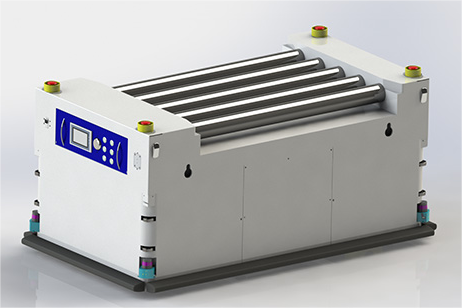
Selecting the correct vehicle form factor remains crucial. You must match machine capabilities to specific material handling tasks. Using the wrong vehicle type guarantees workflow disruption.
A specialized Roller AGV handles automated conveyor-to-conveyor handoffs beautifully. It also manages machine-to-conveyor transfers flawlessly. These specialized units feature motorized top rollers. They align precisely alongside static conveyor belts. The vehicle rollers spin to pull payloads onboard smoothly. This creates seamless payload transfers without secondary lifting equipment. You eliminate intermediate forklift touches completely. This form factor excels in highly automated manufacturing facilities. It bridges stationary automation islands seamlessly.
Tow tractors serve milk-run logistics best. They move multiple carts of raw materials simultaneously. These trains supply long assembly lines efficiently. They act like horizontal trains navigating factory aisles. Tuggers require wide turning radii to maneuver effectively. You must design facility layouts accommodating these sweeping turns. They handle extremely heavy cumulative towing capacities. We deploy them often in automotive parts delivery.
Unit load carriers handle deep-lane stacking tasks. They also execute high-rack put-away operations. These robust platforms interface directly alongside standard pallet racking. They lift heavy pallets safely to elevated positions. Advanced sensors ensure precise fork insertion every single time. They replace traditional manual reach trucks in narrow aisles. You achieve higher vertical storage density utilizing them.
| Vehicle Type | Primary Function | Ideal Facility Environment | Payload Mechanism |
|---|---|---|---|
| Roller Deck | Conveyor handoffs | Automated sorting centers | Motorized top rollers |
| Tow Tractor | Milk-run logistics | Automotive assembly lines | Rear towing hitch |
| Unit Load Forklift | High-rack put-away | Deep-lane storage warehouses | Lifting forks or tines |
Implementing a fleet requires a pristine operational canvas. Your physical building and IT infrastructure dictate deployment success. You cannot force modern robotics into outdated facility constraints.
Navigation technology dictates how vehicles interpret facility layouts. Laser-guided vehicles utilize rotating lasers hitting wall-mounted reflectors. They offer incredible accuracy but struggle in highly dynamic environments. Magnetic tape navigation follows physical lines taped onto floors. This provides absolute reliability but lacks route flexibility. Floor tape degrades over time. Modern systems utilize natural feature navigation like SLAM. These advanced algorithms map facilities dynamically using lidar. However, SLAM struggles in environments featuring constantly shifting pallets. Highly reflective surfaces also confuse optical navigation scanners. You must match navigation technology to your specific environmental conditions.
Your concrete floor represents the foundation of fleet stability. Floor flatness tolerances remain exceptionally strict. Adhere strictly to industry guidelines like the FEM standard. Flat floors ensure stable mast extensions during high lifts. Evaluate maximum incline gradients across your facility map. Autonomous motors struggle pulling heavy payloads up steep ramps. You must also calculate minimum aisle width clearances carefully. Vehicles require adequate space for safe passing and turning. Tight corners trigger safety sensors prematurely. This causes sudden stops and severely impacts throughput speeds.
Do not underestimate hidden software integration barriers. Your current warehouse management system must communicate flawlessly. Assess middleware requirements early during the planning phase. The WMS generates tasks and dispatches fleet commands dynamically. Unstable Wi-Fi networks create dangerous blind spots. Vehicles require continuous communication to coordinate traffic control safely. Substandard network latency causes delayed routing decisions. Upgrade your wireless infrastructure before hardware arrives. Robust IT backbones prevent expensive deployment delays.
Choosing a vendor requires deep operational foresight. You are buying a long-term logistics partnership. Hardware specifications represent only a fraction of the evaluation criteria.
You must look past initial unit costs immediately. True fleet integration involves extensive site mapping protocols. It demands rigorous IT integration hours from specialists. You need comprehensive preventative maintenance schedules established upfront. Software licensing agreements also add long-term recurring expenses. Assess all these variables carefully during vendor selection. Ask about guaranteed maintenance service level agreements. Fast technical support keeps your operations running during critical breakdowns. Evaluate the availability of local spare parts inventory.
Test vendor fleet management software vigorously. You must understand software limitations before signing restrictive contracts. Ask vendors how systems handle complex traffic deadlocks. Expanding fleets from three to fifteen vehicles creates massive routing challenges. Interoperability standards matter immensely here. Ask vendors if they support VDA 5050 protocols. This specific protocol allows seamless communication between different vehicle brands. It protects you against restrictive single-vendor lock-in. You want software capable of scaling alongside your business growth.
Structure a strict Proof of Concept phase first. You must define rigid quantitative success metrics. Measure successful automated cycles per hour accurately. Track human intervention rates closely during peak operational hours. Establish these firm baselines before committing to facility-wide rollouts. A successful pilot proves systemic readiness. It validates your operational assumptions safely. Use pilot data to refine traffic routing and safety zones. Never rush into full deployment without testing a single route first.
Industrial automated guided vehicles represent deep infrastructure investments. They are never just standalone purchases. Your facility must prepare extensively for their arrival. We advise conducting a comprehensive WMS audit immediately. Perform a physical site survey next. You should map out one highly repetitive route today. Use this low-variance route for a potential pilot program. Finally, engage your engineering teams immediately. Calculate baseline material handling operations thoroughly. Set realistic return targets based on verifiable facility data.
A: Deploying these autonomous platforms requires robust Wi-Fi network stability. You must maintain continuous coverage across all operational zones. Network latency limits typically must stay below 50 milliseconds. Consistent communication prevents sudden vehicle stops. Furthermore, seamless WMS integration demands modern API or middleware solutions. These protocols assign tasks and manage real-time fleet traffic efficiently.
A: Strict ISO 3691-4 compliance governs autonomous fleet safety. Vehicles utilize safety laser scanners to monitor their surroundings continuously. These scanners project protective zones ahead of moving units. Human proximity instantly forces vehicle deceleration. If operators breach the closest zone, machines stop completely. These necessary safety decelerations reduce overall cycle times significantly in high-traffic areas.
A: Yes, these specialized units interface well with legacy systems. Successful integration requires precise mechanical height tolerances. You must align the vehicle rollers exactly flush against static belts. The systems rely on optical sensors to verify alignment securely. Standardized handshake protocols dictate when payload transfers begin. This prevents accidental drops during automated conveyor handoffs.


