

Views: 0 Author: Site Editor Publish Time: 2026-07-12 Origin: Site


Automated warehousing often appears as a universal fix for supply chain struggles. However, deploying an Automated Storage & Retrieval System is a high-stakes capital expenditure. It requires precise operational alignment to deliver a successful return on investment. Operations and supply chain leaders must evaluate physical facility constraints alongside daily throughput demands. You need a reliable framework to determine if your warehouse truly needs mechanization. Sometimes, operations only require simple process refinement rather than full mechanization. We will explore exactly where these advanced systems thrive today. Matching the right architecture to your unique industrial environment is the ultimate differentiator. It transforms a potential operational bottleneck into a highly scalable fulfillment engine. Read on to discover the specific operational triggers, ideal core environments, and hidden implementation realities. These factors dictate successful automated deployments across modern fulfillment centers.
Driven by Constraints: AS/RS deployments are most common in facilities facing severe footprint limitations (land costs), chronic labor shortages, or demanding regulatory compliance (e.g., cold storage).
Architecture Dictates Application: The "where" depends heavily on the "what." Unit-load systems serve heavy manufacturing, while highly agile AMR-based or cube-storage systems dominate e-commerce micro-fulfillment.
Integration is the True Test: Hardware efficiency relies entirely on seamless WMS/WCS software integration; an AS/RS is only as effective as the data feeding its control systems.
Hidden Implementation Risks: Floor slab requirements, fire suppression compliance, and downtime during transition are the primary hurdles during a facility upgrade.
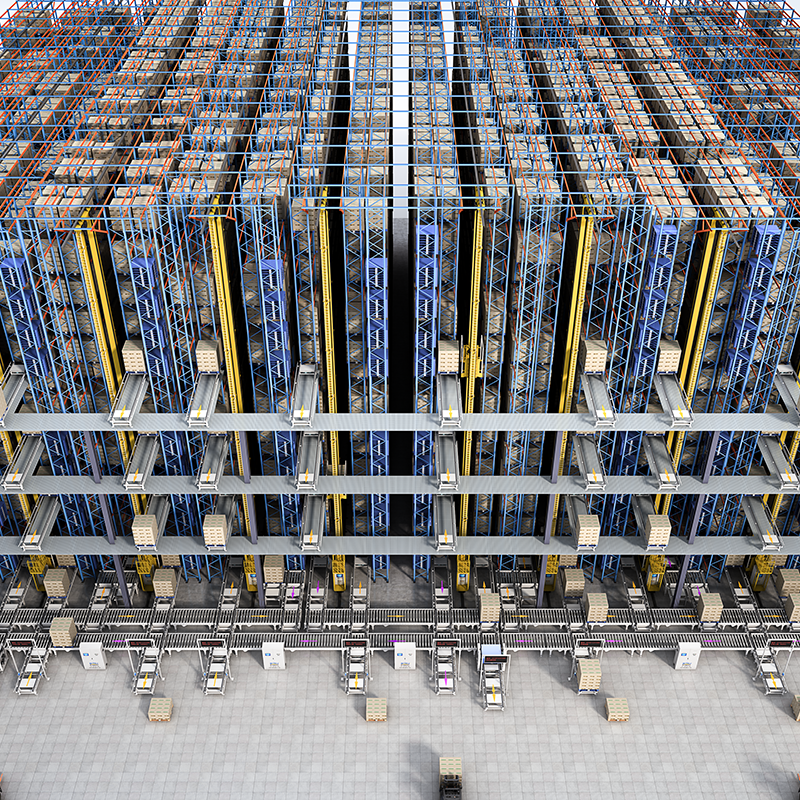
Facilities do not automate simply to chase innovation. They automate to solve acute operational bottlenecks. Expanding physical square footage often proves impossible today. Real estate land costs force companies to build up. A system maximizes vertical cube utilization effortlessly. It reaches high elevations impossible for standard manual forklifts. You can bypass the need for new land acquisition. Instead, you optimize the existing cubic volume perfectly.
Labor availability remains a chronic struggle for warehouse managers. High-turnover manual picking cripples fast fulfillment speed. You can replace this volatility reliably. High-speed automated retrieval provides predictable daily throughput. It acts as a powerful hedge against unpredictable labor markets. Operations run consistently regardless of local staffing shortages or seasonal volume spikes.
Workplace safety mandates also drive adoptions rapidly. Moving away from manual reach trucks reduces injuries significantly. Workers no longer perform heavy, repetitive lifting tasks. Instead, goods-to-person (G2P) workstations deliver items directly to them. Operators stay stationary while the machines handle heavy lifting. This dramatically improves facility ergonomics and lowers insurance liabilities.
Finally, global scale demands absolute inventory accuracy. Manual barcode scanning breeds inevitable human errors. System-directed inventory profiles establish strict digital control over goods. The software logs every single bin movement automatically. This eliminates missing stock and boosts order perfect rates. You know exactly where every unit sits at all times.
High SKU counts create immense operational chaos. Order profiles vary wildly every single hour. Consumers demand same-day shipping constantly. Agile, bin-based solutions solve this exact challenge. They prioritize picking speed over deep-lane density. Parallel processing ensures operators meet tight shipping cutoffs. Fast-moving consumer goods require this extreme agility to succeed.
Strict FIFO/FEFO inventory rotation is legally mandatory here. Batch traceability ensures patient safety globally. Security prevents unauthorized access to highly controlled substances. Enclosed modules lock down valuable inventory efficiently. They automatically log every retrieval digitally. This creates an unshakeable audit trail for regulatory compliance. Inspectors require this level of transparent tracking during audits.
Harsh working conditions reach -20°F routinely inside. Chilled air carries massive utility energy costs. Humans cannot safely work long shifts in these zones. High-density deep-lane systems eliminate wasted aisle space completely. They reduce the total volume of refrigerated air needed. Operations remove humans from freezing environments entirely. This deployment maximizes energy efficiency and improves worker welfare.
Production speeds rarely match downstream assembly consumption. Misalignment causes massive plant floor congestion. Heavy-duty systems handle heavy raw materials easily. They act as strategic buffer storage zones. Parts sequence perfectly for just-in-time (JIT) manufacturing lines. The assembly floor receives exact components precisely when needed. It eliminates production delays and reduces floor clutter.
The specific application dictates the necessary hardware. Heavy manufacturing relies entirely on unit-load systems. They move massive pallets weighing thousands of pounds. They require rigid, robust crane infrastructure to function safely. Conversely, lightweight operations use swift mini-load systems. These handle small totes or cartons rapidly. You must match the machine capacity to the heaviest payload.
Sometimes you do not need facility-wide mechanization. Vertical Lift Modules save localized floor space efficiently. Carousels improve ergonomic parts-picking operations near assembly zones. You must integrate a standardized automated storage rack framework here. This ensures long-term structural integrity for the heavy modules. Modularity keeps the storage system adaptable over time. Workers experience faster picking cycles without crossing the warehouse.
Buyers face a tough technological choice today. Cube storage offers ultra-high inventory density. However, deep bins become less accessible during rush fulfillment hours. You must dig out top bins to reach bottom inventory. In contrast, 3D Autonomous Mobile Robot (AMR) fleets provide incredible flexibility. They adapt to changing warehouse layouts instantly. Yet, AMR fleets require wider operating travel lanes. They sacrifice some storage density for peak picking agility. We must weigh these exact trade-offs carefully before committing.
Mechanical hardware achieves nothing alone. It requires sophisticated control software to function properly. The proprietary scheduling software must talk to your ERP seamlessly. Integrating these complex layers is highly difficult. Poor integration creates useless, stranded mechanical assets. Seamless data flow is the true operational test. Your Warehouse Execution System (WES) must route tasks intelligently.
We observe a strict inverse relationship consistently. Systems maximizing storage density sacrifice peak retrieval speeds. Highly dense configurations bury inventory deep inside lanes. Conversely, fast systems require more open travel aisles. Buyers must baseline peak-hour order lines beforehand. This prevents purchasing the wrong operational configuration entirely.
Consider the core differences in the following chart comparison:
System Type | Primary Advantage | Primary Trade-off | Best Fit Environment |
|---|---|---|---|
Cube-Based Grid | Maximum cubic storage density | Slower retrieval for buried bins | Apparel, Small Electronics |
AMR-Driven Fleets | High agility and easy layout changes | Requires wider operating lanes | E-commerce, Fast-moving Consumer Goods |
Unit-Load Cranes | Handles extreme pallet weights safely | Highly rigid and difficult to modify | Heavy Manufacturing, Beverage Distribution |
Mini-Load Totes | Very fast carton handling speed | Strict weight limitations per tote | Parts Distribution, Pharma |
Vendors frequently market solutions as easily scalable. Reality paints a much harder picture. Expanding a live system requires precise project management. You face strict physical constraints when scaling.
Adding new aisles disrupts ongoing daily fulfillment.
Integrating extra robots requires extensive software recalibration.
Expanding the grid demands new concrete slab pouring.
System downtime delays active customer shipments.
You cannot simply plug and play new modules. Careful capacity planning limits future operational disruptions. Facility managers must forecast growth accurately.
Concrete floor slabs carry immense pressure constantly. High-mast cranes require strict flatness tolerances to travel smoothly. Dense cube grids demand massive load-bearing capacity underneath them. Civil engineering structural assessments are strictly non-negotiable. Ignoring slab tolerances causes catastrophic equipment failure. Cranes can derail if the floor shifts slightly. Facilities often require expensive concrete reinforcements before installation begins.
Multi-tier automated environments present unique fire hazards. Facilities face strict local fire codes universally. In-rack sprinkler systems represent an often-overlooked budget item. Water pressure must reach the highest storage tiers reliably. Planners must budget for these compliance upgrades early. Dense bin layouts block standard ceiling sprinkler water paths. You must work closely with local fire marshals during design.
Rollout timelines pose significant business continuity risks. Installation phases last between six to twelve months typically. Commissioning heavy infrastructure disrupts daily manual operations. Facilities must build temporary buffer stock beforehand. They must run parallel manual processes during transition periods. Careful scheduling prevents disastrous customer service delivery failures. Testing the software takes longer than erecting the steel racks.
Deploying advanced warehouse mechanization represents a fundamental redesign of your facility logic. It belongs specifically where high density, inventory accuracy, and labor constraints intersect. You cannot force an automated system into an incompatible operational workflow. Facilities must match their specific throughput profiles to the correct hardware architecture. A well-integrated system transforms chaotic fulfillment into a highly predictable, scalable engine.
Begin with a rigid, data-driven baseline of your operation. Analyze your historical SKU velocities carefully. Calculate your absolute peak-hour order profiles. Measure your available clear height accurately. You need these exact metrics before engaging any hardware vendors. Proper data collection prevents purchasing misaligned machinery. It ensures your structural floor and fire suppression systems meet strict standards.
Do not wait until labor shortages paralyze your shipping docks. Request a comprehensive facility automation audit today. Consult with an experienced systems integrator early in the process. They can model potential throughput gains based on your specific operational data. Taking proactive steps now secures your supply chain resilience for future growth.
A: Clear height requirements depend entirely on the chosen technology. Agile cube-storage systems can operate in spaces as low as 15 feet. However, traditional high-mast unit-load cranes typically require 30 to 40+ feet of vertical clearance. Maximizing your available ceiling height ensures the best storage density.
A: No, these systems struggle significantly with irregular shapes. Reliable automation requires strict standardized unit loads. Items must fit neatly into uniform totes, trays, or pallets. Irregularly shaped items cause severe mechanical jams and disrupt automated retrieval workflows.
A: A realistic implementation timeframe ranges from 6 to 18+ months. This timeline includes structural engineering, permit approvals, hardware installation, and rigorous testing. Complex WMS/WCS software integration usually dictates the longest phase of the deployment schedule.
A: The entire system stops functioning safely without power. Most setups lack practical manual override options for retrieving goods deeply stored. Facilities absolutely require robust backup generators and redundant server architectures to prevent crippling fulfillment downtime during unexpected outages.


