

Views: 0 Author: Site Editor Publish Time: 2026-08-23 Origin: Site


Material handling is undergoing a massive transformation today. We must move away from relying purely on manual labor to scale facility operations. Instead, modern supply chains demand predictable, systemic throughput. Implementing an automated guided vehicles warehouse system drives this necessary change. It transitions facilities from reactive logistics to proactive, data-driven fulfillment. You can finally stop fighting daily fires on the warehouse floor.
Our goal in this guide is straightforward. We want to strip away vendor hype to give you actionable answers. Operations leaders need a practical framework to evaluate automation readiness. You will learn how to calculate true return on investment and mitigate integration risks. We focus on evidence and real-world implementation tactics. You will discover exactly what matters most when selecting equipment for your facility. The choices you make today dictate your operational resilience tomorrow. Let us dive right in and explore how automation reshapes logistics.
Labor dependency creates severe cost volatility for modern warehouses. Forklift operator retention costs escalate every single year. Operational drag worsens when unexpected shift absences occur. You cannot scale a business efficiently when core workflows rely on unpredictable staffing levels. Automation directly removes this variable from your daily planning.
Manual vehicle fleets inherently cap operational output. Human operators face inevitable fatigue during long shifts. Facility managers must enforce strict speed limits to maintain safety. Traffic congestion builds up at key intersections. These factors create hard throughput ceilings. Automated systems operate without these physiological limitations. They move materials at a steady, uninterrupted pace across all shifts.
Safety and compliance represent another massive driver for automation. Traditional human-operated forklifts contribute to a high percentage of warehouse accidents. Transitioning to sensor-governed machines delivers a baseline reduction in OSHA-recordable incidents. Automated units do not get distracted. They detect obstacles instantly. They apply brakes faster than any human reaction time allows. This creates a fundamentally safer working environment for everyone on the floor.
We must shift the performance focus from "top speed" to "uptime consistency." A human driver might move pallets quickly for two hours but slow down later. Sustained, moderate-speed automation consistently outpaces sporadic human operation over a full day. Predictability becomes your most valuable metric.
Warehouse automation is not a one-size-fits-all endeavor. You must match the specific vehicle architecture to your unique operational workflow. Selecting the wrong form factor guarantees integration friction and poor performance.
Forklift and high-reach models function best for standard pallet integration. They interface directly with your existing racking systems. However, they require precise load presentation. Pallets must sit squarely in their slots. If human workers leave pallets askew, the automated forklift will struggle to engage. These units excel in bulk storage areas requiring vertical lift.
Tow tractors, commonly called tuggers, handle bulk material movement perfectly. They excel across long, linear facility distances. Think about manufacturing handoffs where parts move to the warehousing zone. A single tugger can pull multiple carts at once. This significantly reduces the total number of trips required for high-volume replenishment routes.
Unit load carriers serve a distinct purpose. They are designed for heavy, singular loads moving from conveyors directly to dispatch zones. They act as mobile bridges. When your fixed conveyor line ends, unit load carriers pick up the payload and deliver it seamlessly to outbound staging areas.
Under-ride and latent technologies offer incredible strategic value. They shine brightest in space-constrained e-commerce fulfillment centers. You might deploy a Unidirectional Latent AGV to dramatically increase storage density. These machines physically tunnel under racks or storage carts. They lift the entire unit from below. They move strictly in a predictable vector, which maximizes aisle density. This approach minimizes collision vectors and utilizes every square inch of floor space efficiently.
Table: Core Vehicle Architecture Summary
| Vehicle Type | Primary Function | Ideal Workflow Environment |
|---|---|---|
| High-Reach Forklifts | Vertical pallet storage and retrieval | Traditional racking with precise load placement |
| Tow Tractors (Tuggers) | Pulling multi-cart trains | Long linear routes connecting manufacturing and storage |
| Unit Load Carriers | Conveying heavy, standalone items | End-of-line conveyor transfer to dispatch zones |
| Under-Ride / Latent | Lifting carts from underneath | Dense e-commerce fulfillment and narrow aisles |
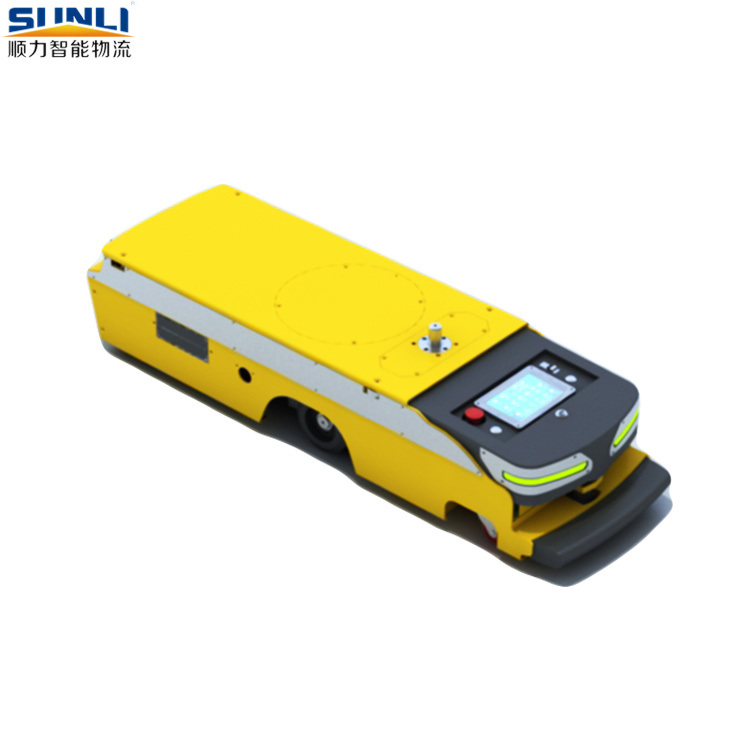
Choosing the right vendor requires deep scrutiny of their underlying technology. Hardware aesthetics rarely determine long-term success. Navigation infrastructure requirements should dictate your first evaluation phase. Contrast the reliability of physical pathing against infrastructure-light options. Magnetic tape and wire-guided systems offer bulletproof reliability. However, they lack flexibility. Laser triangulation and LiDAR options reduce physical infrastructure. They allow you to remap routes via software, but they require clear lines of sight.
Software interoperability cannot be compromised. You must establish the requirement for an API-first architecture. The vendor fleet manager must sync seamlessly with your existing warehouse management systems (WMS). If systems cannot communicate in real time, you will experience severe dispatch delays. Insist on live demonstrations of software handshakes.
Battery management strategies directly impact your 24/7 operations. Evaluate opportunity charging against battery swapping models. Opportunity charging sends units to charging pads during brief idle periods. This keeps the fleet running without human intervention. Battery swapping requires human labor but gets units back on the floor instantly. Factor in the specific downtime your operational cycle allows before committing.
You must look beyond initial capital expenditure. Map out a realistic three-to-five-year ROI timeline. Do not just look at the vehicle unit cost. Factor in long-term maintenance contracts and mandatory software licensing renewals. Include projected energy consumption rates. Vendors often hide recurring software fees in the fine print. Uncovering these long-term expenses ensures you understand the true cost over the equipment lifecycle.
The industry constantly debates between Automated Guided Vehicles and Autonomous Mobile Robots (AMRs). The choice comes down to predictability versus flexibility. AGVs win in highly structured, repetitive environments. They follow absolute rules and predefined paths. AMRs excel in dynamic, constantly shifting layouts. They can maneuver around unexpected blockages dynamically.
Path planning and traffic control differ wildly between the two. AGVs utilize centralized scheduling. A master controller acts like an air traffic control tower. It prevents deadlocks in high-traffic aisles. AMRs use decentralized pathfinding. They make local decisions. In tight, high-traffic corridors, multiple AMRs can trap each other in a localized deadlock. Centralized AGV control eliminates this risk entirely.
Payload capacity and docking precision historically favor the AGV category. They handle ultra-heavy payloads with ease. They also achieve millimeter-level docking accuracy. This precision matters immensely at conveyor transfer stations. If a robot misses a docking station by half an inch, the payload jams.
Chart: Automation Fit Comparison
| Feature | AGV Profile | AMR Profile |
|---|---|---|
| Environment Fit | Structured, unchanging, high-volume | Dynamic, shifting, variable layouts |
| Traffic Control | Centralized (prevents deadlocks) | Decentralized (local obstacle avoidance) |
| Payload & Precision | Millimeter precision, ultra-heavy capacity | Moderate precision, lighter payloads generally |
| Obstacle Handling | Stops and waits for clearance | Reroutes dynamically around obstacles |
Vendors rarely highlight the unglamorous realities of facility readiness. Overlooked physical prerequisites will ruin a deployment. Floor flatness represents a major hurdle. You must audit your floors against strict F-min specifications. Uneven concrete causes sensor vibration and navigation errors. Joint conditions and environmental controls matter deeply. Excessive dust or moisture blinds LiDAR sensors instantly. You must clean house before inviting robots inside.
Network stability acts as the central nervous system for your fleet. Central fleet coordination demands industrial-grade connectivity. Standard office Wi-Fi will fail. You must guarantee industrial Wi-Fi or 5G coverage across the entire footprint. Minimal latency is non-negotiable. If connection drops during a roaming handoff between routers, the vehicle stops immediately for safety reasons. Dead zones paralyze automated operations.
Change management requires serious internal leadership. Automation cannot fix fundamentally broken processes. If your staging logic is chaotic, robots will simply execute that chaos faster. Workflows must be strictly standardized before you deploy a single machine. Furthermore, human workers need comprehensive safety training. They must learn how to operate alongside automated traffic safely. They need to understand sensor fields and right-of-way rules.
We strongly recommend a phased rollout strategy to mitigate massive operational risks. Follow these logical steps to ensure smooth adoption:
Deploying automated material handling equipment is not merely an equipment purchase. These deployments represent strategic infrastructure upgrades. They enforce operational discipline across your entire organization. By shifting toward predictable, systemic throughput, you effectively insulate your output from labor volatility and human fatigue.
When selecting a partner, prioritize buyers who offer comprehensive facility audits. Look for vendors who demonstrate proven WMS integration capabilities rather than those simply pushing hardware. Hardware alone will not solve logistics bottlenecks. The underlying software and implementation expertise define your ultimate success.
Your next step is clear and actionable. Initiate a comprehensive workflow audit this week. Identify your highest-volume, most repetitive material handling routes. Document the current manual costs and throughput metrics. These routes serve as your primary candidates for automation. Start small, validate the technology, and scale confidently.
A: Downtime varies by navigation type. Deploying infrastructure-dependent systems requires temporary aisle closures to install magnetic tape or wires. Natural-navigation systems map the facility digitally and require almost no physical infrastructure. Phased deployments minimize impact by automating one specific zone at a time, allowing the rest of the facility to operate normally.
A: Yes, legacy integration is entirely possible. A Warehouse Control System (WCS) or specialized middleware usually bridges the gap. The middleware translates basic commands from your older legacy software into the modern API calls required by the fleet management system. This avoids the need for an immediate, expensive WMS overhaul.
A: Latent under-ride units typically require significantly narrower aisles than traditional automated forklifts. Because of their compact profiles and zero-turn radius capabilities, they often operate comfortably in aisles as narrow as one meter. However, exact clearance depends on the dimensions of the rack or cart they are carrying above them.
A: They rely on strict safety sensor protocols. LiDAR safety fields scan the route continuously. If they detect debris, the system triggers an automatic, safe stop. The machine then alerts human operators to clear the path. They do not dynamically route around obstacles, as unexpected deviations could cause secondary hazards in tight aisles.


