

Views: 0 Author: Site Editor Publish Time: 2025-11-27 Origin: Site


Building a warehouse racking system is essential for optimising storage and ensuring operational efficiency. A well-designed warehouse rack not only maximises the use of available space but also enhances safety and facilitates easier access to products. This guide will walk you through the steps to build a warehouse racking system, from planning to installation and maintenance.
Before diving into the installation process, it's important to consider several factors to ensure that your warehouse rack system meets both your operational needs and safety standards.
One of the first things to consider is the layout of your warehouse. The racking system you choose must fit into the available space without obstructing aisles or workflows. Be sure to account for:
Aisle width: Ensure that forklifts and other machinery can move freely around the racks.
Pallet types: The racks should be suitable for the types of pallets or storage containers you plan to use.
Forklift turn radius: This is critical for ensuring your warehouse equipment can operate smoothly.
Every racking system has load limits, so it’s crucial to determine the weight and size of the items that will be stored. Consider the following:
The maximum load each rack will bear.
The pallet size and stacking height.
The floor of your warehouse needs to support the racking system. Make sure the floor is:
Level: An uneven surface can cause instability in the racking system.
Strong enough: Ensure that the foundation can handle the weight of the racks and their contents. Check the concrete slab thickness and overall strength.
Be sure that your racking system complies with all local safety regulations. This includes structural integrity standards, load-bearing requirements, and safety accessories (such as safety nets and column protectors).
There are several types of racking systems to choose from, depending on your warehouse's needs:
Selective Racking: Common for general storage, offering easy access to all pallets.
Drive-In Racking: Ideal for storing large quantities of similar items.
Push-Back Racking: Suitable for storing products that need to be rotated regularly.
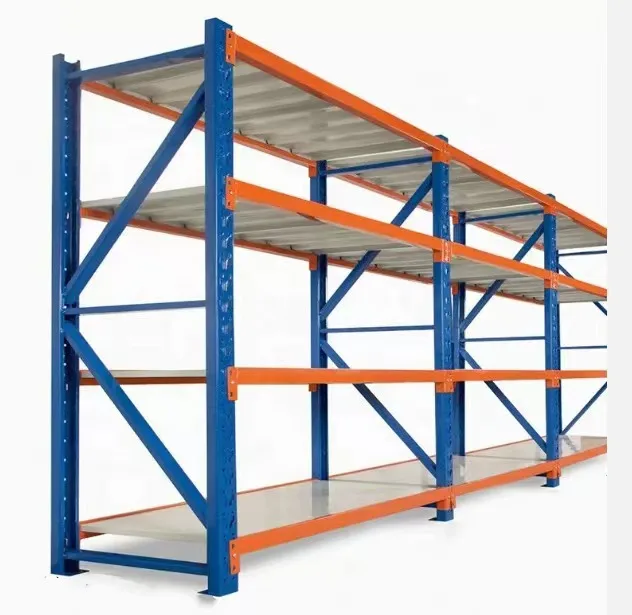
Once you’ve assessed the critical factors, you can begin planning the design of your warehouse racking system.
Begin by designing the layout. This includes deciding how many rows and bays are needed, the height and depth of each racking unit, and spacing between rows. You’ll also need to factor in aisle widths and loading/unloading zones.
Choosing the right materials for beams, uprights, decking, and braces is critical. Steel is the most commonly used material due to its strength and durability. For decking, you can choose from options like wire mesh, wooden planks, or steel plates, depending on the type of items being stored.
Maximising storage capacity and ease of access is key. By optimising the layout, you can increase storage density without compromising on efficiency. This involves balancing the available space with the need for quick and easy picking and replenishment of items.
Adding safety features like wire mesh decking, column protectors, and row spacers helps ensure that the racking system is both safe and durable.
Now that you’ve planned your racking system, it’s time to start the installation. Below is a general step-by-step guide to building the system.
Clear the area where the racking system will be installed.
Verify the floor condition to ensure it is level and able to bear the required weight.
Mark the layout of the racking system on the floor for easy reference during installation.
Start by assembling the vertical frames, also known as uprights.
Attach the horizontal and diagonal bracing to form a solid frame structure.
Once the uprights are assembled, position the baseplates where they will be anchored to the floor.
Secure the baseplates using the appropriate anchoring method, typically expansion bolts, to prevent movement or tipping.
Install the beams onto the uprights. Ensure that each beam is level and positioned at the correct height according to the design.
Lock the beams into place with the appropriate clips or pins to secure them.
If your design includes decking or pallet supports, install these components next.
Ensure that the decking is securely fitted and suitable for the load it will carry.
After the racking system is fully assembled, perform a final alignment check.
Ensure that the uprights are level and plumb.
Verify that the system is securely anchored and that all beams are locked in place.
A warehouse racking system is a long-term investment, and maintaining it is essential for ensuring its continued efficiency and safety.
Regular inspection is crucial to catch any signs of wear or damage before they become a safety hazard. Look for:
Upright damage: Check for any bends or cracks in the uprights that may compromise stability.
Beam clips: Make sure the beam clips are securely fastened.
Anchor pull-out: Inspect the anchors to ensure they are firmly in place.
Misalignment: Ensure the system remains aligned and level.
Column protectors: If the racking system has been damaged due to forklifts or other equipment, replace or repair the affected areas.
Structural integrity: If any section of the racking system has been compromised, immediately take corrective action to ensure safety.
Proper training for warehouse staff is vital for maintaining the safety and efficiency of the racking system. Ensure that employees understand how to use the racks safely, and train them in identifying potential hazards.
A properly constructed warehouse racking system can bring several benefits to your operation.
By using vertical space effectively and implementing the right layout, you can maximise storage density, allowing for more items to be stored in a smaller footprint.
A well-designed racking system facilitates faster picking and reduces the time spent on inventory management. With easier access to products, operations run more smoothly.
A sturdy and well-maintained racking system ensures that your warehouse is safe for both inventory and personnel. Proper installation and regular inspections help prevent accidents caused by faulty racking.
A modular racking system can easily be expanded as your storage needs grow. This scalability ensures that your warehouse can accommodate future growth without requiring a complete overhaul of your storage solution.
How high can I build a warehouse rack safely?
The maximum height of a warehouse rack depends on factors like floor strength, racking type, and the weight of the items stored. Always consult with a structural engineer to determine the safe height for your system.
Do I need to anchor every upright to the floor?
Yes, to ensure the stability of your racking system, each upright should be anchored securely to the floor.
Can I install a warehouse racking system on an uneven floor?
It’s best to have a level floor for optimal stability. However, if the floor is uneven, it may be necessary to level the surface before installation or use adjustable feet on the uprights.
What type of decking should I use on pallet beams?
The type of decking depends on the stored items. Wire mesh is common for visibility and ventilation, while solid decking may be required for heavier or smaller items.
How often should I inspect my rack system for damage?
Routine inspections should be done monthly, with more thorough checks every six months. Always inspect after any significant impact or event that could damage the racking system.
Building a warehouse racking system requires careful planning, design, and installation. By following the steps outlined in this guide and maintaining a strong focus on safety, you can create a racking system that maximises storage capacity, improves operational efficiency, and reduces the risk of accidents. Ensure that your warehouse racking system is properly maintained, and take proactive steps to safeguard it against damage.
If you’re planning to install or upgrade your warehouse racking system, consult with a professional installation company to ensure that your system is built to last and meets all safety and operational requirements.


