

Views: 0 Author: Site Editor Publish Time: 2026-09-17 Origin: Site


Transitioning from traditional static storage to automation represents a major capital expenditure. Standard pricing sheets do not exist for these complex deployments because every installation remains highly customized to the specific facility. Evaluating automation based solely on baseline equipment prices introduces massive financial risk. Failing to account for facility-specific variables—like throughput requirements, workflow dynamics, load profiles, software integration, and facility modifications—leads directly to inaccurate return calculations and severe budget overruns. This technical evaluation framework helps operations leaders understand exactly how specific warehouse requirements dictate the final automated warehouse racking system cost. Facility needs drive every aspect of the investment. Mastering these variables enables highly accurate budgeting and empowers stronger, more informed vendor negotiations when upgrading your storage infrastructure.
Physical steel structures form the foundation of any storage upgrade. Racking frames, uprights, and horizontal rails represent the baseline material expenses. However, an automated pallet rack system requires significantly tighter manufacturing tolerances than standard static shelving. Steel grades must be heavier to prevent rail deflection under dynamic loads. When a five-ton stacker crane accelerates down an aisle, the structural steel must absorb massive kinetic energy without bending. Engineers specify high-yield steel grades to handle these dynamic forces. Deflection limits are strictly enforced, often requiring L/200 or better to ensure the crane's extraction mechanism aligns perfectly with the pallet position. Enhanced long-term durability demands premium materials. These strict engineering standards significantly increase baseline structural costs.
Moving parts drive the greatest variance in hardware expenses. Pallet shuttles add mechanical complexity and battery management needs. Stacker cranes require massive vertical masts and precision hoist motors. Conveyor networks demand continuous power and regular belt maintenance. Robotic arms introduce highly sophisticated articulation joints and vision sensors. Each mechanical addition scales the baseline hardware investment upward. You must also factor in the cost of specialized anchor bolts and heavy-duty baseplates required to secure these dynamic systems to the concrete slab.
Hardware cannot function without sophisticated digital commands. Integrating a smart warehouse racking system with existing ERP and WMS platforms impacts project finances heavily. Off-the-shelf software rarely covers complex operational needs. Custom API development bridges the gap between old databases and new robotic hardware. These digital handshakes require specialized engineering hours. Programmable Logic Controllers (PLCs) must communicate seamlessly with higher-level software via TCP/IP protocols to prevent latency issues during high-speed sorting. A delay of just a few milliseconds in sensor feedback can cause a shuttle to misalign, jamming the entire lane.
Warehouse Execution Systems (WES) and Warehouse Control Systems (WCS) direct the automated machinery. These distinct software layers require expensive licensing agreements. They also demand extensive setup and configuration time. Mapping complex routing logic adds another layer of expense. Engineers must program dual-command cycles, collision avoidance protocols, and dynamic slotting algorithms. Software integration frequently consumes a massive portion of the overall project budget. You are paying for the brain that operates the steel muscle.
Site preparation dictates the success of high-bay automation. Floor slab leveling remains absolutely mandatory. Automated cranes cannot operate safely on uneven concrete. Facilities must meet strict Floor Flatness and Floor Levelness (FF/FL) specifications, often requiring a super-flat rating. The concrete slab must also possess a minimum compressive strength, typically exceeding 4000 PSI, to handle the point loads of the crane rails. Pouring reinforced foundations to support massive point loads adds heavy construction expenses. Epoxy anchoring and structural bracing require specialized labor and extended timelines. Core drilling for new electrical conduits often disrupts existing operations.
Labor costs involve highly specialized installation teams. Mechanical riggers assemble the steel frameworks using laser alignment tools. Licensed electricians route miles of power conduit and control wiring. Installers must also erect physical safety fencing and optical light curtains to protect human workers. The commissioning phase follows physical installation. This involves rigorous stress testing, software calibration, and securing mandatory safety certifications before the system can officially go live. Engineers run thousands of dummy pallets through the system to identify software bugs and mechanical bottlenecks.
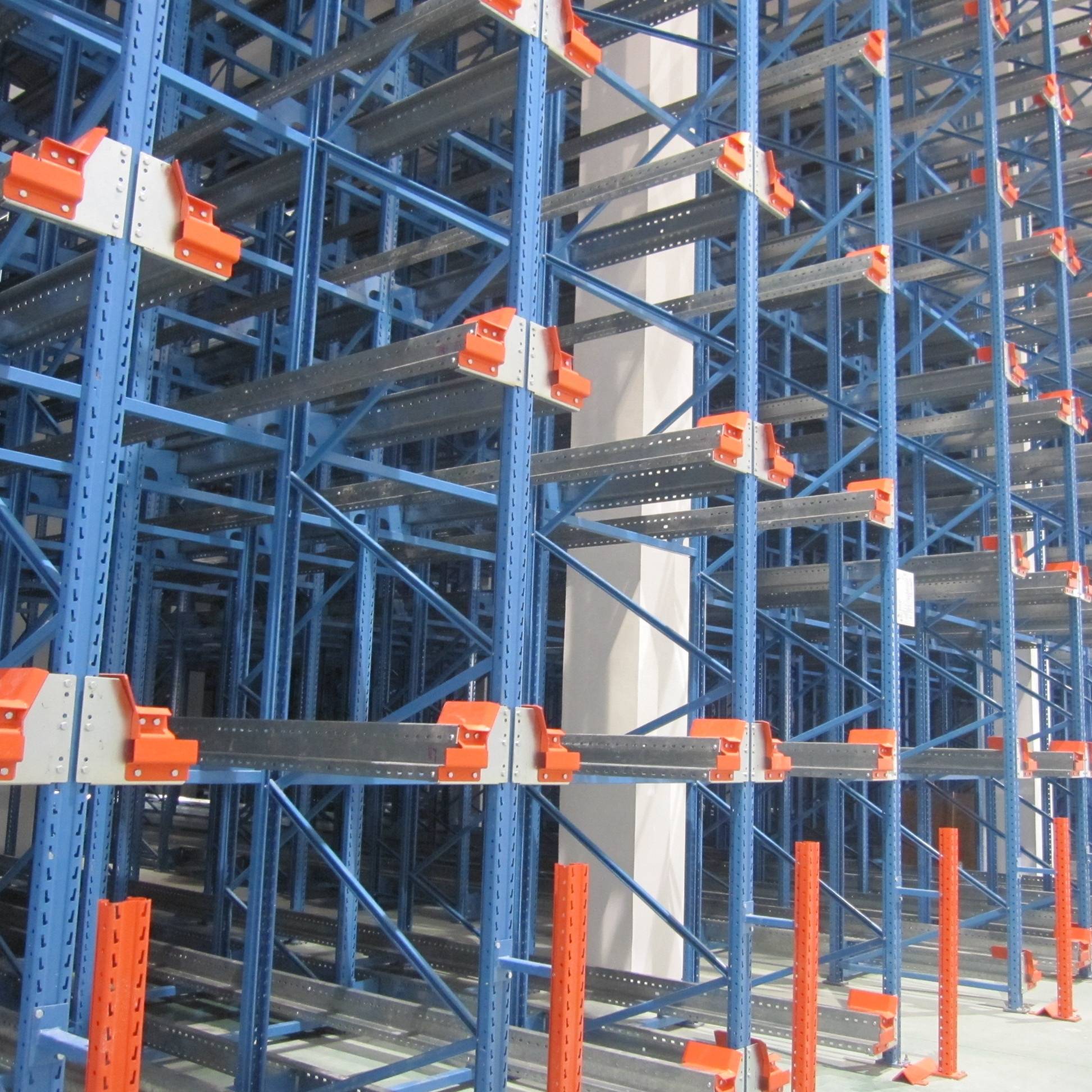
High-throughput requirements necessitate rapid inbound and outbound operations. Speed demands more moving parts. Achieving higher pallets-per-hour metrics requires deploying multiple shuttles per level. It also demands faster, twin-mast stacker cranes capable of aggressive acceleration and deceleration curves. Advanced systems utilize regenerative braking on stacker cranes, capturing kinetic energy during deceleration and feeding it back into the grid to power other units. Upgrading motor speeds and adding redundant robotic units drives up equipment costs substantially. Opportunity charging stations must be installed to keep shuttle batteries topped off during short idle periods.
Specific workflow requirements dictate the complexity of the automated warehouse racking solution. Strict First-In, First-Out (FIFO) inventory rotation requires different lane configurations than Last-In, First-Out (LIFO) setups. Batch picking operations require different software logic than single-order picking. Conversely, high-density, low-throughput needs keep overall capital investment lower. Long-term reserve storage facilities require fewer robotic units and less aggressive motor specifications. You spend less on moving parts and more on static steel.
Land scarcity pushes facilities to maximize vertical space. Expanding a warehouse footprint horizontally incurs massive real estate expenses, zoning delays, and new property taxes. This spatial pressure drives the adoption of an automated storage and retrieval system. Building higher utilizes existing air rights efficiently. You avoid the bureaucratic nightmare of acquiring new commercial land.
Traditional high-density systems offer baseline space optimization. Gravity-flow and double-deep racks improve density but still rely on manual forklift labor. Fully automated solutions maximize space utilization by eliminating wide forklift aisles entirely. ASRS configurations can reach heights up to 40 meters. While the initial capital required for high-bay automation is substantial, the cost avoidance of new land acquisition often justifies the expense. Engineers must also factor in wind and seismic loads when designing these massive vertical structures, especially for rack-supported buildings. Additionally, National Fire Protection Association (NFPA) codes dictate specific flue space requirements for in-rack fire suppression systems, which slightly impacts overall density calculations.
Uniform load profiles allow for cheaper, standardized configurations. Standardized pallets and single SKU lanes fit perfectly into deep-lane automated setups. Predictable weights and dimensions reduce the need for complex sensor arrays. Uniformity simplifies software logic and hardware requirements. When every pallet looks and weighs the same, the automation runs flawlessly with minimal intervention.
Mixed SKUs and variable pallet sizes introduce severe cost premiums. Handling non-standard loads requires highly customized racking structures. Oversized goods or hazardous materials demand specialized containment and handling protocols. Broken pallet boards or hanging stretch wrap can trigger false sensor readings, causing system faults. Dynamic software logic must be programmed to manage these irregularities, increasing engineering costs. Facilities often install automated profile checking stations to reject damaged pallets before they enter the racking system.
Automation deployed in freezer or cold storage environments carries a significant cost premium. Harsh sub-zero conditions degrade standard equipment rapidly. Expect higher baseline expenses to ruggedize the entire system. Specialized lubricants must be used to keep machinery moving smoothly at freezing temperatures. Standard grease turns solid in a blast freezer, causing immediate mechanical failure.
Condensation-resistant electronics prevent short circuits during temperature fluctuations. Cold-rated steel prevents structural brittleness and catastrophic failure. Heated enclosures protect sensitive control panels and PLC units. However, these upfront costs are often balanced by massive operational savings. High-density cold storage dramatically reduces the cubic volume of air that must be cooled, slashing monthly energy bills. You also eliminate the need for human workers to endure extreme cold for extended shifts.
Cost-to-capability comparisons show a clear technological progression. Traditional high-density racks sit at the lower end of the investment spectrum. Push-back and gravity-flow systems increase density but remain entirely manual. They rely heavily on forklift operators and standard warehouse labor. You save on initial capital but pay continuously in payroll and forklift maintenance.
Semi-automated solutions bridge the operational gap. Radio shuttle racks driven by forklifts offer an excellent balance of cost and efficiency. Forklifts place the shuttle into the rack, and the shuttle autonomously moves the pallet deep into the lane. Fully automated systems represent the highest tier. Crane-based ASRS eliminates forklift travel within the storage aisles entirely. The leap to full automation becomes financially viable only when pallet movements per hour cross specific high-volume operational thresholds.
| System Type | Storage Density | Throughput Speed | Relative Capital Investment | Best Operational Use Case |
|---|---|---|---|---|
| Traditional High-Density (Push-back, Drive-in) | Medium to High | Low to Medium | Lowest | Low SKU counts, manual labor availability, budget-constrained upgrades. |
| Semi-Automated (Radio Shuttle) | Very High | Medium to High | Moderate | Deep lane storage, batch picking, bridging the gap to automation. |
| Fully Automated (Crane ASRS) | Maximum | Very High | Highest | High land costs, massive throughput, 24/7 operations, cold storage. |
Retrofitting an existing facility hides many complex expenses. You face immediate operational downtime during construction. Dismantling old racks requires careful labor and waste disposal. Working around existing structural columns complicates the new racking design. Uneven legacy concrete slabs often require expensive leveling treatments before automation can be installed safely. Fire sprinkler systems usually require complete relocation to comply with high-density storage fire codes.
Greenfield installations allow you to build around the automation. New builds eliminate legacy constraints. Rack-supported buildings integrate the steel storage structure directly into the facility's roof and walls. This approach often results in better long-term returns. Despite higher initial construction costs, greenfield projects optimize every square inch for robotic efficiency from day one. You design the ideal workflow first, then wrap a building around it.
Lost productivity during installation impacts finances heavily. Racking replacement halts standard operations in affected zones. Inventory must be relocated, causing temporary congestion in other warehouse areas. This disruption slows down order fulfillment and inbound receiving. You may need to lease temporary off-site storage to handle overflow during the construction phase.
Phased implementations keep the warehouse partially operational. Installers upgrade one zone at a time while the rest of the facility functions normally. However, extending the project timeline increases specialized labor costs. Project management fees scale with the duration of the rollout. You must balance the cost of total shutdown against the premium of a phased installation. Weekend cutovers and night-shift installations can mitigate daily disruption but incur heavy overtime labor rates.
Evaluating Service Level Agreements (SLAs) with your warehouse automation supplier is mandatory. Hardware requires consistent upkeep to prevent catastrophic breakdowns. Budget strictly for preventative maintenance schedules. Routine inspections identify worn belts, degrading sensors, and misaligned rails before they cause operational halts. Predictive maintenance sensors can monitor motor vibration and heat signatures to flag failing components early.
Maintain an on-site spare parts inventory. Waiting for replacement motors or shuttle batteries during a breakdown destroys throughput metrics. Secure 24/7 remote software support contracts. Remote technicians can often resolve WCS routing errors or software glitches in minutes, preventing hours of physical downtime. A robust support contract acts as an insurance policy for your throughput.
Automation changes the nature of warehouse labor. Training existing staff requires dedicated time and financial resources. Workers must learn to operate new software interfaces safely. They need to understand how to troubleshoot minor mechanical faults and manage the new systems without causing damage. Cross-training programs ensure you always have qualified operators on every shift.
Hiring specialized talent may become necessary. Maintenance technicians with robotics experience command higher salaries than standard forklift mechanics. Automation engineers may be required to oversee daily WES operations. Factor these upgraded payroll requirements into your long-term financial planning.
Calculating labor reallocation provides a realistic financial framework. Automation reduces forklift travel time drastically. Minimizing manual picking lowers daily payroll expenses. You can shift human workers from repetitive travel tasks to higher-value quality control roles. Eliminating shift differentials and overtime pay for manual material handlers improves the bottom line immediately.
Financial benefits extend far beyond simple headcount reduction. Automated systems reduce product damage caused by forklift collisions. Lower accident rates decrease workers' compensation claims and insurance premiums. Near-perfect inventory accuracy eliminates costly stockouts and emergency expedited shipping fees. These compounded savings validate the initial capital expenditure.
Calculate the cost avoidance of land acquisition. High-density automation eliminates the need to lease or buy additional warehouse space. Suburban and urban real estate prices continue to climb. Avoiding a new long-term commercial lease saves massive amounts of capital. You also avoid the logistical nightmare of splitting inventory across multiple buildings.
Vertical expansion utilizes existing air rights. Upgrading to a high-bay system within your current footprint avoids zoning board delays. It prevents the disruption of moving operations to a new city. Maximizing cubic volume rather than square footage remains the most financially sound strategy in land-scarce regions.
Address operational skepticism with hard data. Stakeholders often fear the massive upfront costs of robotics. Validate the system's worth through modular, scalable rollouts. Avoid an all-at-once capital expenditure if internal risk tolerance remains low. Show executives exactly how the system solves current operational bottlenecks.
Prove success in one specific zone first. Deploy semi-automated shuttles in your highest-volume SKU lanes. Track the throughput increases and labor savings meticulously. Use this localized success data to justify further expansion into fully automated crane systems later. Data-driven pilot programs build executive confidence.
Standard return timelines typically span three to seven years. This depends heavily on the scale of the initial expenditure and regional labor rates. Facilities in high-cost labor markets achieve break-even status much faster. Cold storage facilities also see accelerated returns due to massive energy savings.
Core metrics drive the calculation. Compare current operational costs against projected automation costs. Factor in expected efficiency gains, reduced error rates, and avoided land purchases. A rigorous mathematical approach removes emotion from the procurement process. You must track every dollar saved on labor, energy, and real estate to build an accurate financial model.
A: A single average cost does not exist due to extreme customization. Prices range widely based on per-pallet positions and system types. Semi-automated shuttles require a moderate investment per position. Fully automated ASRS configurations demand a much higher initial capital outlay but deliver maximum density and speed.
A: Most facilities see a complete return on investment within three to seven years. High-labor-cost regions experience faster returns due to immediate payroll savings. Cold storage facilities also achieve faster returns through significant reductions in energy consumption and footprint optimization.
A: Yes, but handling mixed pallet sizes increases system complexity and cost. Non-standard loads require highly customized racking structures and dynamic software logic. Standardized pallets allow for cheaper, deep-lane configurations. Mixed SKUs demand advanced sensor arrays to prevent jams and ensure safe automated handling.
A: Yes, deploying automation in cold storage introduces a significant cost premium. Sub-zero environments require specialized lubricants, cold-rated steel, and condensation-resistant electronics. However, the massive energy savings gained by maximizing dense storage space usually offset these higher upfront equipment costs.
A: Retrofitting an existing warehouse often seems cheaper initially but hides costs like operational downtime, dismantling old racks, and working around legacy columns. Greenfield projects have higher initial construction costs but allow for rack-supported buildings, often resulting in superior long-term efficiency and better overall returns.
A: Higher throughput requirements directly increase costs. Moving inventory faster requires more mechanical parts, such as multiple shuttles per level or faster twin-mast cranes. High-velocity operations also demand more robust software to manage complex routing and prevent bottlenecks, driving up the total investment.


