

Views: 0 Author: Site Editor Publish Time: 2026-07-10 Origin: Site


Modern warehouses face compounding pressures daily. Labor scarcity, rising real estate costs, and the relentless demand for faster throughput push facilities to their limits. Traditional manual fulfillment is rapidly reaching an absolute operational ceiling. To survive, operations leaders must rethink how they manage inventory. Implementing a robust Automated Storage & Retrieval System answers this challenge mechanically and strategically. It combines advanced hardware and sophisticated software to buffer, store, and retrieve inventory with high precision on demand.
The conversation is no longer just about defining these technologies. It is about rigorous evaluation and strategic deployment. This guide serves as a pragmatic framework for leaders. You will learn how to transition effectively from manual environments to fully automated ecosystems. We will explore core components, compare system types, and outline critical implementation realities to ensure a successful rollout.
System Synergy: An AS/RS is not just hardware; success relies heavily on the integration capabilities of the underlying Warehouse Execution System (WES) or Warehouse Management System (WMS).
Diverse Configurations: Solutions range from heavy-duty Unit-Load cranes to ultra-dense, cube-based robotic grids. Selection depends entirely on load profiles and throughput velocity requirements.
Realistic ROI: While an ASRS warehouse system dramatically compresses footprint and reduces labor dependency, payback periods typically range from 3 to 7 years.
Implementation Risk: Successful adoption requires rigorous facility prep (slab tolerances, fire compliance) and phased rollouts to prevent operational downtime.
Automated fulfillment relies on a seamless triad of hardware, software, and structured workflows. Missing any single element causes bottlenecks. Let us break down how these layers interact.
Physical mechanisms do the heavy lifting. They replace human travel time and physical reaching. Core hardware includes storage structures like high-bay racking or dense cellular grids. Moving mechanisms execute the actual transport. These vary wildly based on the application. Facilities might deploy towering cranes, roaming shuttles, autonomous mobile robots (AMRs), or rotating carousels. Finally, input/output (I/O) stations connect the automated zone to human operators. These stations present goods ergonomically for final packing or assembly.
Hardware operates blindly without intelligent software. The system knows exactly what to do through a strict command hierarchy.
Warehouse Management System (WMS): This manages overall order fulfillment. It tracks global inventory and determines what items need picking based on customer orders.
Warehouse Execution System (WES): This orchestrates the workflow. It groups orders, balances workloads across zones, and decides the most efficient sequence for retrieval.
Warehouse Control System (WCS): This controls the machines directly. It calculates exact mechanical routes, avoids collisions, and triggers the physical motors on cranes or shuttles.
The G2P concept reverses traditional picking. Instead of people walking to goods, the system delivers goods to people. The operational loop starts at receiving. Workers decant bulk products into standardized totes. The software directs automated put-away, placing totes into high-density buffering zones. When an order drops, the WES triggers retrieval. Shuttles or robots extract the specific tote. They route it via conveyors to picking stations. A worker picks the required pieces. The system immediately returns the partially empty tote back to storage. This continuous loop maximizes hourly output.
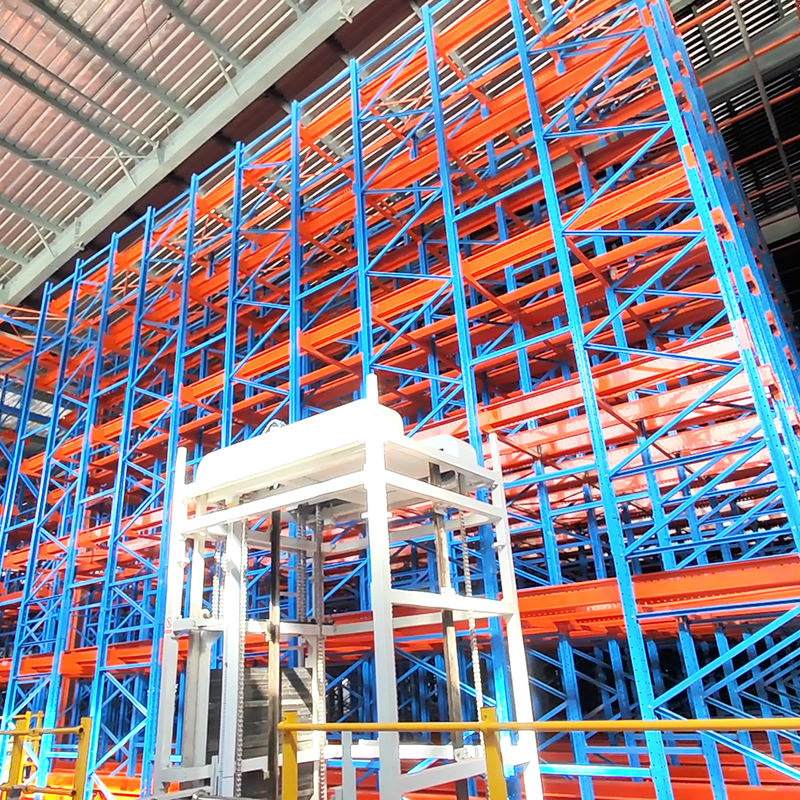
There is no universal solution. Selecting the right ASRS warehouse system depends entirely on what you move and how fast you move it. Facilities must evaluate different architectures to match their exact load profiles.
Unit-load systems handle massive weights. They move entire pallets or heavy bulk containers. They are best for high-weight reserve storage and freezer environments. Operating in sub-zero temperatures makes manual labor difficult and expensive. Automated cranes thrive here. When evaluating these systems, examine the crane mass and mast stiffness. Taller masts can sway, which slows down placement precision. Look for energy recovery modules. Lowering heavy pallets can generate electricity to power the next lift.
Mini-load cranes handle smaller payloads. They transport individual cases, trays, or totes. They work best for high-density buffering and parts distribution. Many facilities use them to sequence outbound boxes before shipping. The main evaluation metric is the crane speed versus payload trade-off. Faster cranes carry less weight. Standardizing your tote sizes is absolutely critical. Mixed-size cases cause mechanical jams and reduce throughput.
Shuttles zip horizontally across racking levels. They deliver extremely high-throughput piece picking. They excel in rapid case sequencing for retail replenishment. Shuttles come with a high upfront capital cost. However, they offer immense redundancy. If one shuttle breaks, the rest of the aisle continues functioning. Captive shuttles stay on one level. Roaming shuttles use lifts to change levels, offering flexibility at lower costs.
Cube systems stack bins vertically in a dense grid. Robots drive on top, digging out required bins. They are best for e-commerce micro-fulfillment. They offer maximum storage density, especially in irregular building footprints. A common evaluation note involves excavation times. If a required bin sits at the very bottom, robots must dig out top bins first. This can slow down immediate throughput for unexpected priority orders.
Carousels rotate horizontally or vertically. VLMs operate like smart elevators, delivering trays to an opening. They are best for point-of-use storage, manufacturing sub-assemblies, and tooling. They carry a much lower entry cost compared to massive grids. However, single-operator sequential picking speeds limit their overall throughput. They work perfectly for slow-moving parts.
System Type | Primary Payload | Best Application | Key Limitation |
|---|---|---|---|
Unit-Load | Pallets / Heavy Bulk | Cold storage, bulk reserve | Large turning radius, heavy footprint |
Mini-Load | Totes / Cases | Parts distribution, shipping buffer | Strict container standardization needed |
Shuttles | Totes / Cartons | High-speed e-commerce picking | High initial capital expenditure |
Cube-Based | Standard Bins | Micro-fulfillment, tight spaces | Dig-out times for bottom bins |
VLMs | Mixed Trays | Manufacturing, tooling storage | Limited by single-operator speed |
Automating a facility requires substantial justification. Operations leaders must frame the business case around measurable performance metrics. Moving away from manual operations transforms fundamental economics.
Real estate costs dictate warehouse strategy. Standard forklift aisles demand nine to twelve feet of clearance. High-bay automated systems or dense grids compress this drastically. You capture vertical space previously wasted. Calculate potential real estate savings carefully. Compare the automated footprint against the cost of leasing a larger building or moving facilities entirely. Often, building upward is vastly cheaper than expanding outward.
Modern strategies shift metrics from simple headcount reduction to output per labor hour. Automation eliminates walking and search time. Workers spend their shift actually picking goods. You also see a massive reduction in musculoskeletal injuries. Lifting heavy boxes from high racks disappears. Workers stay stationed at ergonomic G2P zones. Better ergonomics lead directly to higher retention rates in a tight labor market.
Manual counting invites human error. Automated systems track every single bin movement digitally. Shrinkage drops to near zero. Enclosed grids offer immense inventory protection against dust, damage, and theft. The software guarantees precise First-In, First-Out (FIFO) or Last-In, First-Out (LIFO) execution. This compliance proves vital for food, beverage, or pharmaceutical logistics.
Transparent cost modeling ensures project viability. You must balance Capital Expenditure (CapEx) against Operational Expenditure (OpEx). CapEx includes hardware, software integration, and physical installation. OpEx covers maintenance contracts, spare parts, and electricity. You weigh these costs against savings from labor, reduced picking errors, and deferred leasing. High-throughput systems justify their investments much faster than static buffer storage. Moving fast equals faster payback.
Selecting an automation partner demands strict technical scrutiny. You must filter vendors based on physical constraints and software capability.
You must avoid over-engineering your facility. High density and high speed act as competing forces. If you pack goods densely into a cube, you reduce open aisles. This increases storage capacity but slows down individual item retrieval. Conversely, high speed requires multiple shuttles and numerous aisles. This demands a larger footprint. Identify exactly where your facility sits on this curve. Balance peak seasonal speed against everyday storage needs.
Business grows, and automation must scale alongside it. Evaluate solutions based on incremental expansion costs. Can you add ten more robots to the existing grid easily? Can you extend shuttle aisles without shutting down current operations? Modular systems let you defer initial capital. You buy what you need today and expand seamlessly tomorrow.
Best Practice: Always design the initial layout with empty physical space reserved for future aisle expansion.
Common Mistake: Bolting down conveyors in pathways that block future grid extensions.
Hardware fails if software cannot communicate. Assess the API maturity of the vendor. An Automated Storage & Retrieval System acts only as effectively as its integration. It must converse flawlessly with your existing ERP and WMS architectures. Ask vendors for proven integration use cases. Custom coding middleware adds massive risk and delays deployment.
Mechanical parts break. The metric that matters is recovery speed. Scrutinize vendor maintenance networks rigorously. Look closely at Mean Time Between Failures (MTBF) data for specific motors and shuttles. Check local spare part availability. Ensure the SLA guarantees on-site technician response times within hours, not days.
Buying the equipment is only the first step. Installing heavy automation into a live warehouse presents immense physical and cultural challenges. Planning mitigates operational disaster.
Automated machinery requires strict facility tolerances. Concrete slab flatness is non-negotiable. Cranes reaching eighty feet high will sway violently if the floor dips by a fraction of an inch. Facilities must meet exact F-min specifications. You must verify load-bearing limits. Dense cubes concentrate massive weight on small column bases. Finally, verify clear ceiling heights. Sprinkler pipes, HVAC ducts, and lighting fixtures often block vertical expansion.
High-density storage fundamentally alters fire dynamics. Traditional ceiling sprinklers cannot penetrate tight storage grids. Water bounces off the top layer while fire spreads below. Address this early. You will likely need in-rack sprinklers or specialized gas suppression systems. Consult guidelines from organizations like FM Global. Non-compliance halts building permits instantly.
Automation changes daily routines. Transitioning a workforce from manual picking carts to stationary G2P stations shocks the system. Workers often fear job loss. Address these concerns directly. Emphasize upskilling and safety. Plan for extensive training periods. Expect initial productivity dips. It takes weeks for operators to build rhythm with the new software interfaces.
You cannot stop fulfilling orders during installation. Deploy the system in strict phases. Build and test one automation zone while manual picking handles volume. This strategy proves vital in brownfield facilities. Commission the new system incrementally. Move slower-moving SKUs into the grid first. Keep fast-movers manual until the automation proves stable under load.
An advanced storage and retrieval setup represents a strategic infrastructure investment. It is never an off-the-shelf product. This technology bridges the widening gap between strict labor constraints and aggressive service-level demands. Proper deployment requires balancing dense physical hardware with intelligent, predictive software.
The immediate next step does not involve calling vendors. Start with your own internal data. Operations leaders must complete a thorough SKU profiling. Run a peak-throughput analysis. Conduct a structural facility audit. You must know your numbers before evaluating machines. We encourage you to schedule a data-driven facility assessment today. Use an integration checklist to begin the shortlisting process safely. Precision in planning guarantees precision in performance.
A: Capital expenses vary significantly based on scale, technology type, and payload capacity. Simple vertical modules require lower initial capital. Complex shuttle systems demand much larger investments. You must calculate costs using equipment, software licensing, and facility modifications. Payback timelines depend entirely on labor savings and footprint reduction. Exact figures fluctuate widely based on these factors.
A: Yes, retrofitting is common but requires careful planning. You must evaluate strict facility constraints. Check ceiling height limits to ensure maximum vertical density. Test concrete slab flatness and load-bearing capacity; reinforcement is often necessary. Finally, analyze existing column spacing, as physical pillars can interrupt continuous grid layouts.
A: High-end systems utilize hardware redundancy. If one shuttle fails, adjacent machines absorb the workload. Operations should also maintain manual bypass protocols to extract critical inventory during outages. Localized software fallbacks allow zones to operate independently even if the central server disconnects momentarily.
A: Automated storage systems utilize fixed paths and high-density racking to maximize vertical space. Autonomous Mobile Robots (AMRs) offer flexible, floor-level navigation without fixed infrastructure. Modern warehouse designs frequently combine both. Shuttles handle dense vertical buffering, while AMRs transport extracted goods across open floors to packing stations.


