

Views: 0 Author: Site Editor Publish Time: 2026-07-29 Origin: Site


Mismatched storage infrastructure creates severe operational friction on the warehouse floor. Utilizing the wrong storage system leads directly to picking bottlenecks, wasted vertical space, and significant safety liabilities. Facilities struggle when they deploy oversized pallet racks for small parts or under-engineered shelves for heavy components. Selecting the right system requires matching SKU velocity, weight profiles, and material handling equipment limits to the physical architecture of the storage unit. Operations managers frequently confuse hand-loaded shelving with heavy-duty pallet racking. This misunderstanding results in inefficient floor plans and increased labor fatigue. A dedicated industrial shelving warehouse rack solves these issues by providing accessible, high-density storage for non-palletized goods. This technical evaluation guide explores what these racks are used for, the distinct types available, and the engineering criteria required to make a defensible procurement decision.
Industry terminology often overlaps, causing confusion during facility planning and layout design. The term "shelving" refers specifically to hand-stacking individual items, loose parts, or cartons. "Racking" strictly denotes heavy-duty systems built for palletized loads handled by mechanized equipment like reach trucks and counterbalanced forklifts. An industrial shelving system bridges the gap between light-duty commercial shelves and massive structural racks. It provides robust structural integrity for manual, pedestrian-level loading without requiring forklift access or wide equipment aisles.
Understanding the difference between industrial shelving and pallet racking prevents costly design errors and workflow interruptions. Loading methods dictate the structural requirements of the steel components. Operators load shelving manually, walking down aisles and placing items by hand. Forklifts place heavy wooden or plastic pallets onto racking beams. Standard shelving capacities range from 300 to 2,000 pounds per level based on a uniformly distributed load. Heavy-duty pallet racking handles 5,000 to over 30,000 pounds per bay, requiring significantly thicker steel gauges and larger footplates.
Vertical profiles also differ significantly based on the intended picking method. Shelving focuses on accessible manual pick heights. These systems typically stay under 10 to 12 feet unless integrated into multi-tier catwalk structures where operators walk on elevated grating. Pallet racking utilizes the full height of the warehouse envelope, often reaching past 40 feet to maximize cubic volume, relying entirely on high-reach machinery to access the upper levels.
A standard industrial shelving unit consists of several engineered components that work together to transfer weight safely to the concrete slab. Upright posts form the vertical framework, usually roll-formed from 14-gauge or 16-gauge steel. Shelf clips or heavy-duty rivets secure the horizontal levels to the uprights, allowing for vertical adjustability. Decking materials provide the resting surface for inventory. Sway braces, installed in an X-pattern on the back and sides, prevent lateral movement and racking under heavy loads. Footplates distribute the total weight across the concrete slab and provide pre-punched holes for wedge anchors.
Weight distribution behaves differently on a solid shelf compared to a pallet rack beam. Engineers calculate capacities based on a uniformly distributed load (UDL). Placing a massive, dense object in the dead center of a shelf creates a point load. Point loads cause severe deflection, bending the steel or cracking the particleboard, leading to potential failure. Distributing weight evenly across the entire shelf surface ensures structural stability, engages the side supports properly, and maximizes the rated capacity of the unit.
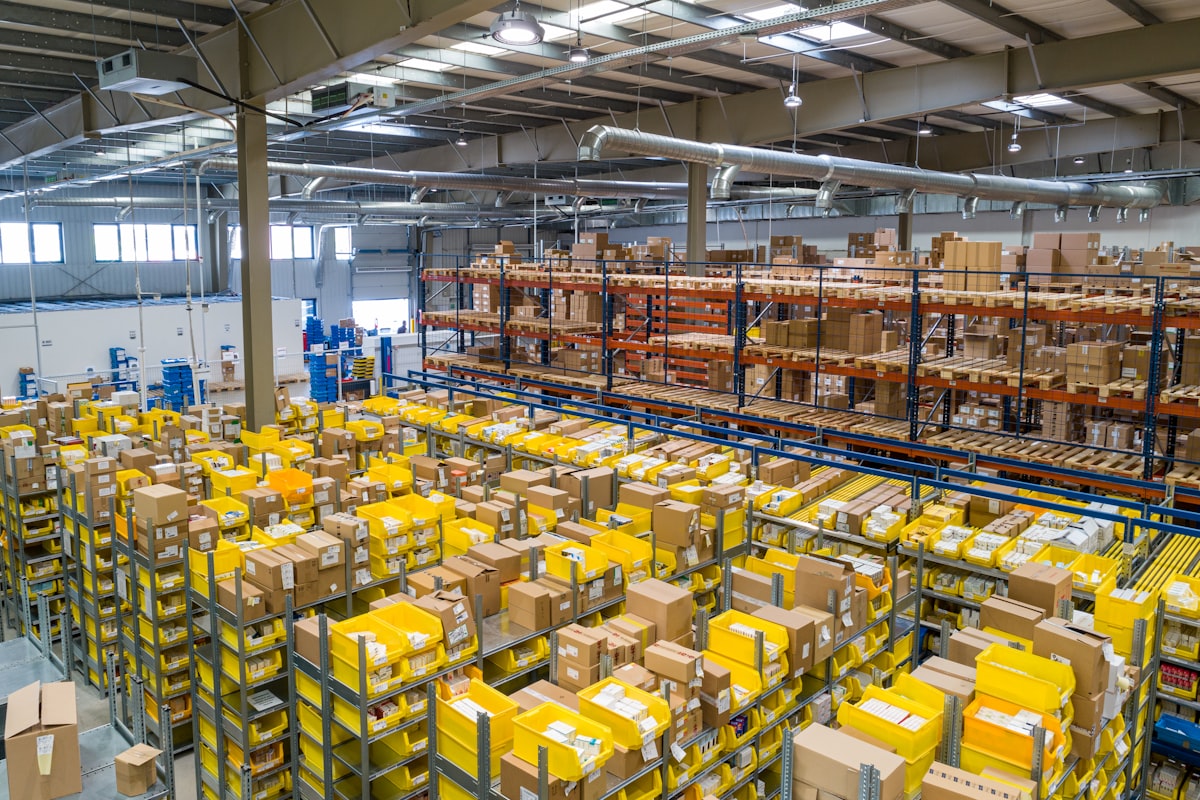
Facilities deploy these systems across diverse operational zones. The specific application dictates the material, depth, and structural capacity of the selected units. Matching the hardware to the daily workflow is the foundation of efficient warehouse management.
E-commerce fulfillment relies heavily on split-case picking, where workers select individual items rather than full cases. Bin shelving organizes thousands of unique SKUs into manageable pick faces. Micro-fulfillment centers use these racks to condense inventory into tight urban footprints where square footage is at a premium. The shelving integrates seamlessly into pick-to-light systems and zone picking workflows. Operators move swiftly through aisles with picking carts, grabbing individual items without waiting for material handling equipment to clear the aisle.
Heavy-duty steel shelving supports dense, non-palletized items that would destroy lighter commercial units. Automotive facilities store motors, heavy tools, brake rotors, and metal components on reinforced steel decks. Manufacturing plants utilize these racks for assembly line staging, keeping parts close to the production floor. Workers require rapid, manual access to heavy parts during production runs. Steel shelving withstands the daily abuse of sliding metal components, heavy crates, and the general wear and tear of an active industrial environment.
Certain environments demand specialized finishes and specific dimensional tolerances. Document archiving requires deep, sturdy shelves to hold heavy banker boxes filled with paper, often utilizing double-deep configurations. Retail backrooms need highly adjustable systems to stage seasonal inventory efficiently, adapting to changing box sizes throughout the year. Cleanrooms, pharmaceutical storage, and sterile environments utilize epoxy-coated or galvanized shelving. These specialized finishes resist corrosion, prevent particulate shedding, and withstand harsh chemical washdowns required for sanitation compliance.
Temperature-controlled zones require constant air circulation to maintain uniform temperatures and prevent spoilage. Ventilated shelving prevents condensation and frost buildup on the product and the rack itself. Wire or slotted steel decks allow cold air from the refrigeration units to flow freely around stored goods. Food and beverage distributors rely on these systems to maintain strict temperature compliance, adhere to health department regulations, and ensure proper first-in, first-out (FIFO) inventory rotation.
No single shelving system fits every facility. Evaluating the structural design against your daily workflow ensures optimal performance, longevity, and safety. You must analyze what you are storing, how workers access it, and the environmental conditions of the building.
Boltless rivet shelving offers rapid, tool-free assembly, making it a favorite for fast-paced facility setups. Installers lock horizontal beams into slotted uprights using a rubber mallet, seating the rivets securely into the teardrop or keyhole slots. It is highly reconfigurable and cost-effective. However, it carries lower weight thresholds compared to structural steel systems. The decking often consists of 5/8-inch particleboard, making it vulnerable to moisture, humidity, and liquid spills. This system works best for general warehouse storage, lightweight cartons, apparel, and temporary staging areas.
Heavy-duty steel shelving delivers maximum durability for harsh environments. It boasts high weight capacities per shelf, often exceeding 1,000 pounds, and resists severe industrial wear. Installation takes longer due to bolted connections or tight-fitting compression clips that require precise alignment. The initial capital expenditure is higher than rivet shelving. It remains the best choice for automotive parts, heavy tooling, dies, fixtures, and permanent high-capacity manual pick zones where structural integrity cannot be compromised.
Wire shelving promotes high visibility and continuous airflow. The open wire design minimizes dust accumulation, reducing cleaning maintenance. It meets strict fire codes by allowing overhead sprinkler water to penetrate through the levels to extinguish fires at the base of the unit. However, it is not suitable for very small, loose parts that can slip through the wire gaps. It also has a lower point-load capacity, as heavy, sharp objects can bend the individual wires. Wire units excel in cold storage, food service, medical supplies, and cleanrooms.
Mobile aisle shelving condenses the storage footprint by eliminating static pedestrian aisles. Shelves roll on heavy-duty floor tracks, opening an aisle only where the operator needs access. This maximizes space utilization dramatically, often doubling storage capacity in the same footprint. The downside is limited simultaneous access. Multiple pickers cannot work in the same zone if the aisles are compressed. It involves high mechanical complexity, requiring level floors and regular track maintenance. Use this for low-velocity SKUs, archival storage, and facilities with severe space constraints.
| Shelving Type | Assembly Method | Decking Material | Best Use Case |
|---|---|---|---|
| Boltless Rivet | Mallet / Teardrop Slots | Particleboard / Wire | Lightweight cartons, apparel, general storage. |
| Heavy-Duty Steel | Bolts / Compression Clips | Solid Steel Panels | Automotive parts, heavy tooling, hardware. |
| Wire Shelving | Split Sleeves / Posts | Steel Wire Mesh | Cold storage, cleanrooms, food service. |
| Mobile Aisle | Floor Tracks / Carriages | Varies (Steel/Wood) | Archival documents, low-velocity SKUs. |
Procuring the right system requires strict engineering calculations and a thorough understanding of your inventory. Guessing capacities leads to structural failure, damaged goods, and severe worker injuries. Follow a structured decision framework to ensure safety and operational efficiency.
Calculate required capacity based on expected inventory profiles. Weigh your heaviest expected load per shelf level, factoring in the weight of the bins or containers themselves. Always account for uniformly distributed loads. Point-loading a shelf causes dangerous sagging. Engineers measure acceptable deflection tolerances strictly. The standard limit in the material handling industry is typically L/140. This means a shelf should not bow more than its length divided by 140 under maximum load. If a 48-inch shelf deflects more than 0.34 inches, it is overloaded or under-engineered for the application.
Shelf depth and height directly impact ergonomic picking and labor efficiency. Deep shelves (over 24 inches) force workers to overreach to grab items at the back, causing lower back strain and slowing down the pick rate. Keep high-velocity SKUs in the "golden zone" between waist and shoulder height. This placement maximizes picking efficiency and reduces worker fatigue. Store slow-moving, seasonal, or lightweight items on the highest or lowest levels where access takes slightly more effort.
Selecting the correct decking material is critical for operational success, load distribution, and safety compliance. Solid steel provides maximum durability, prevents liquid spills from dripping to lower levels, and offers high point-load resistance for heavy metal parts. Wire mesh ensures fire code compliance, allows light penetration to lower shelves, and provides excellent ventilation for cold storage. Particleboard or wood decking is cost-effective and provides a smooth surface for sliding cardboard cartons, but it is prone to sagging under heavy weight and will degrade rapidly if exposed to high humidity or roof leaks.
Assess the ease of adding modular extensions as your business grows. Look for starter and adder configurations. A starter unit has four upright posts, while an adder unit has only two, sharing the middle posts with the starter unit to save floor space and material costs. Evaluate if the shelving can integrate into existing pallet rack structures. Rack-supported shelving allows facilities to utilize the lower pedestrian levels of pallet racks for hand-picking while storing bulk reserve pallets on the heavy-duty beams above.
Ignoring safety protocols during installation creates severe liabilities. Proper implementation requires strict adherence to manufacturer guidelines, local building codes, and regular maintenance checks.
Ignoring manufacturer load ratings causes catastrophic structural failure. Overloaded shelves buckle, dropping heavy inventory onto workers below and potentially causing a domino effect down the aisle. Facilities must install visible load capacity plaques and safety labels on every bay, clearly stating the maximum UDL per level and per unit. Supervisors must train warehouse staff to recognize these limits, distribute weight evenly, and report any signs of shelf deflection or bent clips immediately.
Local building codes and seismic zones dictate installation rules. Facilities in high-seismic areas (like Zone 4) must use heavy-duty footplates and specific concrete wedge anchors (e.g., 1/2-inch by 3-3/4-inch anchors) embedded deep into the slab. Sway bracing is mandatory to prevent lateral collapse during an earthquake or accidental impact. Industry standards typically require floor anchoring if the height-to-depth ratio of the shelving unit exceeds 4:1. For example, a unit that is 12 feet tall and 2 feet deep has a 6:1 ratio and must be bolted to the floor.
National Fire Protection Association (NFPA) regulations govern storage layouts and fire suppression requirements. Facilities must maintain proper longitudinal and transverse flue spaces between back-to-back rows and adjacent units. These gaps allow heat to vent upward quickly, triggering the overhead sprinklers, and allow the water to reach the base of the fire. Solid decking blocks water flow, often requiring expensive in-rack sprinklers at every level. Wire decking allows water penetration, simplifying fire code compliance and avoiding costly plumbing upgrades.
Establish a strict protocol for regular safety audits. Inspectors must walk the aisles monthly to check for bent uprights, loose or missing shelf clips, and excessive shelf deflection. Manual rolling carts, heavy pallet jacks, and order pickers often strike the base of shelving units, compromising the steel. Identify and replace damaged components immediately. Never attempt to hammer a bent upright back into shape; once the steel yields, its structural integrity is permanently compromised.
A: Industrial shelving is designed for manual, hand-loaded storage of individual items and cartons. Pallet racking is engineered with heavier steel to hold bulk palletized loads that require forklifts or other mechanized equipment for loading and retrieval.
A: Capacities vary based on material and design. Standard boltless shelving holds between 300 to 1,000 pounds per shelf. Heavy-duty structural steel shelving can support up to 2,000 pounds per level when the weight is uniformly distributed.
A: No. Shelving systems lack the structural mass, heavy-gauge steel, and beam design required to withstand forklift impacts or support heavy palletized loads. Using a forklift on standard shelving will cause immediate structural failure.
A: Measure the dimensions of your largest storage bins or cartons. Add two inches of clearance for easy manual retrieval. Ensure the depth does not exceed 24 inches for fast-moving items to prevent workers from overreaching and causing ergonomic strain.
A: Anchoring requirements depend on local seismic codes and the unit's dimensions. Generally, if the height-to-depth ratio exceeds 4:1, the shelving must be securely anchored to the concrete slab using wedge anchors to prevent tipping.


