

Views: 0 Author: Site Editor Publish Time: 2026-08-22 Origin: Site


Many facility managers fixate on vehicle speed when deploying automation. Yet, the true bottleneck in 24/7 operations is rarely how fast machines move. We often find the real issue lies in long-term power management. Inefficient charging protocols inevitably lead to bloated fleet sizes. Instead of moving payloads, idle units end up sitting uselessly on chargers. This wastes valuable warehouse space and operational capital. Achieving continuous operation requires a profound shift in facility planning. You must treat automated guided vehicles battery charging not as an afterthought, but as a core component of your facility’s infrastructure and workflow design. Integrating power needs directly into floor layouts ensures your fleet maintains maximum uptime. It allows you to move materials seamlessly without unexpected power failures. Read on to discover how modern charging strategies transform automation efficiency and keep your goods moving continuously.
Modern warehouse automation relies on precise timing. When robots stop to recharge, product flow halts. You must understand how charging downtime directly impacts your operational capacity. A poorly planned power strategy forces managers into costly compensation tactics.
Evaluating automated fleets requires tracking Overall Equipment Effectiveness (OEE). OEE hinges heavily on machine availability. If a robot spends four hours a day tethered to a wall, its availability drops significantly. High vehicle utilization rates depend on minimizing this un-productive time. We measure a successful deployment not by how many robots you own, but by how much time they spend actually carrying payloads. Every minute spent charging should ideally overlap with natural operational pauses.
Many organizations fall victim to the fleet size fallacy. They realize their robots require lengthy charging cycles. To maintain throughput, they purchase redundant robots. This approach bloats capital expenditures artificially.
Common Mistake: Buying 12 robots for a task that only requires 8, simply because 4 robots will always be charging. Instead of buying more hardware, operations should upgrade their power delivery networks to keep the core 8 robots running continuously.
Your shift structure dictates your optimal power strategy. We see distinct differences based on facility operating hours:
Selecting the right power delivery method determines your ultimate fleet efficiency. Engineers generally categorize modern charging strategies into three distinct methodologies. You must align these methods with your specific operational demands.
Battery swapping involves physically removing depleted power cells and replacing them with fully charged units. This method mimics a pit stop in racing.
Mechanism: Technicians use specialized hoists or automated swap stations to extract the heavy battery. They insert a fresh unit, allowing the robot to return to work immediately.
Verdict: This approach carries high capital expenses because you must purchase multiple batteries per robot. It also demands high operational expenses due to constant manual labor. We consider swapping viable only for legacy lead-acid fleets. It also works in older facilities lacking the electrical capacity for rapid power upgrades.
Opportunity charging integrates power delivery directly into the active workflow. It capitalizes on natural idle periods.
Mechanism: Robots navigate to designated staging areas during workflow pauses. They extend physical charging shoes or brushes to connect with conductive floor plates or wall docks. This happens while they wait for a load or during brief shift handovers.
Verdict: Opportunity charging remains the undisputed standard for continuous operation. It maximizes uptime remarkably well. Modern lithium-ion systems thrive on short, frequent bursts of power. This strategy maintains the battery state of charge (SoC) between 40% and 80%, extending overall lifespan.
Inductive technology removes physical touchpoints entirely. It transfers energy through the air using electromagnetic fields.
Mechanism: Alternating current passes through a transmitter pad on the floor. This generates a magnetic field. A receiver pad on the robot converts this field back into usable direct current.
Verdict: Inductive transfer perfectly suits cleanrooms or highly dusty environments. It eliminates worn contact brushes and prevents sparks. However, it currently presents lower energy transfer efficiency. You will also face noticeably higher upfront equipment costs compared to conductive systems.
Comparison of AGV Charging Methodologies
| Methodology | Initial Equipment Cost | Labor Requirement | Ideal Operational Environment |
|---|---|---|---|
| Battery Swapping | High (Extra Batteries) | High (Manual Swaps) | Legacy 1-shift setups, lead-acid fleets. |
| Opportunity Charging | Medium | None (Automated) | High-throughput 24/7 logistics centers. |
| Wireless / Inductive | Highest | None (Automated) | Cleanrooms, sterile labs, dusty factories. |
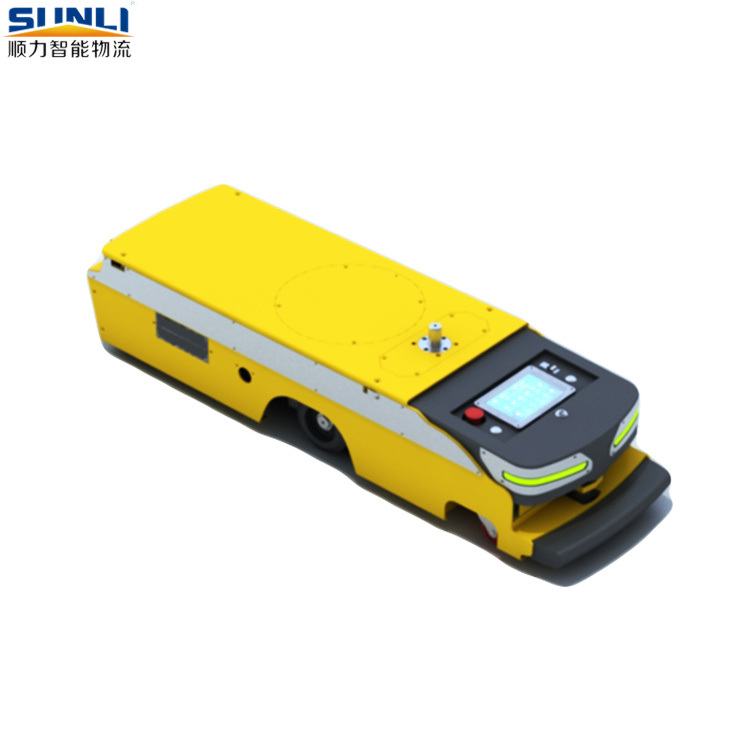
Hardware compatibility plays a massive role in system design. You cannot force a universal power solution onto specialized robots. The physical geometry of the vehicle heavily restricts your infrastructure choices.
The physical design of a robot directly dictates its charging hardware. Tall tow-tractors easily accommodate top-mounted pantograph chargers. Forklift-style robots often use standard side-mounted plug-ins. However, low-profile logistics robots introduce unique engineering constraints. They lack the surface area for bulky power receivers.
Low-profile underride robots present distinct integration challenges. Because a Unidirectional Latent AGV operates by driving entirely underneath storage racks or carts to lift them, top-mounted infrastructure is physically impossible. Any overhead hardware would instantly collide with the payloads they are designed to carry. You must approach their power needs from a different geometric angle.
These specific low-clearance models require highly precise conductive infrastructure. Engineers usually deploy side-mounted brush contacts or flush floor pads.
Successfully implementing these low-profile docks requires rigorous planning:
When you align the hardware correctly, these robots slip onto their docks seamlessly. They grab power while waiting for the warehouse management system to assign the next rack.
Deploying automated power stations across a large facility introduces notable facility risks. You must evaluate electrical capabilities, spatial geometry, and strict safety codes before breaking ground.
Warehouse managers frequently underestimate actual power draws. A single rapid-charger might draw modest current. However, a fleet-wide simultaneous fast-charging event can overwhelm a facility's electrical panel. Utilities actively monitor peak energy demand. If your entire fleet docks at 2:00 PM during a shift change, the massive power spike can trigger severe peak-demand financial penalties.
Best Practice: Implement smart-charging software. This software sequences the docking times. It ensures only a limited number of units draw maximum current simultaneously, smoothing out the facility's overall electrical load.
Decentralized opportunity charging requires installing stations directly along primary travel routes. You must place them where robots naturally pause. This creates a difficult spatial trade-off. Every square foot dedicated to a staging dock is a square foot removed from active inventory storage.
You must map out high-traffic nodes carefully. Placing docks in dead zones forces robots to travel too far just to power up. Placing docks in main arteries risks creating severe traffic jams when multiple units queue for energy.
Powering heavy industrial machinery introduces fire and electrical risks. You must adhere to strict industrial safety frameworks.
Choosing your facility’s power network requires structured analytical thinking. You must look past raw specifications and evaluate how the technology integrates into long-term financial and operational goals.
You must weigh initial capital outlay against permanent operational savings. Fast-charging lithium-ion systems require substantial upfront capital. The intelligent docks and advanced chemistries command premium pricing. However, this initial expenditure eliminates the need for battery swap technicians. By removing human intervention from the power cycle, you drastically reduce ongoing labor expenses. Over a multi-year deployment, the automated approach reliably yields superior financial returns through uninterrupted productivity.
Your business will eventually grow. Your charging network must accommodate future fleet expansions gracefully. Ask your vendors specific scaling questions before signing contracts. How easily can we add new nodes to the facility map? Does the power management software support an extra 50 robots without requiring a complete system overhaul? Modular dock designs allow you to bolt on additional capacity quickly as your throughput demands increase.
Do not guess where to place your power stations. We strongly recommend conducting a digital simulation or a physical time-study of your current facility workflows. You need to identify natural "idle points" in your daily operations. These include packing queues, staging lanes, or assembly line buffers. Once you map these idle zones, you pinpoint the exact optimal locations for your new infrastructure. This ensures robots absorb energy organically without ever abandoning their assigned tasks.
Achieving continuous operation requires treating power delivery as the backbone of your automated ecosystem. Your fleet will only perform as well as the infrastructure supporting it. Remember these core takeaways as you plan your deployment:
By prioritizing intelligent power management, you guarantee your logistics robots spend their shifts moving goods, not waiting on the wall.
A: No. Modern Lithium-Iron Phosphate (LiFePO4) batteries thrive on frequent, shallow charging cycles. Unlike legacy lead-acid batteries that required deep discharging to prevent memory effects, lithium chemistries perform best when maintained between 40% and 80% capacity. Opportunity charging actually prolongs their operational lifespan.
A: It depends heavily on the charger's amperage and the robot's battery size. Generally, a 5-to-10 minute charge can yield 1 to 2 hours of active run time. This rapid replenishment perfectly matches natural workflow pauses, such as waiting for a pallet to be wrapped.
A: Yes. Advanced fleet management software orchestrates dock sharing effectively. The software prioritizes routing based on each vehicle's State of Charge (SoC). It ensures robots with critically low batteries take immediate priority, preventing gridlock and maximizing dock utilization.


